The Serious Impact of USPS Privatization
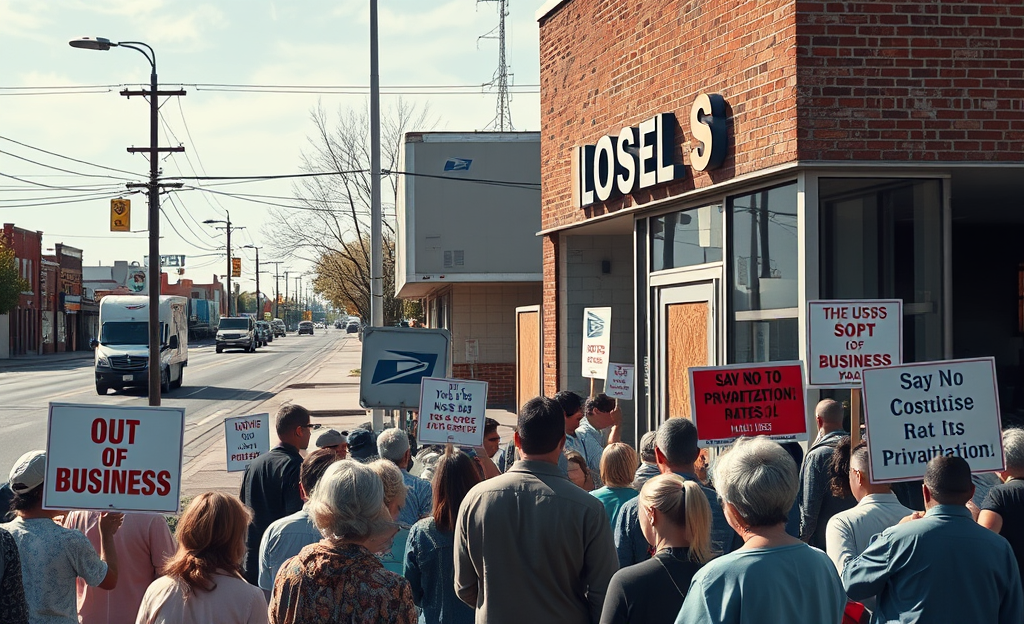
This article will explore the serious implications of USPS Privatization.
As discussions around the future of the United States Postal Service heat up, concerns regarding the potential closure of local post offices, significant increases in shipping rates, and the elimination of Universal Service Obligations have emerged.
With projected price hikes ranging from 30% to 140%, it is essential for the public to understand the stakes involved and recognize the importance of preserving this vital institution.
The validity of these concerns has been echoed across various political contexts, highlighting the urgency of the situation.
Overview of Wells Fargo Equity Research Memo on USPS Privatization
The recent Wells Fargo memo outlines a potential path toward USPS privatization, raising serious concerns about the future of mail delivery in the United States.
By proposing significant changes, the memo suggests a shift towards a system where market forces dictate the operations and financial health of the postal service.
The document highlights potential closures of local post offices and a dramatic increase in shipping rates.
As a self-sustaining agency, the United States Postal Service has traditionally provided affordable and reliable service to every corner of the nation.
However, USPS privatization could reshape national mail delivery by potentially ending Universal Service Obligations that ensure service to every address at uniform pricing.
Equity research findings indicate that, under privatization, cost structures could alter drastically, with prices potentially soaring by 30% to 140%.
These changes are of particular concern to rural customers who rely heavily on the USPS for essential services and correspondence.
Advocates argue that instead of a focus on profit, the primary duty of a postal service should remain as a public utility committed to universal service.
Such privatization proposals like the one discussed in the memo are not new but are gaining momentum.
This makes public awareness and opposition critical to preserving an institution that is deemed integral to national communication and commerce.
Learn more from the detailed analysis provided in the Wells Fargo USPS Privatization Framework to understand the implications of these economic shifts.
Closures of Local Post Offices and Service Impact
Privatizing the United States Postal Service could result in the shutdown of many local post offices, as private entities prioritize profitability over community service obligations.
This shift could particularly devastate rural and underserved urban areas, where post offices are vital hubs for daily activity.
According to the Supply Chain Dive’s insights, the shift towards privatization can make delivery services increasingly resemble those of private giants like FedEx and UPS, which may not adhere to Universal Service Obligations that ensure accessibility to all.
Consequently, communities might experience longer wait times for services and potentially increased prices, further straining residents who rely heavily on these services.
The closure of local post offices and reduced services would disproportionately impact seniors and those without reliable internet or transport, further highlighting the inequalities that privatization could exacerbate.
Such closures translate into reduced accessibility — job losses — longer delivery times.
Increases in Shipping Rates and Pricing Estimates
The proposal to privatize the United States Postal Service (USPS) carries dire implications for shipping rates.
As outlined in a report, privatization could necessitate increases between 30% and 140% to ensure profitability.
30% to 140% price jump in shipping rates could make sending parcels and letters prohibitively expensive for everyday users.
These increases would not only affect individual customers but also impact businesses that rely on USPS’s affordable services to maintain operational costs.
Furthermore, these potential hikes demonstrate the fundamental shift in accessibility and affordability that privatization might bring.
Many USPS users currently enjoy lower costs compared to private couriers such as FedEx and UPS.
However, post-privatization, this advantage could disappear.
USPS prices are about 25% to 60% cheaper.
The anticipated rise could not only hinder small businesses’ ability to compete but could also decrease overall mailing frequency, disrupting communication and e-commerce activities on multiple levels.
End of Universal Service Obligations
Universal Service Obligations (USO) ensure that all Americans, regardless of geography, receive mail services at uniform rates and quality.
The USO guarantees nationwide delivery, providing essential connections between individuals and businesses, especially in areas not serviced by private carriers.
These obligations play a crucial role in making postal services available to every corner of the country, ensuring that everyone remains connected.
Without USO, the impact on rural and underserved areas would be substantial.
These communities face the possibility of drastically reduced service frequency, coupled with soaring costs due to the shift towards profit-driven models often employed by private entities.
The relevant concern is that higher operational costs make maintaining services in less populated areas economically unfeasible.
A privatized USPS could likely mirror companies like FedEx or UPS, focusing on profitability over public service.
Consequently, the removal of USO signifies a shift from equitable access to a marketplace-driven approach where availability becomes unequal, reflecting broader socio-economic disparities.
Historical Context and Political Considerations
The push to privatize the United States Postal Service has appeared repeatedly across several administrations, reflecting a fluctuation in governmental approaches to public service reform.
During the 1980s, under the Reagan administration, the notion of a privatized economy began to gain momentum, encouraging debates on the role of government in commercial enterprises.
However, it was in the 2000s policy debates that this idea gained notable prominence.
With a heightened emphasis on efficiency and a desire for reducing government expenditure, the conversation around privatizing USPS intensified, placing it at the forefront of political agendas.
Political figures often advocated for the USPS to dive into the private sector as a means to streamline operations and relieve financial burdens on taxpayers.
According to the Trump administration’s efforts, USPS privatization resurfaced as a priority, highlighting a possible strategy to reinvigorate the postal system’s financial viability.
This proposition, however, raised considerable concerns about accessibility, potential cost hikes, and the impact on rural communities that heavily rely on postal services to maintain essential connections, underscoring the significant stakes involved in such political decisions.
Public Awareness and Advocacy: ‘The USPS is Not for Sale’
‘The USPS is Not for Sale’ serves as a rallying cry, highlighting the urgent need for public awareness and advocacy against privatizing this vital national institution.
Privatization threatens to dismantle the USPS’s Universal Service Obligations, leading to the closure of local post offices and imposing hefty shipping rate hikes.
Under this alarming proposal, prices could surge by an astonishing 30% to 140%, as outlined in a Wells Fargo memo.
The historical role of the USPS in ensuring affordable and reliable service for every American, regardless of location, is at risk.
Public campaigns, such as the APWU Campaign Against Privatization, emphasize that the USPS should not become a tool for Wall Street enrichment.
To protect this cornerstone of American life, the public must act decisively:
- Contact representatives.
- Join advocacy groups.
- Spread awareness through social media campaigns.
In conclusion, the push for USPS Privatization poses significant threats to the accessibility and affordability of mail services.
Public awareness and action are crucial to ensure that ‘The USPS is not for sale.’



0 Comments