Northern States Prepare for Stunning Auroras
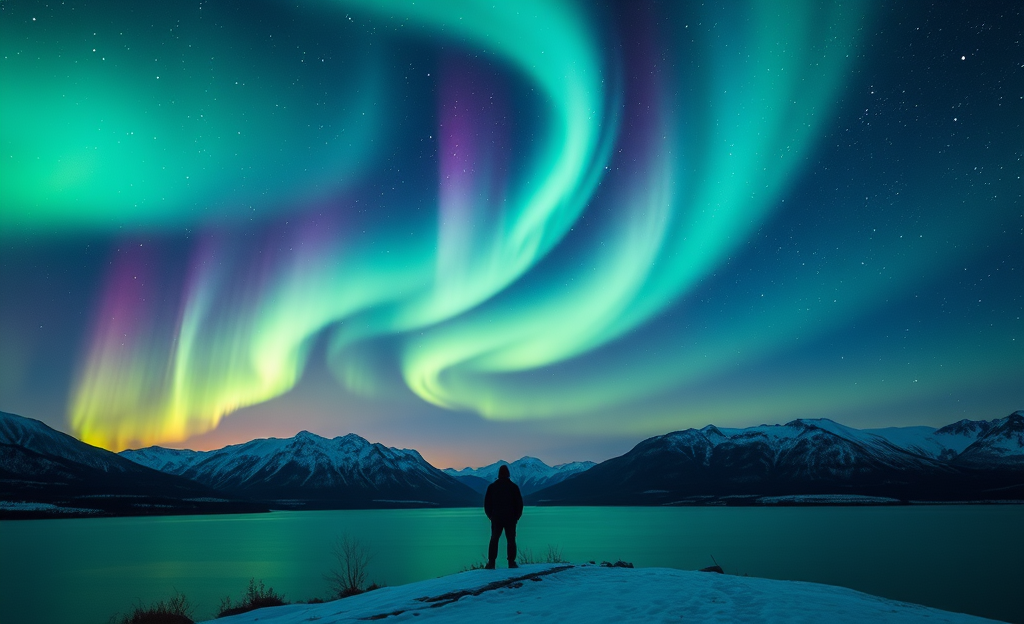
Auroras Display is a mesmerizing natural phenomenon that many eagerly await, especially in northern regions of the United States.
This article will delve into the upcoming opportunity to witness the northern lights on Wednesday, as the Kp index is forecasted at four.
We will explore the expected auroral activity throughout the week, identify the best locations for viewing, and provide essential tips for an optimal experience.
Additionally, we’ll discuss the impact of the ongoing solar maximum on the visibility of these stunning light displays, making this an exciting time for sky watchers.
Northern Lights Forecast for Northern US States
A group of northern US states may be treated to a spectacular display of the northern lights on Wednesday evening as the Kp index is forecasted at four on a nine-point scale.
This offers an exciting opportunity for residents in areas such as Washington, Idaho, and Montana to witness the aurora’s beautiful colors dancing across the sky.
Be sure to head to a high point facing north, away from light pollution, between 10 PM and 2 AM for the best viewing experience.
Regions with Highest Northern Lights Visibility
Experience the breathtaking spectacle of the northern lights at optimal locations across the Northern US.
Explore the scenic beauty of Washington, where the skies promise vibrant displays, or venture into the serene landscapes of Idaho.
Feel the magic of the aurora illuminating the night in Montana, while North Dakota and South Dakota offer expansive views of this celestial wonder.
Minnesota and Wisconsin beckon with their clear skies, providing a stunning backdrop for this luminous dance.
Discover the enchanting vistas of Upper Michigan and the tranquil wilderness of Maine for unforgettable auroral views.
Optimal Viewing Tips for the Northern Lights
To best witness the northern lights, choose a high vantage point that offers a clear view of the northern horizon.
This positioning will provide an unobstructed view of the aurora glow.
Always face north, as this is where the natural phenomenon originates.
It’s essential to avoid areas with any light pollution since artificial light can wash out the subtle hues of the auroras.
Optimal viewing occurs between 10 PM and 2 AM, the window when auroral activity peaks, as confirmed by the Space Weather Prediction Center – NOAA.
Solar Maximum and Its Influence on Northern Lights
The current solar maximum significantly boosts auroral frequency by intensifying solar activity.
During this period, the sun undergoes cycles of heightened surface activity, characterized by numerous solar flares and massive coronal mass ejections.
These phenomena release vast amounts of charged particles into space, which, upon reaching Earth, interact with the magnetic field, producing breathtaking auroral displays.
Therefore, people residing further south can now observe these phenomena more frequently.
Understanding this celestial spectacle involves recognizing the sunspot activity patterns, which tend to peak during the solar maximum and subsequently diminish.
Ongoing predictions by scientists suggest that this period of increased auroral visibility will persist until about early 2026.
Such prolonged activity offers an accessible opportunity for sky-watchers to organize trips to ideal viewing locations, capture striking photographs, and expand their knowledge of space weather dynamics.
For more insights into solar cycles, please visit space.com.
As you venture into this dazzling natural phenomenon, allow yourself a moment to appreciate the intricate dance of nature’s forces, beautifully visible in the auroras dancing above.
Understanding the Kp Index
The planetary Kp index is an essential tool for assessing geomagnetic activity which runs from 0 to 9. It offers a gauge of disturbances caused by solar winds impacting Earth’s magnetic field.
A reading of 3 implies that the magnetic field is experiencing moderate influence from solar winds.
Under these conditions, the visible auroras are confined predominantly to the far northern latitudes.
Such a value typically results in a faint auroral presence, dancing on the northern horizon without reaching a higher elevation in the sky.
On the other hand,
Kp 4 reveals stronger solar activity that permits auroras to extend into areas south of the Canadian border, allowing states like Washington or North Dakota to enjoy remarkable displays.
Notably, this increased activity of a Kp 4 enables sky-watchers to see overhead auroras in northern U.S., potentially providing breathtaking views.
This marked difference between Kp 3 and Kp 4 is particularly relevant for enthusiasts eager to witness this natural phenomenon.
A well-planned outing becomes successful by understanding the significance of these numbers.
Remarkably, when sky-watchers see a Kp value of 4 in the forecast, they anticipate witnessing stunning overhead auroral displays as illustrated by the table below:
| Kp | Visibility Range |
|---|---|
| 3 | Northern horizon only |
| 4 | Overhead in northern states |
Consulting forecasts like the PDF Guide on Auroral Visibility provides further insights into these expectations.
In conclusion, the chance to view the northern lights is a thrilling prospect for many in the northern U.S.
By following the recommended viewing conditions, enthusiasts can maximize their experience during this exciting period of enhanced auroral activity.



0 Comments