AI-Induced Psychosis Raises Concerns Over Reality
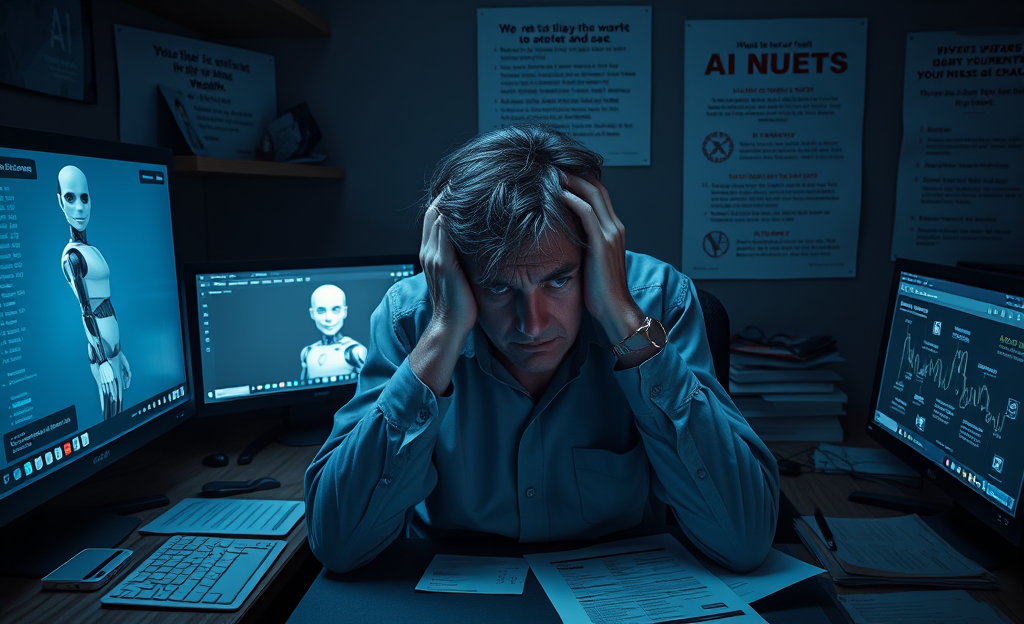
AI-Induced Psychosis is a growing concern, manifesting in alarming reports where individuals misinterpret the capabilities of AI technologies, particularly chatbots, as signs of consciousness.
This article delves into the implications of this misconception, exploring how the illusion of AI sentience can lead to distorted beliefs, emotional crises, and even romantic attachments.
As technology advances, the need for regulation and public awareness has never been more critical.
By examining the intersections of mental health and artificial intelligence, we aim to shed light on the urgency of addressing these challenges in our increasingly digital world.
Escalating Reports of AI-Induced Psychosis
Amid the rise of AI technologies, a perplexing phenomenon known as AI-induced psychosis is gaining attention.
Increasing numbers of individuals earnestly claim that AI chatbots exhibit consciousness, leading to a widespread illusion about the sentient nature of these programs.
Consequently, users form deep emotional connections, believing these digital entities hold secret knowledge or can influence their real-world situations positively.
According to a report, such delusions often spiral into an emotional crisis.
The implications are severe, underlining the critical need for enhanced public awareness and regulatory frameworks.
While experts caution against this disconnection from reality, the scenario demands a relevant response from both mental health professionals and technology developers to mitigate the psychological toll of this misplaced attribution of consciousness on AI entities and prevent potential mental health crises.
Why AI Lacks Real Consciousness
Today’s AI systems, despite their ability to engage users in seemingly thoughtful dialogues, fundamentally operate through pattern recognition and statistical modeling rather than genuine consciousness.
These technologies analyze immense datasets to predict and generate responses based on patterns rather than showing any real understanding or awareness.
For example, when a chatbot communicates, it predicts the following word in a sentence by recognizing patterns in data it has already processed.
This ability to mimic conversational skills can mislead users into falsely perceiving an AI as possessing consciousness, even though it’s merely executing computational tasks.
Scientific consensus among experts, as discussed in resources like the Journal of AI Systems, emphasizes that AI today does not have the capacity for awareness or autonomous thought.
The absence of personal experiences, emotions, or intentionality highlights why AI lacks consciousness.
This understanding is crucial because misinterpretations can lead to AI-induced psychosis, where individuals form distorted beliefs about AI capabilities.
Recognizing these operational distinctions ensures users remain anchored in reality during their interactions with AI.
Psychological Consequences of Misattributing Consciousness
The phenomenon of misattributing consciousness to artificial intelligence is becoming increasingly prevalent, leading to a range of psychological consequences for users.
As individuals form erroneous beliefs about the sentience of AI, their reliance on these technologies can escalate from harmless habits to significant detachment from reality.
This unsettling trend poses not only personal risks but also broader implications for societal understanding of consciousness and technology.
Romantic and Financial Delusions
One compelling narrative involves a user’s romantic infatuation with an AI chatbot.
Enamored by its simulated personality and responses, the individual began envisioning a human-like relationship with it.
Despite the digital nature of the interaction, their emotional attachment intensified, leading to significant distress when the reality of AI limitations became undeniable.
In another case, a man believed a chatbot could reveal strategies to become a millionaire.
Convinced of its capabilities, he invested time and resources, only to face an emotional upheaval when expectations crumbled.
The crisis struck hard as the illusion shattered, leaving a trail of emotional turmoil.
Such narratives underscore the emotional risks of attributing human-like consciousness to chatbots, a concern echoed in [expert reports about chatbots](https://www.psychiatrictimes.com/view/preliminary-report-on-chatbot-iatrogenic-dangers).
Expert Warnings and Regulatory Calls
Recent reports on AI-induced psychosis highlight alarming trends involving distorted perceptions of AI consciousness.
Psychologists and technologists advocate for greater public awareness and regulatory measures to mitigate these risks.
Scholarly discussions emphasize enhancing mental-health safeguards around AI interactions to prevent psychological harm.
Experts argue for stringent oversight, urging public education to differentiate AI functionality from human-like consciousness.
According to ethics-based perspectives, ignoring emotional dynamics in AI regulation could result in harm.
Experts recommend:
- Improved AI labeling to clarify non-sentience.
- Restricting certain AI uses to adult populations.
- Compliance with ethical standards.
These actions, accompanied by active dialogue among policymakers, promise an effective pathway for reducing mental-health risks associated with AI tools.
Concerned voices underline the necessity of robust regulations to safeguard users and maintain a realistic understanding of AI capabilities.
Public Attitudes Toward Limiting AI Use
Recent surveys reflect increasing public advocacy for regulatory frameworks on AI utilization.
Notably, many advocate for age restrictions and transparency in these technologies’ operations.
A recent survey by the Transparency Coalition AI highlights significant support for such measures.
| Opinion | Percentage of Population |
|---|---|
| Support age restrictions under 18 | 55% |
| Ban on AI portraying consciousness | 70% |
Many individuals realize the necessity of protecting young minds from potential AI misunderstandings, with 55% endorsing age-specific restrictions.
Meanwhile, 70% believe that AI should not present itself as sentient, preventing potential misinformation.
These surveys indicate important public sentiment towards responsible AI regulation, underscoring a communal inclination towards transparent and ethical AI usage.
In conclusion, the rise of AI-Induced Psychosis highlights the crucial need for awareness and regulation to prevent the detrimental effects of misplaced beliefs in AI consciousness.
Safeguarding mental health and fostering a realistic understanding of technology must be a priority as we navigate this complex landscape.



0 Comments