Battery Storage Is Key For Renewable Energy Transition
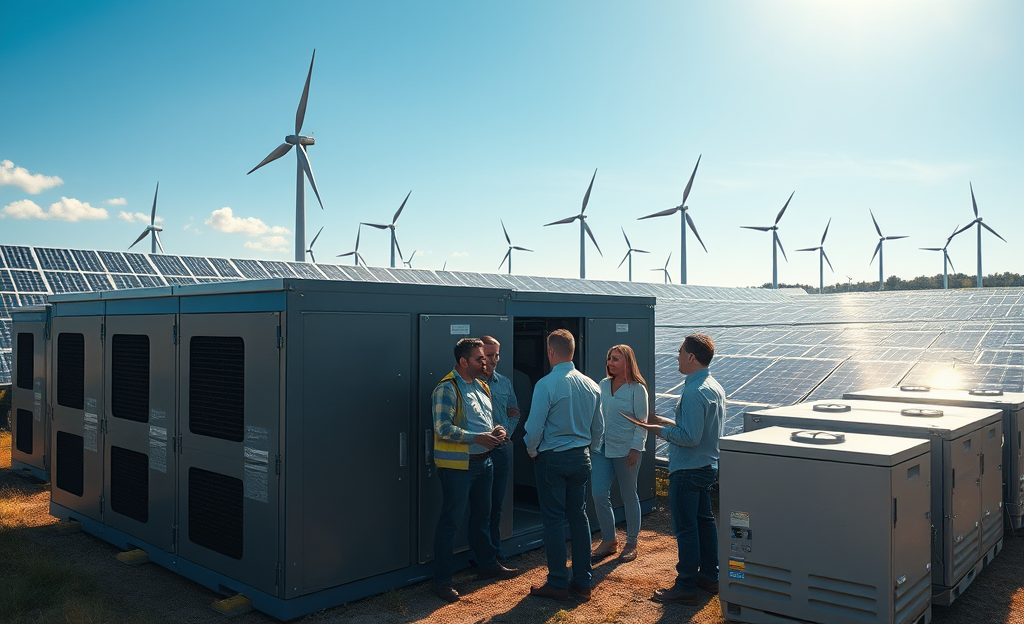
Energy Storage systems play a pivotal role in the transition to renewable energy sources, addressing the inherent challenges of supply and demand mismatches.
As we shift toward solar and wind energy, the need for reliable storage solutions has become increasingly vital.
This article will explore the benefits of energy storage, the collaboration with manufacturers for customized solutions, and the key considerations in selecting battery manufacturers.
We will also delve into how these systems enhance energy project viability and contribute to a resilient and competitive clean economy market.
Rising Need for Energy Storage in a Renewable Grid
The mismatch between renewable supply and consumer demand arises from the intermittent nature of solar and wind energy.
Solar panels generate maximum output during midday, when electricity demand from businesses and residences is relatively low.
At the same time, wind energy can peak unpredictably, often not aligning with the typical usage patterns.
Furthermore, renewable energy often peaks at night or during unseasonably windy days, exacerbating the mismatch between production and demand.
This results in reliability challenges such as:
- Midday solar surplus
- Nighttime wind peaks
- Weather-dependent output variations
These scenarios underline the critical importance of energy storage systems.
By storing excess power during peak production periods, these systems ensure a steady energy supply, reducing reliance on non-renewable sources.
With the growing integration of renewables, energy storage becomes indispensable for stabilizing grid supplies, enhancing grid reliability, and meeting everchanging consumer demands.
For more insights into energy storage, you can visit Energy Storage Importance by Renewable Institute.
How Storage Manufacturers Stabilize the Grid
Storage manufacturers play a critical role in stabilizing the grid by accumulating surplus renewable energy generated during peak production times.
These systems smooth out energy output fluctuations and ensure a reliable supply, effectively reducing reliance on gas-fired power plants.
By integrating energy storage solutions, manufacturers enhance grid reliability and support the broader transition to a cleaner energy future.
Collaborative Customization for Optimal Integration
Collaborating with storage manufacturers for customization allows project owners to achieve economic gains through co-designing systems that seamlessly integrate with renewable energy sources.
This partnership involves tailoring system size, controls, and cost structures to meet the unique demands of each project, resulting in relevant energy solutions.
The joint engineering approach ensures lower capital outlay by optimizing resources, while enhancing grid reliability and minimizing dependency on fossil fuels.
Such collaboration not only supports scalability and lifecycle support but also boosts operational resilience, promoting the smooth transformation to a clean economy.
For more insights, explore strategic collaboration benefits in system design.
Forces Accelerating Battery Manufacturing Demand
Battery manufacturer demand is surging due to several key drivers that are reshaping the energy landscape.
A major factor includes falling battery costs, which have improved the economic viability of battery technology.
This cost decline, fueled by advancements in production techniques, enables affordable deployment of Battery Energy Storage Systems.
Furthermore, government incentives play a crucial role, with legislation promoting sustainable energy sources propelling market growth.
These incentives encourage investment and facilitate infrastructure development.
Moreover, grid modernization efforts are rapidly escalating the need for robust energy storage, ensuring a constant energy supply from intermittent renewables.
This modernization enhances grid reliability and reduces reliance on conventional power plants.
- Falling battery costs
- Government incentives
- Grid modernization
Choosing the Right Battery Manufacturer
Evaluating battery manufacturers involves scrutinizing key areas like chemistry performance, scalability pathways, and lifecycle support.
Performance in battery chemistry is crucial because it determines the efficiency and reliability of energy storage solutions.
According to a study on Lithium battery technologies, selecting the right chemistry impacts storage capacity and longevity directly.
Furthermore, scalability is vital as energy demands can shift, necessitating solutions that grow in tandem with needs, ensuring grid stability and economic viability.
Transitioning into lifecycle support, long-term service offerings highlight a manufacturer’s commitment to maintaining operation efficiency and sustainability through warranties and maintenance.
Thus, choosing a manufacturer that excels in these areas sets a foundation for enduring performance and alignment with modern energy demands.
| Factor | Why It Matters |
|---|---|
| Chemistry Performance | Ensures reliable chemistry and efficiency. |
| Scalability | Allows for expansion with increasing demand. |
| Lifecycle Support | Provides enduring service and warranties. |
Battery Storage: Boosting Project Success and Sustainability
The integration of battery storage systems significantly enhances the viability of energy projects by providing reliability and flexibility, thus boosting their attractiveness to investors.
As highlighted by PowerFlex, these systems can reduce energy costs and contribute to energy security, which leads to greater profitability and economic feasibility.
By enabling the storage of excess energy produced during peak generation times, battery systems allow for cost optimization by discharging stored power during high-demand periods when prices are elevated.
This financial efficiency directly translates into substantial long-term savings for projects.
Furthermore, aligning with sustainability objectives becomes achievable as battery storage supports renewable energy usage, minimizing reliance on fossil fuels.
According to Northmore Gordon, battery storage systems bolster sustainability targets, reinforcing a project’s environmental credentials and enhancing its contribution to a cleaner and greener future, while maintaining operational resilience, ensuring continuous energy provision, and fostering competitiveness in the renewable sector.
Storage Integration as a Competitive Advantage
Integrating advanced energy storage systems delivers transformative benefits for businesses, empowering them to adapt swiftly to fluctuating energy demands and market conditions, ensuring a seamless operation even during grid instability.
By strengthening operational resilience, companies shield themselves from energy-related disruptions, maintaining productivity and enhancing confidence among stakeholders.
This proactive approach not only staves off potential losses but positions businesses as leaders in the clean-energy marketplace.
The storage systems optimize energy use, allowing firms to capitalize on lower off-peak rates and facilitate the adoption of renewable sources, further propelling their commitment to sustainability.
Embrace the competitive edge provided by energy storage integration as it becomes an integral factor in distinguishing a company from its industry peers in an increasingly eco-conscious economic landscape.
As highlighted by resources such as Tata Consulting Engineers Blog on Energy Storage, the future of grid-scale energy storage is pivotal in achieving clean and resilient power systems, driving innovation and growth.
In conclusion, the significance of energy storage cannot be overstated.
By optimizing costs and enhancing sustainability, energy storage systems are essential for the successful integration of renewable energy in our power grids.



0 Comments