Meta Unveils Innovative Smart Glasses Lineup
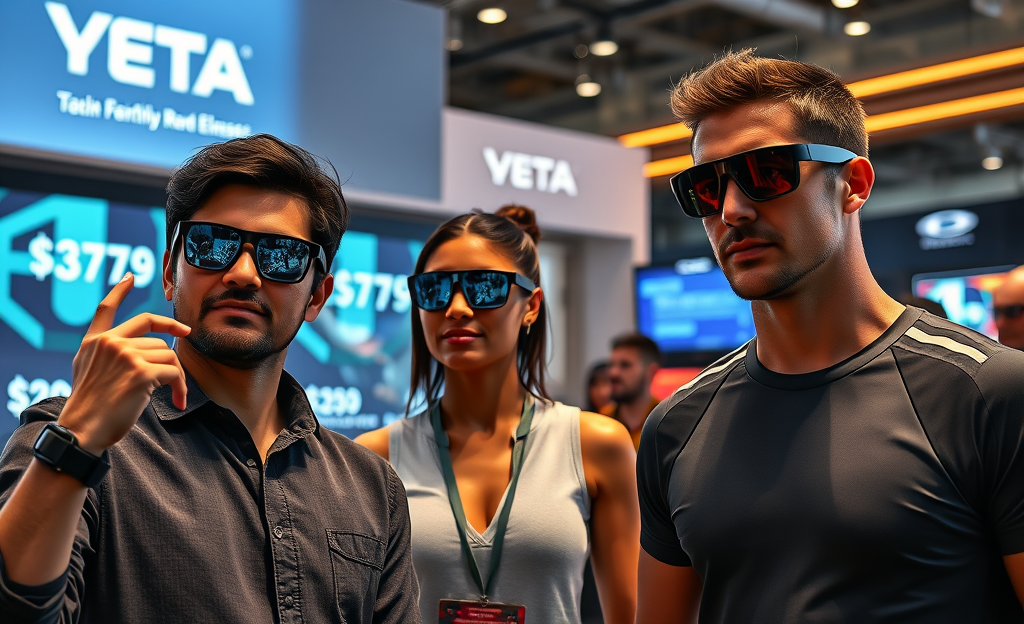
Smart Glasses are taking a significant leap forward with Meta’s latest unveiling, which includes the innovative Ray-Ban Display, the Ray-Ban Meta (Gen 2), and the Oakley Meta Vanguard.
Each product offers unique features designed to enhance user experience through advanced technology.
However, despite their innovative promise, a recent live demonstration exposed several technical issues that raised questions about their reliability.
This article will explore the exciting features of these smart glasses, the challenges faced during the demo, initial reviews highlighting both innovation and shortcomings, and Meta’s broader strategy in the wearables sector.
Overview of Meta’s Smart Glasses Lineup
Meta has unveiled its groundbreaking smart glasses lineup featuring Ray-Ban Display, Ray-Ban Meta (Gen 2), and Oakley Meta Vanguard, priced at $799, $379, and $499, respectively.
These innovative devices showcase Meta’s commitment to integrating cutting-edge technology into wearable designs.
The trio caters to diverse needs, with the Ray-Ban Display offering an exceptional see-through lens and neural wristband control for an immersive experience.
Meanwhile, the Ray-Ban Meta (Gen 2) focuses on enhancing user interaction with modern features, and the Oakley Meta Vanguard stands out as a robust choice for active wearers.
| Model | Price |
|---|---|
| Ray-Ban Display | $799 |
| Ray-Ban Meta (Gen 2) | $379 |
| Oakley Meta Vanguard | $499 |
.
As part of Meta’s strategy, this lineup represents a fundamental step in their broader wearables roadmap.
Ray-Ban Display: Core Features and Neural Wristband Control
The Ray-Ban Display represents a significant advancement in smart eyewear, integrating transparent display technology that allows users to see digital content overlaid onto their real-world environment.
This innovative feature is complemented by a neural wristband that enables intuitive control through thought-based interactions, creating a seamless user experience.
As users navigate their digital lives, the combination of the display and neural wristband highlights a new frontier in wearable technology, aiming to enhance connectivity and interactivity.
Live Demo Setbacks
During the live demo of Meta’s Ray-Ban Display, a series of technical issues surfaced, capturing audience attention.
The much-anticipated demonstration was marred by failed video call responses, causing interruptions that hindered the seamless experience promised.
Moreover, there were noticeable AI misinterpretations that led the assistant to provide incorrect answers, diminishing its reliability in real-world scenarios.
Despite these setbacks, the presentation showcased innovative advancements in wearable technology, offering glimpses of what the future could hold.
The technical difficulties highlighted a disparity between the conceptual potential and real-time execution, urging Meta to refine these groundbreaking features further.
Early Reception and Critical Feedback
Meta’s unveiling of the Ray-Ban Display smart glasses has garnered a mix of enthusiasm and critique from media and reviewers alike.
The initial reception celebrates the bold innovation embodied in the glasses’ crisp, bright display and the intuitive control enabled through a neural wristband.
For example, ZDNet’s review highlights the significant strides from their predecessors.
However, the live demo’s technical difficulties, including failed video call responses and AI misinterpretations, have not gone unnoticed.
Despite these setbacks, TechRadar emphasizes how Meta has improved upon the issues that Google Glass faced, noting the sleek design and vibrant display as crucial wins.
Yet, skepticism lingers as many, including Business Insider, question the product’s current readiness for mass adoption.
While the glasses represent a pioneering vision in wearables, the inconsistencies during the demonstration serve as a reminder of the challenges still ahead.
Meta’s Roadmap for Wearables Innovation
As Meta strides into the future of technology, it isn’t just pushing boundaries with advanced smart glasses, but ambitiously intertwining them with its revolutionary neural wrist interfaces.
This visionary fusion signifies more than just an innovation in wearables, it marks the dawn of a new interactive era where human and machine symbiosis becomes seamlessly integrated into daily life.
Leveraging neural signals, captured deftly by the wrist interfaces (Meta Neural Wrist Interface), and feeding them into the augmented reality vistas of smart glasses, Meta is not just enhancing user interactions but is also evolving them beyond the realm of imagination.
This broader wearables roadmap exemplifies Meta’s commitment to the convergence of predictive technology and everyday functionality, fostering an ecosystem where thoughts translate into actions with ease, thus paving the way for a Relevant text digital future.
Smart Glasses present an exciting future for wearable technology, yet the challenges faced during live demonstrations remind us that innovation often comes with hurdles.
As Meta continues to refine its products, the balance between cutting-edge features and user experience will be crucial for success.



0 Comments