Columbus Day Celebrations and Indigenous Advocacy
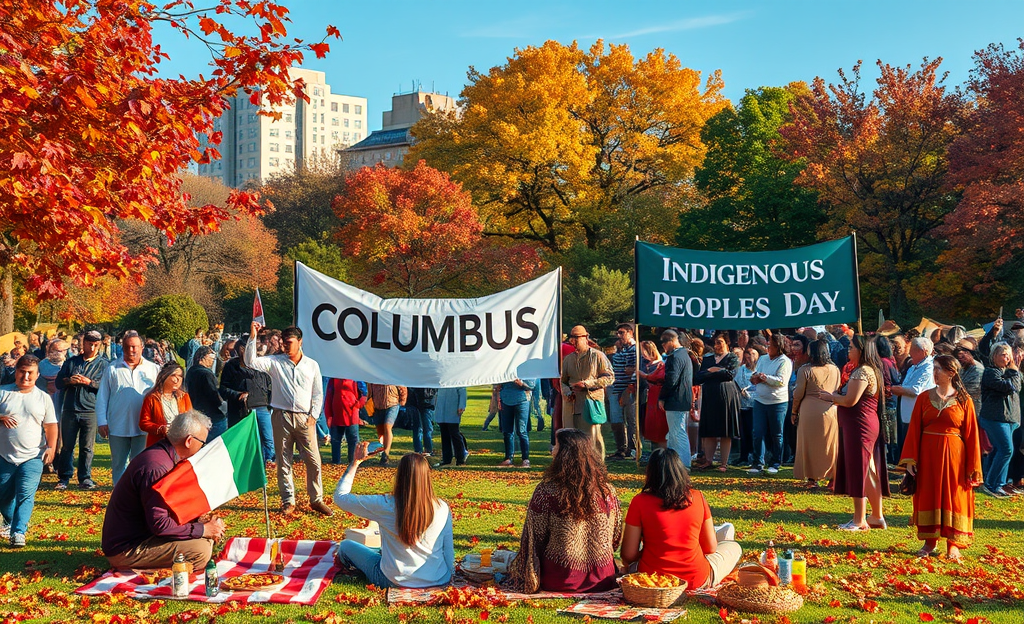
Columbus Day, a federal holiday celebrated on the second Monday in October, has become a topic of significant debate in recent years.
This article will explore the discrepancies in how states recognize this holiday, with 30 states observing it, yet only 20 providing paid days off for state workers.
Furthermore, we will delve into the growing trend of states adopting Indigenous Peoples Day, reflecting a shift in societal values regarding the legacy of Christopher Columbus and the treatment of Indigenous peoples.
Join us as we examine this evolving landscape and the celebration of Native American heritage.
Federal Holiday Overview
Columbus Day stands as a federal holiday in the United States, honoring Christopher Columbus’s arrival in the Americas in 1492. Observed on the second Monday in October, this holiday highlights the intersection of history, tradition, and modern perceptions.
Many states and territories recognize its significance, yet divergence exists in how it’s treated across the nation.
Wikipedia outlines that 30 states along with three U.S. territories recognize the day.
However, only 20 states and two territories offer a paid day off for state workers.
Critics and Indigenous advocates have influenced this transition, with states opting for Indigenous Peoples Day to acknowledge historical impacts.
The variance among states underscores the ongoing dialogue over national history and cultural commemoration.
- 30 states and three U.S. territories recognize Columbus Day.
- 20 states and two territories offer a paid holiday for state workers.
- Significant disparity exists among state celebrations.
Variation in State Paid Leave Policies
Columbus Day is officially recognized in 30 states and three U.S. territories, reflecting a significant cultural acknowledgment.
However, only 20 states and two territories extend this recognition to a paid holiday for state employees.
This distinction illustrates the varied approaches states take towards the holiday.
While some states choose to honor Columbus Day by closing government offices and offering paid leave, others continue business as usual, maintaining open offices.
Efforts to recognize Indigenous Peoples Day have influenced these differences, with some regions replacing or combining celebrations.
Nevertheless, the transition to acknowledging Indigenous heritage remains uneven across the United States.
For a deeper understanding of how states handle this day, visit Pew Research.
| State | Recognizes Holiday | Paid Day Off |
|---|---|---|
| Alabama | Yes | No |
| California | No | No |
| Rhode Island | Yes | Yes |
Expansion of Indigenous Peoples Day
The expansion of Indigenous Peoples Day illustrates a significant shift in recognizing Indigenous heritage and addressing historical injustices associated with Columbus Day.
In recent years, Maine, Vermont, New Mexico, and the District of Columbia have led the way by fully replacing their paid Columbus Day holidays with Indigenous Peoples Day.
This change reflects growing criticism from Indigenous advocates concerning the commemoration of Christopher Columbus, given the lasting impacts of European colonization on Indigenous populations.
As a result, these states have not only acknowledged the painful history but also celebrated Native American culture and contributions.
The trend continues as several jurisdictions follow suit, moving towards adopting similar practices and making Indigenous Peoples Day an official holiday.
More states are recognizing the importance of honoring Indigenous peoples, their resilience, and their rich cultural legacy.
Each new recognition marks a step towards a more inclusive history, reflecting the nation’s ongoing journey towards understanding and reconciliation.
For more context, see the Pew Research Center’s insights on this topic.
Observance of Native American Heritage
17 states and Washington D.C. choose to commemorate Native American heritage on the same date as Columbus Day.
While some states align these observances, others prefer alternative dates, reflecting the growing movement to honor Indigenous culture distinctively.
For instance, California and Nevada celebrate Native Americans Day on the fourth Friday of September, highlighting their commitment to recognizing Native American contributions separately.
Meanwhile, states like Maine, Vermont, and New Mexico have opted to replace Columbus Day entirely with Indigenous Peoples Day, showcasing their dedication to acknowledging Indigenous history and culture.
As more regions consider changing the narrative surrounding Columbus Day, there is a shift towards celebrating Indigenous heritage either concurrently or on different days to recognize its significance.
This ongoing transformation underscores the wider conversation about how history is commemorated and whose stories are represented in public holidays.
To explore more about these celebrations, visit USA Today article on Columbus Day and Indigenous Peoples Day changes.
Origins and Evolving Perception
Columbus Day was established in 1937 as a national holiday in the United States, largely due to the efforts of Italian American communities who viewed it as a way to honor their heritage.
President Franklin D.
Roosevelt was instrumental in making it an official holiday through the influence of organizations like the Knights of Columbus.
As a result, this day became a celebration of Italian American pride and an acknowledgment of Christopher Columbus’s historic voyages.
More information can be found at the History Channel’s detailed article about the holiday.
However, Columbus Day has faced increasing scrutiny because of Columbus’s treatment of Indigenous peoples and the oppressive nature of European colonization.
Controversies arise from Columbus’s role in initiating slave trades, violence, and the eventual subjugation of various Native American tribes.
As a response, many have advocated replacing or supplementing Columbus Day with Indigenous Peoples Day, which acknowledges and honors the rich heritage and resilience of Indigenous communities.
This shift reflects a growing awareness and sensitivity to historical truths and cultural acknowledgment.
For more context, consider exploring an insightful analysis of the criticisms surrounding Columbus Day and its current transformation in public perception.
In conclusion, the transformation of Columbus Day into Indigenous Peoples Day in many states highlights a broader recognition of Indigenous rights and heritage.
As society grapples with its history, the evolution of this holiday serves as a reminder of the importance of honoring diverse cultural narratives.



0 Comments