Valuable Triptych Painting Saved by Almshouse Auction
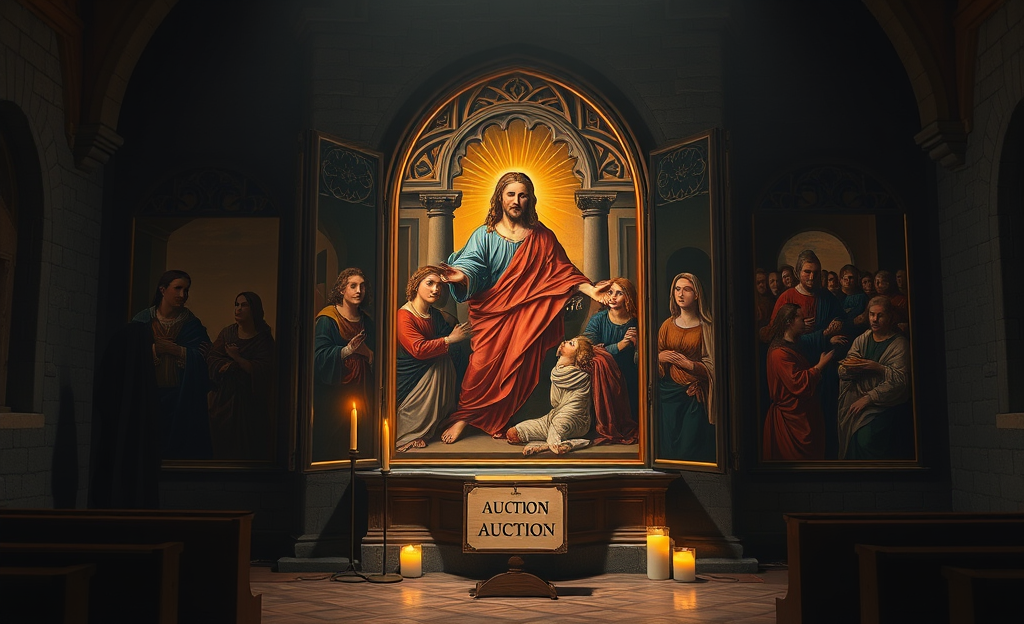
A Triptych Painting discovered in a chapel of an almshouse has captivated art enthusiasts and historians alike, valued at £3.5 million after its auction reveal.
This remarkable piece, the sole surviving work of an unknown 15th-century artist from Brussels, showcases five miracles of Christ and has endured the test of time by remaining hidden during periods of religious strife.
As the almshouse faces challenges, including the closure of 19 housing units in 2023, the decision to auction this masterpiece aims to generate funds for new accommodations for those in need, weaving together art and social impact.
The Hidden 15th-Century Triptych
Amid the serene ambiance of a humble almshouse chapel, the discovery of a hidden masterpiece has sparked intense excitement.
Concealed for centuries, this 15th-century triptych, crafted by a previously unknown Brussels artist, emerges as a newly revealed treasure.
The intricately detailed painting, which captures the wonder of the five miracles of Christ, was long believed to be lost.
This rare find, shielded from religious purges by the hands of caretakers, now sits at the center of attention as its valuation reaches an astounding £3.5 million.
Enthusiasts and historians alike are drawn to this astonishing piece, which serves as a testament to the enduring allure of artistic genius.
- The triptych originates from late-15th century Brussels
- Depicts five miracles of Christ with breathtaking detail
- Valued at £3.5 million after expert appraisal
- Survived for centuries by being hidden during religious purges
- This remarkable discovery highlights a link between art history and modern philanthropy
Artistic and Historical Significance
The artistic and historical significance of this triptych painting lies in its intricate depiction of the five miracles of Christ, showcasing the artist’s deep understanding of religious narrative and iconography.
Stylistic hallmarks characteristic of the late 15th-century Brussels school further enhance the work’s importance, highlighting the fine details, vibrant colors, and emotional expressions typical of this influential artistic milieu.
Additionally, the mystery surrounding the anonymous painter adds an intriguing layer to the piece, as the rarity and exceptional quality of the work elevate scholarly interest and invite further exploration into the lost narratives of artists from this era.
Survival Through Religious Turmoil
Amidst the tumultuous backdrop of the 16th-century iconoclasm, the Low Countries witnessed a powerful wave of religious purges, targeting cherished devotional images.
During this era, artworks faced the threat of destruction due to the rise of Calvinist movements fervently objecting to religious imagery.
Within this climate of discord, the triptych miraculously survived by being hidden in plain sight.
Caretakers ingeniously concealed the artwork within the almshouse, safeguarding it from the destructive forces of iconoclasts.
Through centuries of secrecy, the painting remained intact, quietly holding its stories, until its recent revelation unveiled its historical resilience.
Auction and Almshouse Plans
The almshouse faced significant financial challenges in 2023, leading to its critical decision to auction a valuable triptych painting, preserved from the late 15th century.
This move was necessitated by a budget shortfall that made it unsustainable to maintain numerous units.
- The closure of 19 units was inevitable after a comprehensive financial review.
- The painting is expected to fetch a remarkable £3.5 million at auction, providing much-needed funds.
- The primary objective is to construct six new units to house vulnerable residents, addressing the immediate housing needs.
This strategic decision underscores a commitment to balancing heritage preservation and social welfare by reinvesting art’s value into community betterment.
More information can be found on the auction site here.
In conclusion, the auction of this Triptych Painting not only highlights the enduring power of art but also serves a greater purpose by addressing pressing housing needs.
The funds generated will help create vital new units for the community, underscoring the intersection of culture and charity.



0 Comments