Lula Talks Peace With Trump And Maduro Amid Tensions
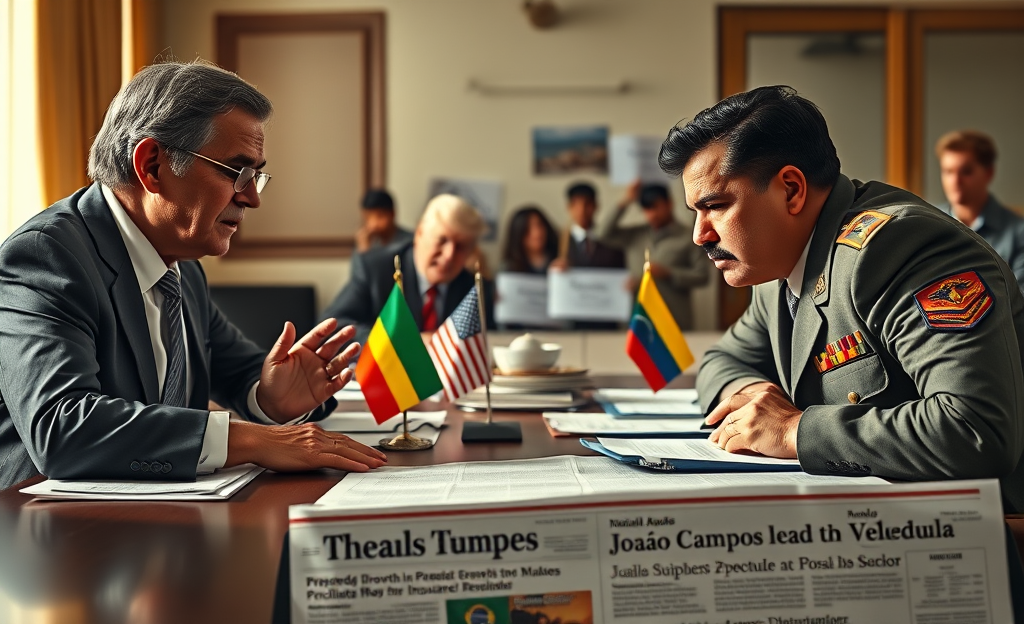
Military Strength plays a significant role in the ongoing dialogues concerning peace in Latin America, exemplified by recent discussions between leaders Lula, Donald Trump, and Nicolás Maduro.
As these conversations unfold, various domestic issues also prevail, including postal workers threatening to strike and Lula weighing a veto on dosimetry.
Additionally, the insurance sector anticipates notable growth, while political dynamics in Pernambuco reveal João Campos leading in voter intentions.
This article delves into these intertwined narratives, highlighting the critical challenges and developments shaping the region’s future.
Peace Dialogue Between Lula, Trump, and Maduro
The recent conversation among Lula, Donald Trump, and Nicolás Maduro underscored the complexities in achieving peace in Latin America.
While regional stability is at stake, Lula maintained a diplomatic tone, emphasizing the importance of political solutions over aggressive actions.
During the dialogue, he stressed that Latin America should remain a zone of peace and cautioned against foreign interventions as per his views on Poder 360.
Maduro, on the other hand, supported Lula’s stance, reiterating his willingness to engage in discussions that prioritize harmony in the region.
However, a notable contrast emerged with Trump, who placed significant emphasis on America’s military strength.
He stated,
We possess unmatched power in the hemisphere.
This statement highlighted his focus on force over negotiation pathways.
The conversation, although complex, remains critical in navigating the peace agenda in Latin America.
Postal Workers’ Strike Threat Over Missing Incentives
Frustration is mounting among postal workers over the withdrawal of key incentives that have traditionally bolstered morale.
The absence of crucial benefits such as the turkey voucher, which is especially expected during holiday seasons, is a major sticking point.
These incentives are seen as more than trivial perks; they play a vital role in maintaining workers’ commitment and engagement.
Workers now feel undervalued, leading to widespread discussions about the potential impact of the proposed strike in the sector.
Amid this unrest, postal employees are spotlighting the neglected benefits list as a cause for their dissatisfaction.
Key missing incentives include:
- Turkey voucher
- Holiday bonuses
- Performance rewards
This growing unrest was succinctly captured by a union representative, who stated,
“The ongoing lack of incentives shows a disregard for the hard work and dedication that postal workers bring to their jobs each day.
“
This sentiment highlights the critical need for action to avoid disruptions in postal operations, adding urgency to management’s response decisions.
Lula’s Pending Veto on Dosimetry and Demands for Bolsonaro’s Punishment
Lula’s evaluation of the potential veto on the dosimetry bill has sparked significant political and public discourse.
In the legal context, “dosimetry” refers to the measuring and adjusting of penalties for convicted individuals.
Lula is contemplating vetoing this bill, which has the potential to reduce penalties for former President Jair Bolsonaro.
Many perceive this as a way to ensure accountability and justice for his involvement in past political turbulence.
The challenges of getting such a veto to stand are compounded by the existing political dynamics, which could see significant resistance from the legislative body.
Simultaneously, there is intense public pressure for punishments for Bolsonaro, enhancing the stakes of Lula’s decision.
“He has to pay for the attempt of the coup,” said Lula in recent statements.
The gravity of these stakes is visible in the urgency for transparency and justice within Brazilian politics.
CNI Remarks on the 6:1 Weekly Work-Hour Ratio
The CNI’s remark of “
never been 6 to 1
” regarding weekly work-hours has sparked curiosity about its implications on productivity and workforce well-being.
Typically, labor standards involve a 40-hour work week, often structured as 8-hour workdays with weekends off.
Contrary to this, the perceived 6:1 ratio implies an unconventional scheduling that hasn’t been standard practice.
This unusual structure may raise questions about its impact on employee morale and effectiveness.
Senate Committee discussions highlight changes towards more balanced work schedules, enhancing labor conditions and ensuring two days off without salary reduction, aligning with globally acclaimed labor norms.
Such adjustments aim to reduce workplace fatigue and improve overall job satisfaction, which in turn can boost productivity.
Here’s a comparative analysis illustrating the difference:
Ratio Description 6:1 Commented by CNI as unprecedented Standard Commonly 40-hour work week Insurance Sector Forecast: 8% Growth by 2026 (Excluding Social Security)
The insurance sector is poised for notable growth, projecting an 8% expansion by 2026, excluding the impact of social security.
This optimistic outlook is fueled by increasing consumer awareness, a rise in demand for various insurance products, and advancements in technology that enhance service delivery.
Additionally, a growing economy and evolving regulatory frameworks are creating a conducive environment for the industry to thrive.
João Campos Leads Pernambuco Voting Intentions at 55%
João Campos currently leads the Pernambuco gubernatorial polling with a substantial 55% share, underlining his significant regional influence.
This impressive margin over his rivals indicates a commanding presence in the political landscape.
Real Time Big Data provides this insight, highlighting Campos’ appeal among voters, and suggesting a potential shift in the state’s political dynamics.
Connecting effectively with the electorate, his progressive agenda resonates strongly, reflecting a broad regional preference for his leadership.
Real Time Big Data indicates João Campos has a notable lead
, showcasing his growing prominence and potential impact on Pernambuco’s governance.
In conclusion, the intersection of military discussions, labor tensions, and political maneuvering illustrate the complexities facing Latin America today.
As leaders address these pressing issues, the outcomes will undoubtedly influence the trajectory of the region.



0 Comments