Apple Vision Pro Struggles With Declining Sales
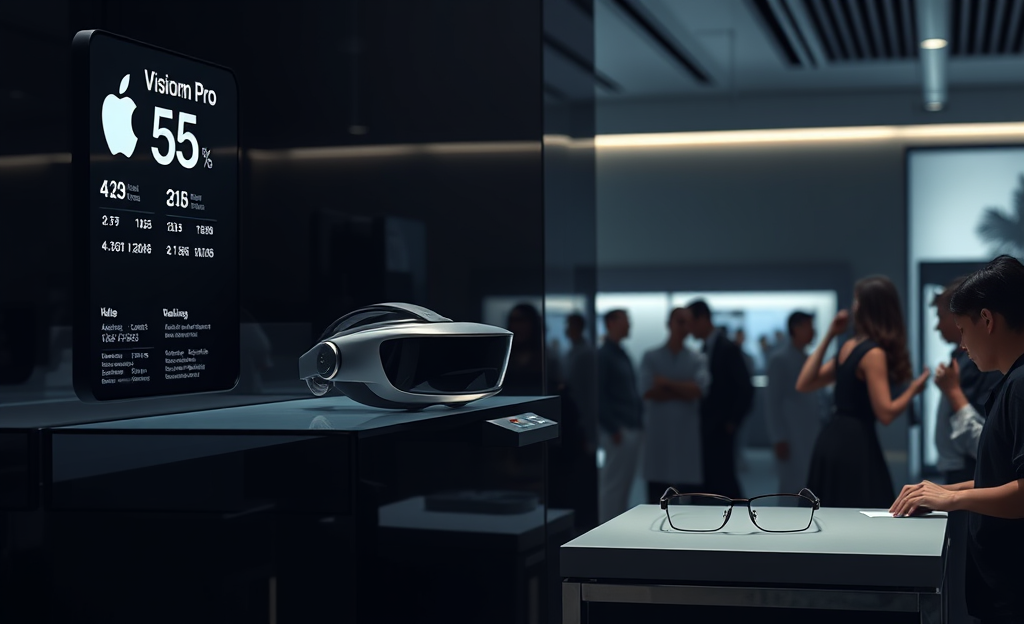
Augmented Reality technology has gained significant attention over the past few years, but the recent struggles of the Apple Vision Pro have raised questions about its future in the marketplace.
In this article, we will explore the dramatic decline in sales for Apple’s flagship AR headset, the drastic cut in marketing efforts, and the implications of its high price point.
We will also examine the broader trends affecting the augmented and virtual reality device market and discuss Apple’s shift towards creating a more affordable alternative in smart glasses.
Finally, we will consider the potential for new products that could align better with consumer demands.
Apple Vision Pro Sales Collapse in Q4 2025
Apple’s Vision Pro experienced a dramatic fall in sales as shipments plummeted from 500,000 units in Q4 2024 to 4,500 units in Q4 2025, marking a -99.1 percent year-over-year crash.
This stark decline illustrates the significant challenge Apple faced with the Vision Pro, despite its prior success.
The drop can be attributed to several factors, including a reduction in marketing budgets by 95% and the absence of a compelling ‘killer app’ that could attract a sustained user base.
High pricing at $3,499 further hindered market penetration, leaving the device out of reach for many potential consumers.
According to a market analysis by VR News, these issues, combined with a broader decline in the AR/VR market, forced Apple to rethink its strategy.
Despite the Vision Pro’s promising capabilities, the headset’s market presence dwindled, proving that high-tech features alone do not guarantee success without accessibility and unique applications.
Apple’s decision to allocate more resources towards developing affordable smart glasses shows an adaptive response to market realities by aiming for devices that better align with consumer expectations and price points.
The significant decrease in Vision Pro sales exemplifies the volatility in tech markets where consumer preferences shift swiftly, demanding innovation that balances both cost-effectiveness and utility.
This launch was an important learning experience for Apple as it recalibrates future product strategies to meet evolving market demands effectively.
Effects of a 95 Percent Marketing Budget Cut
The 95 percent cut in Apple Vision Pro’s marketing budget has had substantial effects on its reach and consumer perception, significantly affecting its performance in the fourth quarter of 2025. As advertising footprints shrank, the ability to capture potential consumers’ attention dwindled.
- Social media ads were slashed, shrinking reach by half.
- Online video promotions experienced steep reductions, lessening engagement opportunities.
- Search engine marketing noticeably decreased, limiting visibility to curious browsers.
With weaker visibility in key market areas like the US and UK, Apple Vision Pro’s limited exposure in these crucial markets directly correlates to the drastic erosion in sales numbers.
The decline in sales highlights the reflective impact of marketing budget contractions on consumer reach for high-end technology products like the Apple Vision Pro.
“Apple Vision Pro production reportedly axed despite newer models, with marketing cut by more than 95%”.
Price Barrier and Missing ‘Killer App’
The high price point of the Apple Vision Pro remains a significant barrier for many consumers.
Priced at a steep $3,499, it stands out in the market, making it challenging for buyers to justify the expense without a clear and compelling reason.
In contrast, competitors with lower-priced models attract more interest due to their affordability and practical applications.
A crucial aspect missing from the Vision Pro’s appeal is a ‘killer app’ that could ignite widespread consumer enthusiasm and justify its premium pricing.
According to Apple Vision Pro Challenges, without this defining application, the Vision Pro struggles to exhibit the essential value that would encourage adoption.
| Feature | Details |
|---|---|
| Vision Pro Price | $3,499 |
| Rival Price | $499 |
Beyond its pricing, the Apple Vision Pro lacks the transformative applications seen as key to unlocking its capabilities fully.
The absence of a ‘killer app‘ limits its perceived utility for everyday users, unlike its competitors that have identified and leveraged such applications to increase appeal.
A significant weakness highlighted in the market is the failure to align with broader consumer needs and demands, which contributes to its underwhelming sales performance.
Referring to Apple Vision Pro Market Reception, this strategic gap underscores how critical a ‘killer app’‘ is in defining the product’s value proposition.
Without it, the Vision Pro continues to be perceived as an expensive novelty rather than a must-have device, with the market responding accordingly through dwindling interest and purchase intent.
In competitive terms, Apple’s Vision Pro lags behind its lower-priced counterparts due to the absence of an app ecosystem that extends beyond niche professional uses.
While the device boasts impressive technology, these features alone do not compensate for the lack of a transformative app that can dictate mass consumer adoption, a fact noted in Apple’s Design Gamble.
As the market and consumers evolve, price sensitivity plays an increasingly crucial role, making affordability and essential functionality primary determinants of market success.
Shift Toward Affordable Smart Glasses
The AR/VR market faced a significant downturn in 2025, as reported by news outlets like Tom’s Guide.
This decline impacted sales across the industry and drove companies to re-evaluate strategies.
Competitors like Meta’s Quest, Lenovo’s ThinkReality, and Vuzix Blade have already made their mark with more budget-friendly options.
The focus has shifted toward a “pivot to affordability”, steering interest away from high-priced headsets to more accessible smart-glass solutions.
Observing this trend, Apple has redirected its efforts per Chosun’s insights, prioritizing innovation in smart glasses.
This realignment offers a pathway to potentially introduce upcoming products that more closely align with consumer demand by emphasizing utility and affordability, creating an opportunity to reclaim market share in the evolving tech landscape.
In conclusion, while the Apple Vision Pro faces substantial challenges, the opportunity for innovation in the augmented reality market remains.
As Apple pivots toward more accessible smart glasses, the future of AR technology may still hold promise, contingent on understanding market trends and consumer needs.



0 Comments