Decoding Internal Monologue Through Brain-Computer Interface
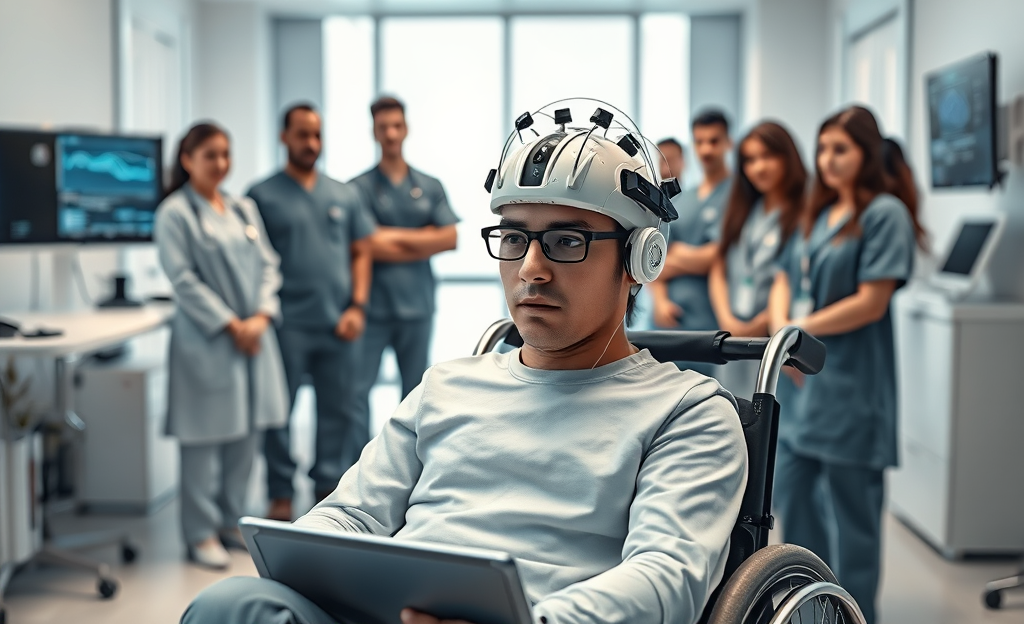
Brain-Computer Interface technology has made remarkable strides in recent years, particularly in enhancing communication for individuals with paralysis.
This article explores the groundbreaking development of a BCI that decodes a person’s internal monologue, offering a glimpse into their thoughts and desires.
With an impressive decoding accuracy of 74%, this innovative device not only captures internal speech but also utilizes brain activity patterns akin to attempted speech.
Additionally, the integration of a password protection feature marks a significant step in user privacy and security.
As we delve deeper into these advancements, we will discuss the potential impact on restoring natural communication for those affected by paralysis.
Decoding Inner Speech with Next-Generation Brain-Computer Interfaces
Decoding inner speech with next-generation brain-computer interfaces represents a groundbreaking advance in communication technology.
This technique isolates the distinct neural signatures associated with an individual’s thoughts, enabling the translation of internal dialogue into spoken language with remarkable accuracy.
For individuals with severe motor impairments, this innovation offers a vital lifeline, facilitating a new realm of expression and interaction that was once thought unattainable.
Artificial Intelligence Accuracy in Reading Silent Phrases
The 74% accuracy achieved by the new brain-computer interface (BCI) marks a significant milestone in decoding internally spoken phrases.
This advanced technology taps into the brain’s silent whispers, converting them into communicable speech.
By effectively recognizing brain activity patterns akin to vocal intentions, the BCI allows users to “speak” without uttering a word.
Imagine the ability to clearly express a thought like “Raise the window” simply through mental articulation.
Such capability sets a new benchmark for BCIs, facilitating communication for those with paralysis and potentially transforming how we understand the nexus between thought and expression.
For further insight, you can refer to The Scientist on Brain-Computer Interfaces, which delves deeper into this groundbreaking development.
Neurophysiological Parallels Between Internal and Attempted Speech
The intriguing overlap between neurological processes governing internal and attempted speech underscores fundamental principles in neurophysiology.
As highlighted by research, both types of speech activate identical cortical regions, albeit with differing intensities.
While internal speech manifests with reduced signals, its pattern closely parallels that of attempted speech, a fact crucial in determining design pathways for brain–computer interfaces.
This neurophysiological mirroring is pivotal, as it enables accurate representation and decoding of internal monologues, facilitating the development of sophisticated communication aids.
To elucidate the differences, consider the following comparison table:
Internal Speech Attempted Speech lower amplitude higher amplitude slower temporal dynamics faster temporal dynamics underdeveloped articulatory planning complete articulatory planning less neural engagement stronger neural activation
Thought-Based Password for Privacy and Security
The revolutionary brain-computer interface (BCI) activates decoding only after the user thinks the phrase chitty chitty bang bang, emphasizing security safeguards.
This security trigger ensures that thought translation technology protects user privacy effectively.
Precisely decoding internal monologues to speech solely by authenticating thought passwords adds a layer of robust security.
The ability to manage communication privacy for individuals with paralysis reveals potential beyond traditional devices, creating new standards.
- Enhances user control over personal thoughts.
- Strengthens data privacy with a mental password.
- Supports seamless communication with privacy intact.
Toward Restoring Natural Communication
As we look to the future, the development of brain-computer interfaces (BCIs) holds the promising future of restoring fluid and natural communication for those who, due to paralysis, find themselves unable to speak.
Emerging technologies, like those described on the NIH’s research on brain-computer interfaces, promise enhanced connection and interaction by translating thought into spoken word with unprecedented accuracy.
With this groundbreaking innovation, we inch closer to a world where individuals can reclaim their voices, engaging once more in the spontaneous dialogue that enriches human interaction.
These efforts, highlighted by academic work and breakthroughs in institutions, mark a transformative shift in medical science, rejecting isolation and embracing community, connection, and communication.
The pathway to this reality is irresistible, tapping into the core of human dignity and potential for all.
Brain-Computer Interfaces represent a promising frontier in assistive technology, paving the way for individuals with paralysis to reclaim their voices.
The future holds immense potential for enhancing communication and improving quality of life through these revolutionary innovations.



0 Comments