Methane Emissions Surge Threatening Climate Goals
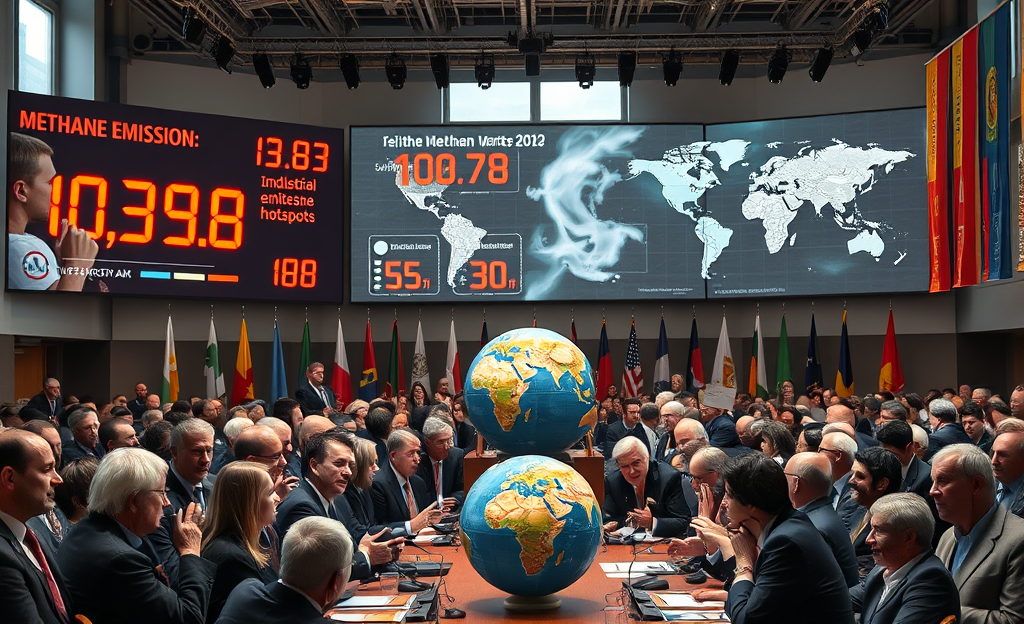
Methane Emissions are a critical factor in the ongoing climate crisis, accelerating global warming with alarming speed.
This article will explore the rising concentrations of methane in the atmosphere, the urgent need for significant emission reductions, and the potential impact of these reductions on global temperatures.
We will analyze the challenges faced by major emitters and the resistance to proposed regulations, particularly in the European Union.
Additionally, we will discuss the technologies available for detecting and addressing methane leaks, emphasizing the importance of swift, coordinated global action to combat climate change effectively.
The Alarming Rise of Methane Emissions
Methane is climbing faster than ever recorded, threatening our global climate goals despite the fervent promises made by 159 countries to slash emissions by 30% come 2030. Recent data from the NOAA underscores a startling truth: atmospheric methane has surged dramatically over the past five years, outpacing any period since meticulous recordings began.
This potent greenhouse gas, although short-lived compared to carbon dioxide, significantly exacerbates global warming.
If methane emissions see a substantial reduction, global warming mitigation could lead to a deceleration of up to 0.4 degrees Celsius by 2050. Yet, major emitters continue unabated, venting and flaring, undermining the concerted efforts required for addressing climate change.
With existing technologies ready to detect and fix leaks, the world stands at a crossroads.
The narrative that follows will delve into the intrinsic properties of methane, explore the tangible climate benefits of reducing its emissions, and outline the comprehensive solutions available to combat this growing threat.
Methane’s Climate Physics
Methane plays a crucial role in climate dynamics due to its significant warming potential despite its relatively short atmospheric lifespan.
Unlike carbon dioxide, which remains in the atmosphere for centuries, methane breaks down within a decade due to its shorter residence time.
This characteristic offers a unique opportunity for climate intervention.
According to the Methane mitigation can quickly cool the planet, unlike slow CO2 reductions
By implementing improvements in detecting and fixing leaks, humanity can achieve immediate impacts on global temperature trajectories, averting potential damaging climate feedbacks and embracing a proactive approach to decarbonization.
The Payoff of Rapid Methane Cuts
Aggressive methane mitigation offers a powerful avenue to curb climate change within the next few decades.
Methane, while short-lived compared to carbon dioxide, wields a much greater potential in heating the planet.
Current projections suggest that reducing methane emissions could slow global warming by up to 0.4 °C (0.7 °F) by 2050. In a world where the pressing need for impactful climate actions grows every day, the scenario of a 30% cut in methane emissions provides a significant temperature adjustment compared to business as usual.
| Scenario | Temperature Change by 2050 |
|---|---|
| Business as Usual | +1.1 °C |
| 30% Methane Cut | +0.7 °C |
Such reductions can shield us from severe climatic extremes and ensure a sustainable future.
Swift, coordinated global action elevates these efforts by leveraging available technologies and measures to actively detect and repair leaks.
Implementing these strategies decisively unlocks greenhouse gas mitigation opportunities and positions methane reduction as among the top climate actions with measurable near-term benefits.
Obstacles to Cutting Methane—Global and EU Perspectives
The challenge of reducing methane emissions remains significant, largely due to the ongoing practices of venting and flaring by prominent oil-and-gas producers.
Despite global commitments, massive flaring continues in key oil basins, highlighting a disconnect between pledges and actions.
This results in methane emission levels that defy international promises to cut emissions by 30% by 2030. The European Union’s proposed legislation, which seeks stringent cuts, faces substantial pushback from political and industrial stakeholders who argue that such measures could jeopardize economic stability.
According to the European Commission, the regulations aim to mitigate significant environmental impact, yet industry leaders express concerns over the financial implications of compliance.
These challenges are compounded by broader geopolitical issues, where varying national agendas render coordinated global efforts complex.
Thus, achieving significant reductions necessitates not only technological solutions but also overcoming entrenched political resistance and industrial inertia.
Global Coordination and Leak-Detection Technology
Joint international action is essential to scaling up leak-detection and repair systems, enhancing our ability to combat global warming.
The International Methane Emissions Observatory plays a pivotal role in this effort, offering unprecedented transparency and data to authorities worldwide.
Advances in methane sensors, drones, and satellite technology provide the tools needed to identify and address methane leaks efficiently.
By utilizing these technologies, we can quickly address high-emission sources and mitigate their impact on climate change.
- Satellite imaging pinpoints super-emitters within hours.
- Drone surveillance provides real-time monitoring of remote areas.
- Advanced sensors detect methane leaks with remarkable accuracy.
International collaboration is vital in sharing these technologies across borders.
By fostering global cooperation, nations can adopt consistent standards and practices.
The swift deployment of existing technologies will significantly reduce methane emissions, contributing to a meaningful slowdown in global warming.
Methane Emissions pose an urgent challenge that requires immediate, concerted efforts worldwide.
By recognizing the importance of reducing these emissions, we can take significant strides toward mitigating climate change and protecting our planet for future generations.



0 Comments