Tariff Increase Hits Lumber Industry Hard
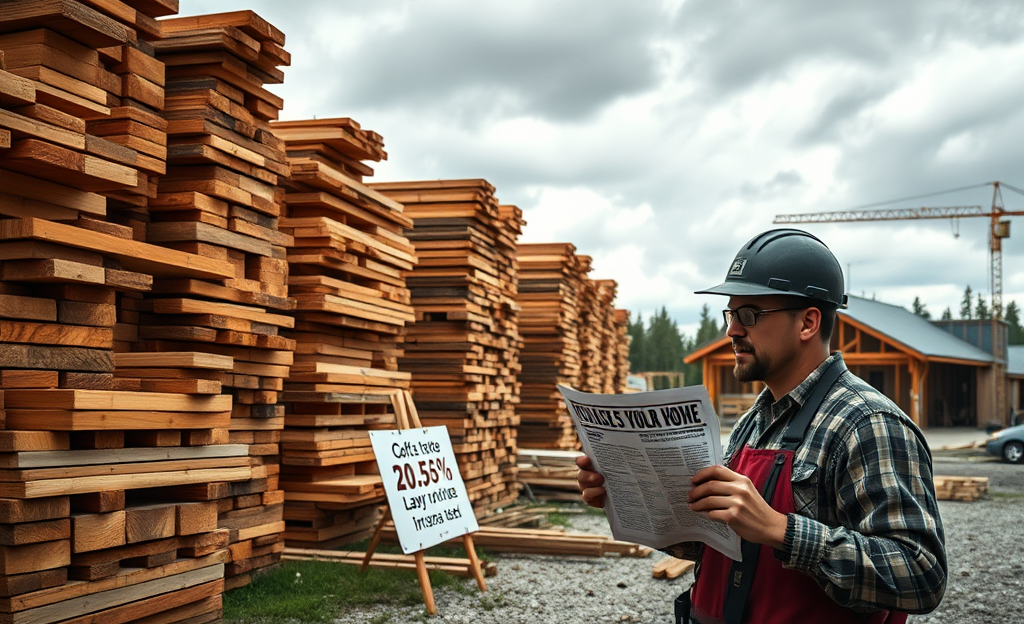
The Lumber Industry is facing significant challenges as the U.S.
Department of Commerce has increased anti-dumping tariffs on Canadian softwood lumber to 20.56%.
This decision has drawn sharp criticism from lumber organizations in British Columbia, who view the tariffs as an unjustified and punitive measure that threatens jobs within the sector.
With the potential to raise housing costs for Americans by thousands of dollars, the implications of these tariffs extend beyond the Canadian borders.
This article will explore the repercussions of the tariff increase, job losses in the forestry sector, and the ongoing investigations that could further strain the lumber supply chain.
U.S. Anti-Dumping Tariff Rises to 20.56 Percent
The U.S.
Department of Commerce has officially announced an increase in the anti-dumping tariff on Canadian softwood lumber to 20.56%, nearly tripling the previous rate of 7.66%.
This hike reflects a significant policy shift that directly impacts both Canadian exporters and U.S. consumers.
An anti-dumping tariff is a levy imposed on foreign imports believed to be priced below fair market value.
Such measures are typically enacted to protect domestic industries from unfair competition, ensuring that local businesses can compete on a level playing field.
This tariff adjustment is not without controversy.
British Columbia’s lumber organizations have heavily criticized the move, describing it as unjustified and punitive.
The new rate is anticipated to increase the cost of construction and home purchases in the U.S., potentially adding $15,000 to $20,000 to projects.
As elucidated in official announcements, including those available from the Commerce Department, the decision stems from a lengthy trade dispute that underscores the complex interplay of international trade regulations and domestic economic interests.
British Columbia Industry Calls the Move Unjustified and Punitive
The recent hike in U.S. tariffs on Canadian softwood lumber has sent waves of dismay across British Columbia’s forestry sector, which is already grappling with the brunt of economic hardships.
The B.C.
Lumber Trade Council has voiced its frustration, labeling the move as extremely unjustified and deeply punitive.
These punitive measures strike the industry painfully like a “gut punch,” impacting an already fragile economic structure replete with layoffs and dwindling job opportunities.
With more than 40,000 job losses since the 1990s, the sector now faces further economic destabilization due to these tariffs, pegged by experts to potentially add a considerable financial burden to American homebuyers.
Adding to the devastation, industry leaders argue that these tariffs serve as protectionist barriers rather than a fair trade measure, harming not only Canadian workers but also U.S. consumers.
Costs rising by an estimated $15,000 to $20,000 for home construction or purchases exemplify the far-reaching consequences of the U.S. decision.
Drawing concerns from various stakeholders, including the trade minister, who has termed the decisions as incredibly unjustified, these increased tariffs exacerbate an already challenging situation for B.C. families and communities dependent on the lumber trade for their livelihoods.
This predicament reflects through several responses captured by local media, portraying the tariffs as not only a threat to economic stability but also an obstacle to constructive international trade relations, as echoed by sources, including the CBC’s coverage.
Higher Lumber Prices for American Homebuyers and Builders
The doubling of tariffs on Canadian lumber is weighing heavily on U.S. homebuilders and buyers.
This measure is anticipated to add between $15,000 to $20,000 to the cost of constructing or purchasing a home in the United States.
According to the US Homebuilding Costs Could Spike Report, the increased tariffs compound the challenges already faced by an industry crucial to maintaining affordable housing.
- Higher material costs push up mortgage sizes.
- Increase in home prices due to added lumber expenses.
- Fewer buyers can afford homes, slowing market growth.
Relevant text: These tariff-induced cost increases have profound implications for the average American homebuyer and the building industry.
As prices rise, both mortgage sizes and the barriers to first-time homeownership climb, making it less accessible for many.
This situation compounds broader affordability issues within the housing market, affecting potential buyers’ ability to secure and finance a home.
For builders, these added costs mean reevaluating supply sources, potentially passing higher prices onto consumers, and navigating an increasingly challenging economic landscape.
Total Tariff Load and Decades of Job Loss in B.C. Forestry
| Tariff Type | Rate |
|---|---|
| Existing Tariff Load | 15.54% |
| New Anti-Dumping Duty | 20.56% |
The cumulative impact of tariffs on Canadian softwood lumber could see rates exceed 30%, affecting both U.S. construction costs and over 40,000 jobs lost in British Columbia’s forestry sector since the 1990s.
The new duty of 20.56% layers onto existing tariffs, pushing prices higher for materials crucial to American homebuilders.
Consequently, the significant spike in lumber costs reflects the combined rates, as seen with these adjustments.
Furthermore, these imposed duties underscore the relentless erosion of B.C.’s forestry workforce, historically crucial to its economy.
Transitioning through decades of industry transformation, the province’s sector remains in a precarious position, needing strategic navigation amid these fiscal challenges and U.S. trade policies.
U.S. Federal Investigation Adds Further Uncertainty
The ongoing U.S. federal investigation into Canadian lumber imports presents an additional threat to British Columbia’s forestry sector, already grappling with significant tariffs.
This probe could lead to stricter trade measures, exacerbating the challenges faced by an industry that has suffered the loss of over 40,000 jobs since the 1990s. B.C.’s lumber producers have been a critical supplier of wood to the U.S. market, where Canadian timber plays a vital role in meeting demand.
However, as these investigations continue, the feasibility of maintaining this role diminishes.
Disruptions in this supply chain could have serious implications for U.S. housing costs, as Canadian wood is essential for construction.
Without B.C.’s contributions, which are increasingly at risk, the availability of affordable housing in the American market might decline significantly.
Industry experts warn that diminishing supplies from Canada will likely lead to increased construction costs—a scenario that some predict could add $15,000 to $20,000 to the price of new homes.
This additional threat places further strain on an already volatile sector, underscoring the importance of resolving trade disputes to secure a stable and mutually beneficial cross-border lumber trade.
In conclusion, the increased tariffs on Canadian softwood lumber pose serious threats to both the Lumber Industry in British Columbia and the housing market in the United States.
As the situation develops, stakeholders must navigate the challenges posed by these tariffs and their broader economic impact.


0 Comments