Unions Urge Action to Save Refinery Jobs
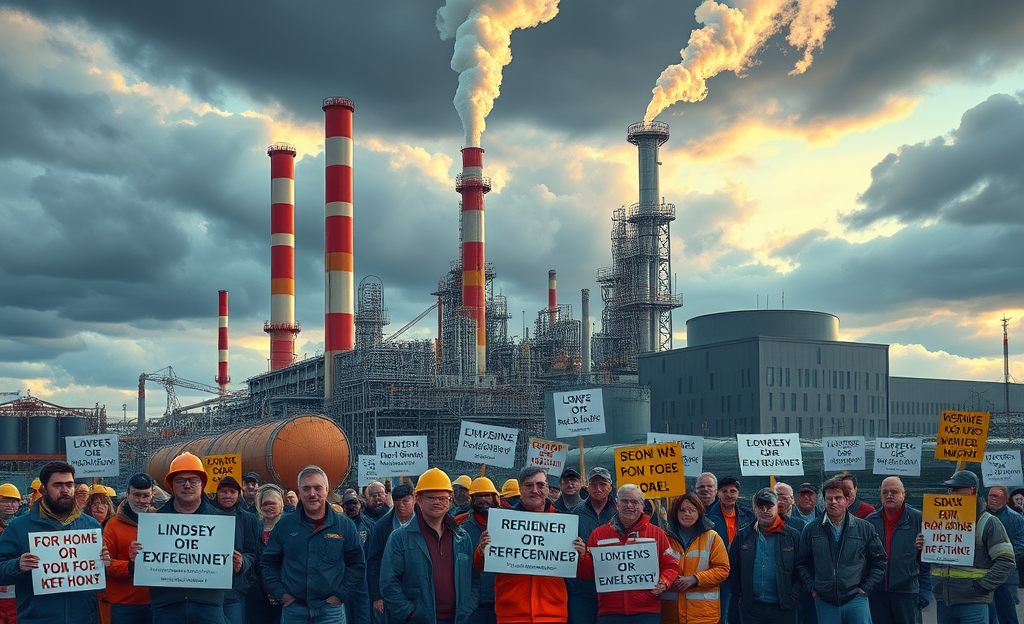
Refinery Jobs are at the forefront of urgent discussions as unions and political parties call on the UK government to intervene in the impending closure of the Lindsey Oil Refinery in Immingham.
With 420 jobs at stake following the owner’s administration, the refinery’s role in the UK’s fuel supply and local economy is being critically examined.
This article will delve into the implications of the shutdown, the ongoing criticism of government action, and the potential solutions being proposed by various stakeholders to ensure the future of this vital facility.
Urgent Calls to Safeguard Lindsey Oil Refinery
The ongoing crisis surrounding the Lindsey Oil Refinery closure has reached a tipping point as unions and political parties intensify calls for UK government intervention.
The refinery, a linchpin in the nation’s fuel supply chain, faces closure after its owner entered administration, threatening the loss of 420 jobs.
This looming shutdown is not only a blow to the regional economy but also poses a significant threat to the UK’s energy infrastructure.
Stakeholders have highlighted the refinery’s vital role in ensuring regional fuel security, arguing that failure to act could put hundreds of livelihoods in immediate jeopardy.
The urgency in this situation cannot be overstated, as government inaction risks exacerbating economic instability in the entire area.
Despite the Energy Minister’s assertion that selling the business as a whole is impractical, unions emphasize the pressing need for long-term operational support and joint venture exploration to secure the site’s future.
With mounting pressure, the UK government is urged to consider all available options to prevent this economic and social crisis from deepening further.
You can find more about the protests at the Energy Voice site.
Economic and Employment Implications of Potential Closure
The potential closure of the Lindsey Oil Refinery in Immingham is set to have a significant economic impact on the region.
As this refinery, one of only five major refineries in the UK, shuts down, the risk to approximately 420 jobs stands as a stark reminder of its role in local employment.
The refinery doesn’t just impact those directly employed; it sustains specialized supply-chain businesses, services local construction industry, and contributes to retail and hospitality sectors.
Additionally, the processing capacity of about 105,700 barrels per day illustrates its economic importance to the UK’s fuel supply chain.
Given the lack of a buyer, as highlighted by Grimsby Telegraph, the government faces scrutiny over its inability to secure the refinery’s future.
As such, long-term operational support and intervention remain critical for protecting not just immediate employment, but the broader regional economic stability.
Steps towards collaboration in joint venture options are emphasized by unions to safeguard the region from economic downturns.
Government Response and Criticism
The UK government’s attempts to secure a buyer for the Lindsey Oil Refinery have faced significant challenges and public scrutiny.
Despite extensive efforts, no credible offers emerged to save the refinery from closure, as reported by BBC News.
The Energy Minister expressed disappointment yet insisted that selling the business as a whole was not feasible.
This statement came after criticisms escalated, especially from trade unions and political groups, who framed the efforts as insufficient and delayed.
They called for the government to take more aggressive actions to preserve the site and local employment.
A stark contrast exists between governmental actions and the public sentiment:
| Government Action | Criticism |
|---|---|
| Explored full-sale option | Labeled ‘too slow’ by unions |
| Declared fuel supply safe | Ignored regional economic impact |
Amid the turmoil, there’s hope for future employment solutions at the site.
The Energy Minister mentioned ongoing explorations into joint ventures, as highlighted by Energy News.
However, the criticism of inaction continues to reverberate, challenging the government to respond with viable economic support.
Proposed Joint Ventures and Long-Term Support
Unions and political parties are increasingly advocating for joint ventures as a viable solution to save the Lindsey Oil Refinery in Immingham.
Emphasizing the critical importance, they are urging the UK government to facilitate and support potential partnerships with industry players to ensure the refinery’s ongoing operations.
Unions, keen to prevent the loss of 420 jobs, stress that long-term governmental involvement is crucial not only for the workers but also for preserving regional economic stability.
Possible joint venture solutions include:
- Government equity stake in partnerships offered to private investors
- Exploring collaborative ownership with energy firms such as Glencore or Trafigura
- Enabling flexible, conditional funding support for operational continuity
Relevant support from the government would ensure the refinery’s capacity to meet the UK’s fuel supply needs.
BBC and Unite highlight the necessity for strategic intervention.
Unabated pressure on ministers underscores the urgency of decisive action to safeguard the site’s future.
Refinery Jobs remain a priority as stakeholders push for government action.
The future of the Lindsey Oil Refinery is uncertain, but continued advocacy for intervention highlights the need for sustainable solutions to support both employment and the regional economy.



0 Comments