Historic Election Brings First Female President
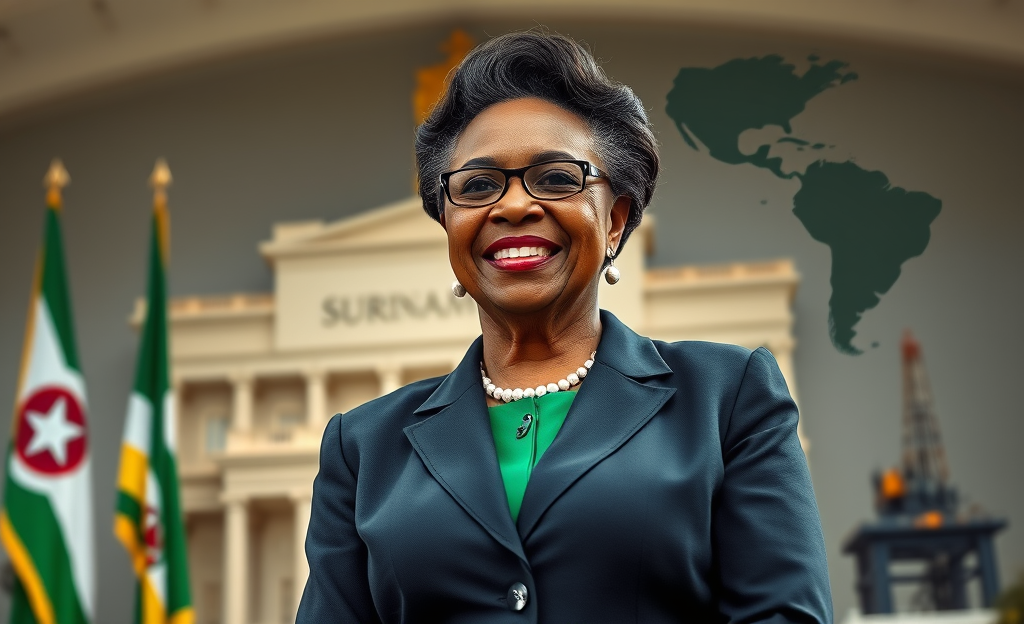
Suriname has made history by electing its first female president, marking a significant political shift in the nation.
As the new leader prepares to assume office on July 16, 2025, she faces a myriad of challenges, including an economic crisis fueled by a legacy of corruption and public dissatisfaction.
With plans for offshore oil production on the horizon, the administration aims to stabilize the country’s finances and address substantial debt obligations.
This article delves into the implications of this landmark election and the strategies the new government intends to employ to navigate the turbulent waters ahead.
Historic Election of Suriname’s First Female President
Suriname marked a groundbreaking moment in history with the election of its first female president following a coalition deal in the National Assembly.
Running unopposed, Dr.
Jennifer Geerlings-Simons, a distinguished 71-year-old physician and seasoned lawmaker, brought her unique blend of medical expertise and legislative experience to the forefront.
As July 6, 2025 witnessed her election, the nation eagerly anticipates her inauguration on July 16, 2025.
Born in Suriname, she has witnessed firsthand the socio-economic challenges and opportunities her country faces.
Steeped in a career that bridges health and governance, Dr.
Simons aims to unite a divided assembly and address legacy issues left by previous administrations.
Her remarkable journey includes deep-rooted commitment and unyielding dedication.
Here are three standout facts:
- Suriname’s first female president.
- Over four decades of public service.
- Leader amidst an economic crisis.
Political and Economic Background Challenges
Suriname has been grappling with an economic crisis fueled by corruption and austerity measures enacted during the previous administration’s tenure.
This period of governance was marred by rampant corruption, which significantly damaged public trust and stained governmental institutions.
Austerity measures, intended to stabilize the floundering economy, placed additional pressure on the already struggling population, leading to significant public discontent.
Protests became a common occurrence, as citizens rallied against decisions that exacerbated poverty and inequality.
Despite being poised for economic growth through potential oil production, Suriname’s immediate concerns revolve around stabilizing its economy and restructuring significant debt obligations.
As one of the poorest nations in South America, Suriname faces substantial socio-economic challenges.
The country is wrestling with pressing economic decisions amidst debilitating inflation and GDP contraction.
Efforts to secure funding and strategic alliances remain crucial, especially in light of the anticipated oil revenues.
The table below highlights the economic contraction and inflationary pressures facing Suriname:
| Indicator | 2023 | 2024 |
|---|---|---|
| GDP Growth | -2.3% | -1.1% |
| Inflation | 40% | 35% |
Prospects of Offshore Oil Production
Suriname is positioning itself for a major economic turning point with the slated commencement of offshore oil production in 2028. This venture is expected to catapult the nation’s economy significantly, transitioning it from one of the poorest countries in South America to a more robust economic player.
Companies like TotalEnergies have committed vast investments through projects such as the GranMorgu, which highlights the strategic value these developments hold.
Offshore block 58 will be a catalyst for economic expansion, potentially increasing GDP growth by 55% annually by transforming natural resources into financial gains, creating employment, and improving public services.
This policy shift is reflective of Suriname’s growing focus on enhancing fiscal policies to support sustainable growth, partially by strengthening relations with global partners like China.
The government’s initiative to distribute oil revenues among its population aims to uplift living standards across Suriname, marking a significant policy direction.
Financial Stabilization Strategies and Debt Management
The new administration in Suriname, led by its first female president, is strategizing to stabilize the nation’s financial landscape amidst the daunting approximately $400 million in annual debt obligations.
The country’s economic strategy involves a comprehensive reform to enhance tax revenue collection—addressing loopholes and inefficiencies that have long plagued the system.
Streamlining government processes and leveraging technological advancements in tax administration are crucial steps being considered.
This approach ensures that the burden does not disproportionately fall on the most vulnerable populations.
Moreover, international partnerships play a pivotal role in Suriname’s strategy to revitalize its economy.
The country joined the Belt and Road Initiative back in 2019 and maintains a significant link with China (Belt and Road Initiative, 2019).
To bolster its economic foundation, Suriname is also nurturing relationships with key players such as the International Monetary Fund (IMF) and Caribbean Development Bank.
These partnerships aim at securing technical support and funding for sustainable development projects.
Through these collaborative efforts, the administration seeks to lay a robust economic foundation for the future of Suriname, fostering growth and stability for its citizens.
Demographic Overview and Economic Policy Focus
Suriname’s population of 646,000 significantly influences its fiscal and economic strategies, focusing on tax revenue improvement and nurturing international relations.
The government acknowledges that increasing tax revenue is critical to stabilizing the economy, especially given the nation’s heavy debt obligations.
To achieve this, there is an emphasis on refining taxation systems and administration, as noted in the Suriname IDB Group Country Strategy.
Besides domestic efforts, Suriname aims to enhance its foreign relations, particularly by deepening ties with China through its ongoing participation in the Belt and Road Initiative.
This partnership opens potential avenues for economic support and infrastructure development, which are crucial for a nation preparing for offshore oil production.
As such, both revenue growth and foreign diplomatic strategies remain pivotal to Suriname’s vision for economic revitalization and sustainable development.
In conclusion, Suriname’s first female president holds the potential to reshape the nation’s future, tackling economic challenges while fostering international relationships.
Her leadership will be crucial in steering the country toward recovery and stability.



0 Comments