Wall Street Thrives as Corporate Borrowing Surges
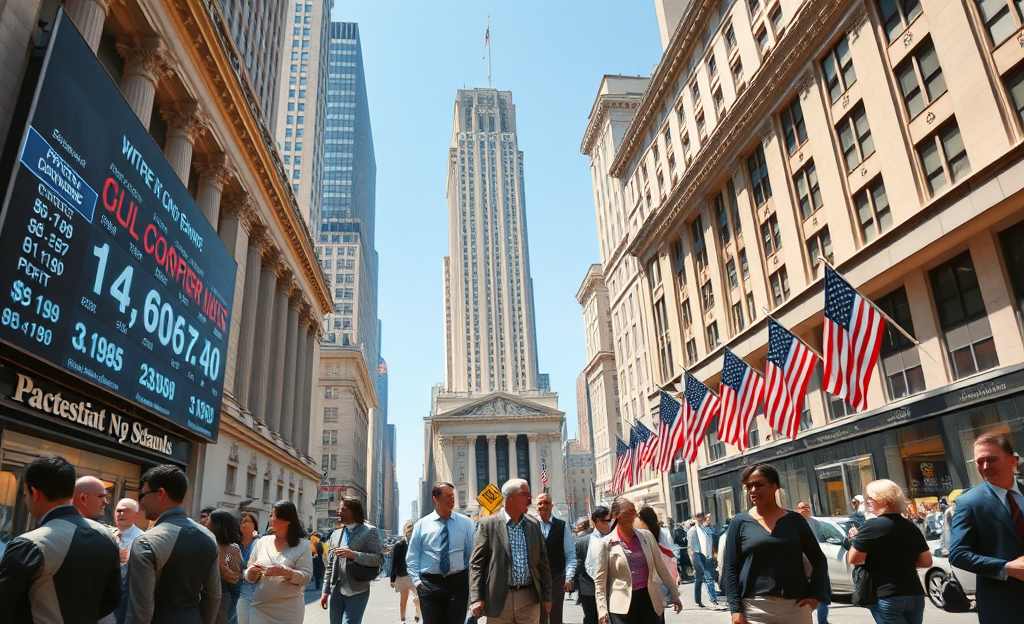
Corporate borrowing is on the rise, reflecting a vibrant atmosphere on Wall Street that has been invigorated by a surge in stock and bond trading.
This article will delve into the impressive financial performance of the six largest U.S. banks, whose reported profits for the second quarter have surpassed expectations.
We will explore how postponed tariffs have positively impacted market sentiment, the notable growth in investment banking revenues, and the broader implications for consumer and corporate borrowing.
Additionally, we will examine the favorable banking environment and the resurgence of previously struggling institutions, painting a comprehensive picture of the current economic landscape.
Wall Street’s Resurgence Amid Market Volatility
Wall Street’s recent upswing, marked by a $39 billion profit reported by the six largest U.S. banks, is largely attributed to a surge in stock and bond trading, and an increase in corporate acquisitions and borrowing.
The turbulence, initially caused by tariffs, began to subside following the tariff postponement, leading to improved investor sentiment.
Consequently, the financial landscape shifted, enabling robust economic activities that propelled market performance.
- Heightened trading volumes
- Increased corporate borrowing
- Improved cross-border M&A activity
As markets became less volatile, banks recorded significantly higher revenues.
The largest U.S. bank alone achieved a quarterly profit of approximately $15 billion, showcasing the effectiveness of strategic moves in investment banking.
Loan growth witnessed a 5% increase, reflecting strong consumer and corporate borrowing.
These developments underscore a positive economic sentiment with diminishing recession fears.
A favorable banking environment, characterized by low-risk assets, has freed up capital for further growth and investments, laying a solid foundation for recovery for industry laggards as well.
The culmination of these factors solidifies an optimistic outlook for the banking sector and promises sustained growth for the broader U.S. economy.
Record Q2 Profits Among the Six Largest U.S. Banks
The six largest U.S. banks reported a collective $39 billion profit in the second quarter of 2024, showcasing a remarkable 20%+ year-over-year jump.
This impressive outcome was significantly aided by a resurgence in stock and bond trading activity, alongside increased corporate acquisitions and borrowing.
Notably, JPMorgan particularly excelled with an extraordinary 25.4% annual increase, demonstrating the financial sector’s robustness at this juncture.
The positive trends stemmed largely from postponed punitive tariffs, which optimized trading conditions and revitalized investor sentiment, thereby catalyzing corporate transactions and boosting profitability.
Consumer and corporate borrowing also posted strong figures, reflecting broader economic stability and diminished recession fears.
Furthermore, low-risk assets have freed capital for future growth and investments.
| Bank | Profit (Q2 2024) | Year-over-Year Increase |
|---|---|---|
| JPMorgan | $14.22 billion | +25.4% |
| Bank of America | $8 billion | +15% |
| Goldman Sachs | $3.04 billion | +150% |
| Wells Fargo | $8 billion | +10% |
As a result, the banking sector experienced exceptionally favorable conditions in this period, bolstered further by sector-wide recoveries.
Industry laggards have shown notable improvements, thus contributing to a widespread positive sentiment enveloping the market.
The unexpected impact of these factors currently renders the U.S. financial system a hub of unprecedented opportunities, enabling banks to strengthen their outlooks while also providing a solid foundation for sustained future growth.
Such an optimal environment not only underscores the sector’s vitality but also propels the broader U.S. economy forward, supporting dynamic investment and lending opportunities.
Tariff Delays Reignite Investor Confidence
The postponement of punitive tariffs instilled a significant shift in investor confidence by alleviating fears that had been building due to anticipated economic turbulence.
As these tariffs were deferred, markets observed a resurgence in trading volumes, primarily in stocks and bonds.
According to the M and A Market Analysis, this deferral initiated a strategic resurgence in corporate transactions, invigorating the equities market.
Investors, renewing their focus on acquisitions and investments, pushed stock indices to record new highs.
This transition reflected a broader sentiment shift, where risk-on trading dynamics prevailed, further propelling market activity.
Consequently, a broader economic optimism emerged, as outlined by the Q2 2025 Market Commentary.
Addressing key factors:
- Postponement of punitive tariffs bolstered market confidence
- Risk-on trading returned as tariff deadlines shifted
- Corporate transaction activity significantly increased
The reliable easing of these barriers designed the path for notable financial growth.
Industry observers noted subsequent calmness in consumer confidence, sharply contrasting the turbulence from earlier quarters.
As engagements across sectors intensified, S&P Global Analysis highlighted how this newfound stability freed up resources for innovation and growth opportunities.
Investors embraced this invigorated environment, directing capital into emerging ventures and traditionally strong assets alike, thus fostering a robust economic climate.
Loan Growth and Investment-Banking Strength Fuel Sector Momentum
The largest U.S. bank demonstrated remarkable performance in the second quarter, leveraging unexpectedly strong investment-banking revenue coupled with rising loan balances to achieve a substantial $15 billion profit.
This achievement underscores the bank’s astute handling of emerging market conditions, translating a favorable economic environment into robust financial gains.
Notably, improved investor sentiment following the deferment of earlier tariffs contributed to a resurgence in corporate transactions, amplifying the bank’s advisory reach and earnings.
As these economic clouds dispersed, the consistent demand across its retail and corporate segments further fueled this financial momentum.
Strong signals of consumer and corporate confidence are evident in the bank’s ability to capture a 5% loan growth, highlighting the underlying resilience in both markets.
This trend indicates a durable orientation towards financing needs across varied sectors, suggesting a forward-looking optimism regarding customer creditworthiness and economic vitality.
With robust investment-banking fees as a driving force, the bank navigated the quarter’s market dynamics while strategically positioning itself for sustained growth.
Against a backdrop of diminishing economic risks, the bank continues to channel resources into low-risk assets, thereby freeing up capital for growth and investment opportunities, setting the stage for continued sector momentum as the broader U.S. economy strengthens.
Economic Outlook Brightens as Risks Recede
Financial markets have seen a significant shift recently, characterized by diminished recession fears.
This optimistic outlook stems largely from stable consumer credit and the recovery of underperforming banks, contributing to a broader economic resurgence.
According to the American Bankers Association, consumer credit quality remains solid, which in turn supports sustained borrowing and spending, vital cogs in the economic machine.
Moreover, the banking sector is benefiting from a highly favorable banking environment as low-risk assets continue to free up capital necessary for growth and investments.
This bolstered liquidity translates to strong capital buffers, safeguarding financial institutions and boosting investor confidence.
Analysts point out that the rebound of previous industry laggards indicates this energy is poised to persist.
The strategic postponement of certain tariffs has also enhanced investor sentiment, renewing interest in corporate transactions.
Overall, the fusion of robust consumer credit, strategic fiscal measures, and the return of formerly stagnant banks generates a potent cocktail for projected economic stability, encouraging further investment in the sector and supporting sustained growth.
In conclusion, the optimistic outlook for Wall Street and the banking sector is driven by robust financial performance, improved investor sentiment, and solid consumer credit, indicating a strong recovery.
As corporate borrowing continues to rise, the U.S. economy appears well-positioned for sustained growth.



0 Comments