G20 Finance Ministers Emphasize Central Bank Independence
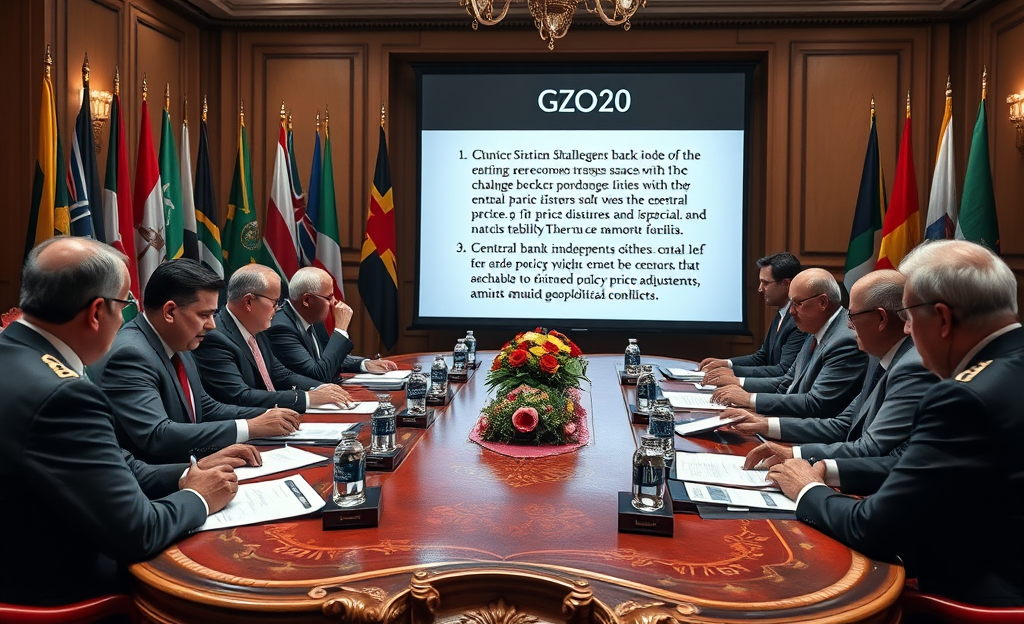
Central Bank independence has emerged as a crucial topic in discussions among G20 finance ministers, particularly following their recent meetings in South Africa.
This article will delve into their consensus on maintaining price stability amidst a backdrop of global economic challenges, including wars, trade disputes, and natural disasters.
As the G20 transitions to U.S. leadership in December, we will explore the implications of this shift on their focus and approach, as well as the ongoing uncertainties posed by tariffs and geopolitical conflicts in the international landscape.
Consensus Among G20 Finance Ministers on Central Bank Independence
In a noteworthy development from the recent G20 meetings held in South Africa, finance ministers from the world’s largest economies reached a unanimous decision emphasizing the central bank independence as the cornerstone of their agreement.
This landmark consensus, underpinned by the commitment to reinforce the autonomy of central financial institutions, is critically important for maintaining global financial stability.
The ministers’ joint statement underscores that monetary policy free from political pressure is crucial in fostering a stable economic environment by ensuring that decisions regarding interest rates and inflation control are founded on accurate data rather than political agendas.
This determination to safeguard independence reflects an urgent need to shield global economies from the ramifications of geopolitical conflicts and trade disputes, as acknowledged in the communique available via Finance Track Communique.
As the G20 prepares for the U.S. to assume the rotating presidency in December, this resolution marks a pivotal shift toward prioritizing resilience and policy integrity amidst increasing economic uncertainties worldwide.
Addressing Global Economic Challenges in the Joint Statement
The G20 finance ministers’ joint statement illuminates how the global economic landscape teems with intricate challenges, such as wars, trade disputes, and natural disasters.
These elements exacerbate the uncertainty surrounding the economy, compelling world leaders to adopt nuanced strategies.
By underscoring their commitment to price stability, they emphasize the importance of keeping inflation in check amidst these tumultuous conditions.
Moreover, to remain adaptive and responsive, these leaders highlight the necessity for data-driven policy adjustments; this approach allows them to pivot as required to mitigate impacts on economies worldwide.
As part of their consensus, the ministers reiterate the critical role of central banks as independent entities—crucial in their ability to tailor monetary policies specific to their nations’ needs.
This pledge, outlined in the joint statement, remains a cornerstone strategy in navigating through these multifaceted economic obstacles.
For detailed insights, visit the G20 Media Page for a deeper understanding of the statements and commitments made.
Upcoming Shift in G20 Institutional Approach and Presidency
As the G20 presidency transitions to the United States in December 2023, significant institutional changes are anticipated.
The administration plans to focus primarily on leader summits and financial meetings instead of maintaining multiple working groups across various sectors.
This shift reflects a streamlined approach to global economic governance.
There will be a notable withdrawal from sustainable finance working groups, emphasizing more concentrated dialogues among leaders.
This reorientation aims to improve the efficacy of decision-making processes, fostering a more cohesive strategy in addressing global economic challenges.
The following table illustrates the transformation in the G20’s institutional focus:
| Current Approach | Future Approach |
| Multiple working groups | Concentrated leader summits |
| Focus on sustainable finance | Emphasis on economic stability |
With the U.S. assuming the presidency, the G20 will adopt a strategic pivot, underscoring the importance of adaptability to data-driven policies and cultivating strong international partnerships.
Acknowledgment of Growing Global Economic Uncertainty
The G20 finance ministers have astutely recognized the heightened market volatility stemming from escalating global economic uncertainty, emphasizing the role of tariffs and geopolitical conflicts as critical exacerbating factors.
They understand the intricacies involved in managing these challenges, acknowledging that tariffs imposed by major economies, such as those mentioned in Reuters articles, have disrupted established trade patterns, adversely impacting global supply chains and fueling economic unpredictability.
Furthermore, the ongoing geopolitical tensions, exemplified by wars impacting US allies as detailed in relevant NHK World News articles, add layers of complexity to the global outlook, obliging finance leaders to navigate a landscape fraught with economic interventions and uncertainties.
The ministers highlighted that a coordinated effort within the G20 is paramount in crafting responses that can mitigate these issues, ensuring a path towards stability.
Central Bank independence remains vital as the G20 navigates a complex global economy.
The group’s commitment to adapting its strategies will be crucial in addressing the evolving challenges posed by geopolitical tensions and economic instability.



0 Comments