Black Unemployment Rises to 7.2 Amid Economic Pressures
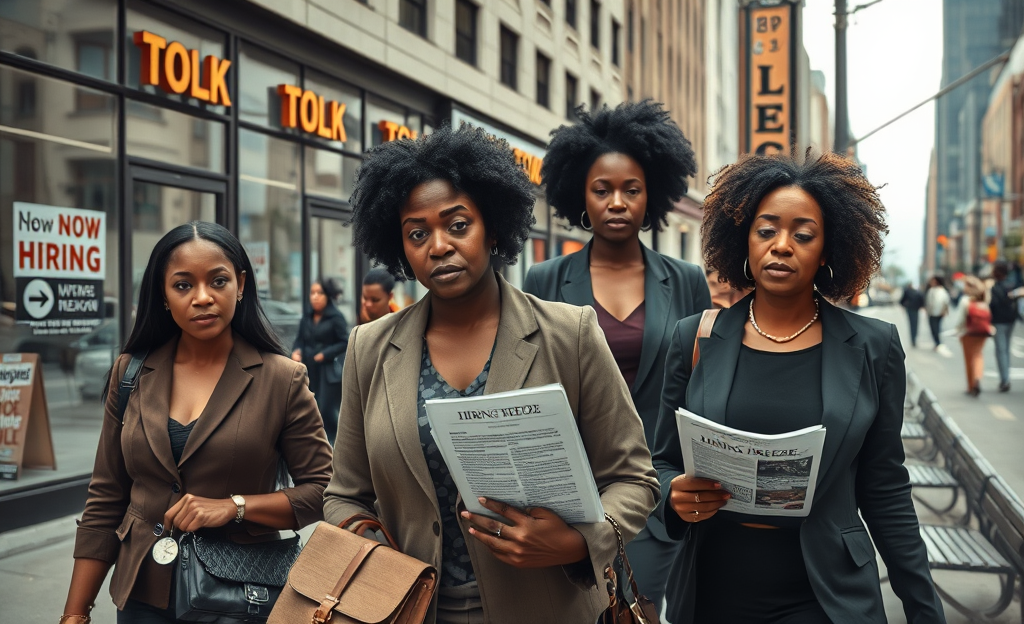
Black Unemployment has become a pressing issue, as recent reports reveal a rise to 7.2% among Black Americans in July, up from 6.3% the previous year.
This increase points to significant economic pressures affecting this community, particularly Black women, whose unemployment rate has also climbed.
The article will delve into the factors driving these trends, including state disparities, federal job cuts, and the potential impacts of changing trade policies and diversity initiatives.
By examining these elements, we aim to provide a comprehensive understanding of the challenges facing Black workers in today’s labor market.
Rising Unemployment Among Black Americans
Unemployment for Black Americans reached 7.2% in July, an increase from 6.3% a year prior, indicating rising financial stress within this community.
Key economic pressures influencing this sharp rise, especially during the May-to-June period, include:
- Higher borrowing costs hampering business investments
- Uncertainty in trade policies affecting employment stability
- Potential budget cuts targeting diversity, equity, and inclusion programs
- Job losses within the federal government, where Black workers represent a significant portion of the workforce
Amid these compounding factors, the significance of this month-to-month surge cannot be overstated.
Such a precipitous increase serves as a powerful warning sign of the broader economic challenges facing Black workers.
The data, as referenced in Essence’s Black Unemployment Report, signals an urgent need for targeted solutions to address the underlying economic pressures contributing to this trend.
The sudden escalation highlights vulnerabilities in the labor market that demand immediate attention to prevent further deterioration.
Impact on Black Women
Unemployment for Black women has seen distressing growth from 5.5% to 6.3%, reflecting an alarming trend in the labor market over the past year.
This increase resonates with recent data presented by organizations like The 19th News, highlighting the ongoing economic pressures Black women face in the United States workforce.
These figures reveal not just a numerical rise but symbolize deeper systemic challenges that persist within the employment landscape.
This troubling escalation in unemployment is significant within the broader dynamics of both gender and racial equity.
It signifies more than just an economic gap; it unveils a heightened vulnerability for Black women, who are often at the intersection of racial and gender disparities.
Changes in federal employment and potential cuts to diversity programs exacerbate this situation, underlining the urgent need to address these disparities through policy measures and equitable job opportunities for all employees regardless of race or gender.
Geographic Disparities in Black Unemployment
Black unemployment demonstrates notable geographic disparities across the United States, reflecting varying economic climates and opportunities.
For instance, according to employment data, Michigan experiences a significantly higher unemployment rate for Black workers compared to some other states.
| State | Black Unemployment Rate |
|---|---|
| Michigan | ~10% |
| South Dakota | Lower rate |
| Alabama | Lower rate |
This table illustrates the stark contrast in Black unemployment figures among states like Michigan, South Dakota, and Alabama.
While Michigan reports rates nearing 10%, South Dakota and Alabama show much lower values, highlighting the complex factors influencing employment, such as federal job availability and fluctuating trade policies.
Federal Job Cuts and Trade Policy Uncertainty
Federal job cuts have significant implications for Black Americans, who comprise a substantial 18% of the federal workforce.
As these positions vanish, Black communities face mounting unemployment pressures that extend beyond mere job losses.
The cascading effects are evident across states like South Dakota and Alabama, which report considerable differences in Black unemployment rates compared to places like Michigan, where figures are nearing 10%.
Job reductions within government sectors trigger pronounced economic vulnerabilities, exacerbating existing disparities.
Key stressors include:
- Agency downsizing that disproportionately affects Black workers reliant on government stability
- Potential cuts to diversity, equity, and inclusion programs impacting future hiring
- Uncertainties from changing trade policies, causing industry-wide ripple effects
Shifting trade policies augment this instability by creating uncertain economic conditions that further deter job security for Black Americans.
Retreat from Diversity, Equity, and Inclusion Programs
Reductions in diversity, equity, and inclusion programs are increasingly associated with the slowing of hiring opportunities for Black workers.
As societal and workplace commitment to these crucial initiatives wanes, the landscape for Black employment grows more challenging.
Potential hiring setbacks are a significant concern as companies dismantle DEI efforts.
An expert noted, “DEI pullbacks risk reversing progress,” underscoring the broader implications of such retrenchment.
Notably, the impact on Black federal employees has been profound, highlighting how federal job cuts have disproportionately affected Black communities.
Additionally, the diminishing number of roles directly tied to DEI efforts further stymies progress; these roles often served as pivotal avenues for increasing workforce representation for Black Americans.
As federal positions dwindle and trade policies remain uncertain, Black unemployment edges higher, threatening to unravel strides made toward equity and inclusivity in the workplace.
Signs of a Slowing Labor Market
The labor market demonstrated weakness in July with the addition of only 73,000 jobs, a stark shortfall from expected figures, according to the CNN coverage of the July job report.
This slowdown signals broader economic challenges, notably impacting Black Americans who are already experiencing heightened unemployment pressures.
The deceleration raises alarm for these communities, where shifts in federal employment—where Black workers form a significant portion—and the potential impact from modifying trade policies stir concern.
Moreover, impending cuts to diversity and inclusion initiatives could exacerbate hiring challenges, specifically for Black women facing rising unemployment rates.
As the job market cools, vulnerable groups feel the strain more acutely, reflecting the interconnected nature of employment trends and economic policy.
The compounded risks underscore the importance of addressing systemic disparities, ensuring these shifts don’t further disadvantage those already on the margins.
In conclusion, the rising Black unemployment rate underscores ongoing economic challenges.
As various factors contribute to this trend, it is crucial to address these issues to ensure a more equitable labor market for all.



0 Comments