Economic Concerns Rise Amid Tariff Increases and Inflation
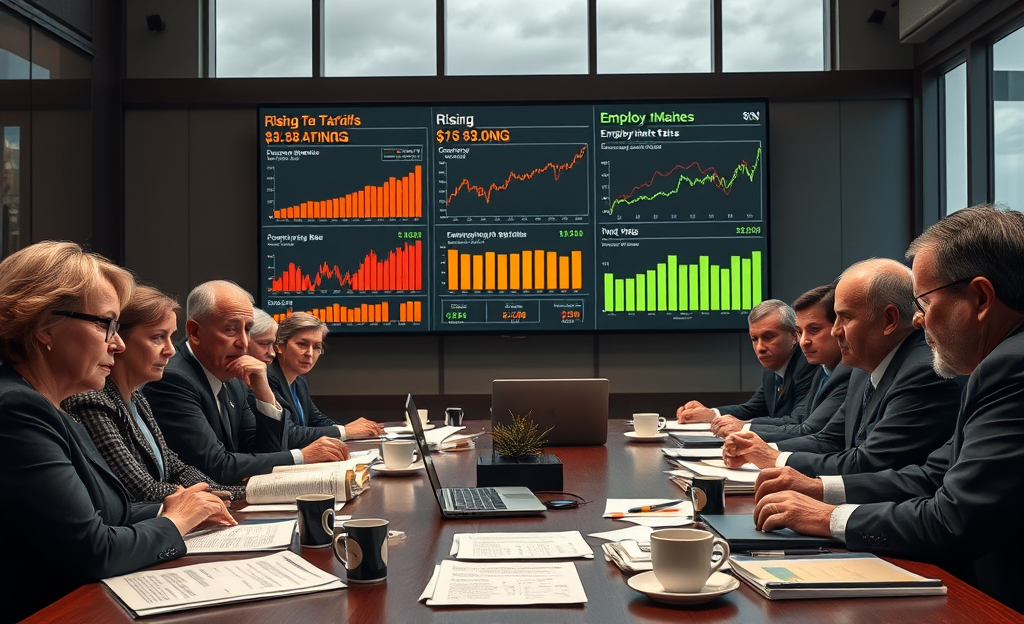
Economic concerns are intensifying as recent labor and inflation data reflect a troubling trajectory for the U.S. economy.
The administration’s insistence on a ‘no panics’ approach has raised eyebrows, particularly among Republicans worried about the steep increase in tariffs on Chinese goods.
With indicators pointing towards reduced hiring and increasing prices, experts warn of a potential stagflation scenario.
This article delves into the implications of escalating tariffs, the administration’s response to worsening economic indicators, and the growing skepticism surrounding the reliability of economic data, providing insights into the precarious state of the American economy.
Administration’s Reassurance Amid Worsening Economic Data
As the U.S. grapples with increasing negative labor and inflation metrics, the administration is firmly employing a ‘no panics’ mantra to quell fears surrounding mounting economic challenges.
This strategy aims to minimize concerns over worsening conditions as the implications of escalating tariffs and rising unemployment become more pronounced.
However, beneath this reassuring surface, deeper issues linger, prompting critical analysis of the administration’s ability to navigate the unfolding economic landscape.
Republican Concerns Over Tariff Increases on Chinese Products
Republicans are increasingly anxious as the scheduled tariff climb from 30% to 80% on Chinese imports approaches November 10.
Concerns rise over the potential political and economic repercussions.
The potential impact of these tariffs could lead to instability in key voting districts.
Additionally, the economic strain on American businesses reliant on Chinese goods exacerbates fears.
Furthermore, some districts may face:
- Higher costs for key districts
- Increased employment uncertainty
- Global trade tensions
.
As the tariff deadline looms, Republican lawmakers strive to navigate these challenges while addressing constituent concerns effectively.
Indicators and Implications of Possible Stagflation
Economic signs increasingly point towards potential stagflation in the U.S., defined by rising inflation and a noteworthy hiring slowdown.
A key signal is evident: companies are hiring at slower rates, with growth plummeting to 0.1%.
Concurrently, economic data from sources like Forbes underline persistent inflation trends.
In response, the administration continues to downplay these signals, claiming the economy remains stable.
Yet, the blend of persistent inflation and declining hiring trends paints a troubling picture of stagflation, leading experts to warn of potential recessionary consequences.
| Indicator | Status |
|---|---|
| Hiring Growth | Slowing to 0.1% |
| Inflation Rate | Rising Consistently |
Consequently, policy shifts, especially in tariffs, may exacerbate these economic strains.
Expert Warnings of Recession Risks from Tariffs and Unemployment
Economic experts warn that the combination of escalating tariffs and rising unemployment may push the U.S. economy towards a recession.
NPR’s analysis highlights concerns that a tariff shock this large could shave a full point off GDP, a sentiment echoed by many in the financial sector.
Transitioning into these economic challenges, one might realize the dire implications for consumer prices and investment.
Adding to the complexity, the economic breeze swirls as business expectations decline, signaling a potential recessionary spiral.
With these tariffs poised to rise significantly, experts stress the need for caution.
JP Morgan’s research suggests navigating this uncertain terrain requires a nuanced and informed strategy, urging both policymakers and businesses to brace for a potentially abrupt shift in economic conditions.
Impact of Bureau of Labor Statistics Head Dismissal on Data Credibility
The recent dismissal of the head of the Bureau of Labor Statistics has amplified concerns about the credibility of employment data.
Many view this action as a retaliatory move following the release of disappointing jobs numbers, potentially indicating a deeper issue within the data presentation framework.
NBC News reports that President Trump’s decision to remove the BLS chief has sparked debates across economic sectors.
As doubts intensify, stakeholders fear the reliability of upcoming economic statistics.
Amid the turmoil:
- Economists question data integrity
- Analysts express concern over tampered reports
Stakeholders are urged to keep a vigilant eye on evolving economic narratives, ensuring transparency within labor and financial data revelations.
Declining Business and Consumer Expectations Despite Administration’s Optimism
Recent surveys reveal a decline in confidence among both businesses and households, reflecting growing concerns about the future economic landscape.
For instance, the National Federation of Independent Business’ small business optimism index has been consistently falling, despite a slight recovery anticipated.
Similarly, consumer sentiment is at a near-record low, with layoff fears rising and hiring slowing, as indicated by CNN, where they reported that cracks are forming in America’s economic foundation.
These data points reflect a larger narrative: confidence is eroding, even as inflation pressures prevail.
However, the administration insists that the current situation remains under control, downplaying the severity of these trends.
Their optimistic stance continues despite analysts warning that an economic situation could deteriorate rapidly if current trends persist.
This disparity between the administration’s assurances and the real-world economic indicators underscores the profound uncertainty currently faced by both businesses and consumers.
This disconnect could further fuel anxiety, as experts caution against the potential repercussions of escalating tariffs and increasing unemployment rates.
With business expectations declining, skepticism towards the administration’s narrative of economic stability grows, further complicating the outlook for the future.
In conclusion, as economic concerns deepen, the balance between policy and reality becomes increasingly fragile.
The insights from economists and the reactions to tariffs will play a critical role in shaping the future economic landscape.

0 Comments