Tourism Decline Hits Visitor Numbers In June
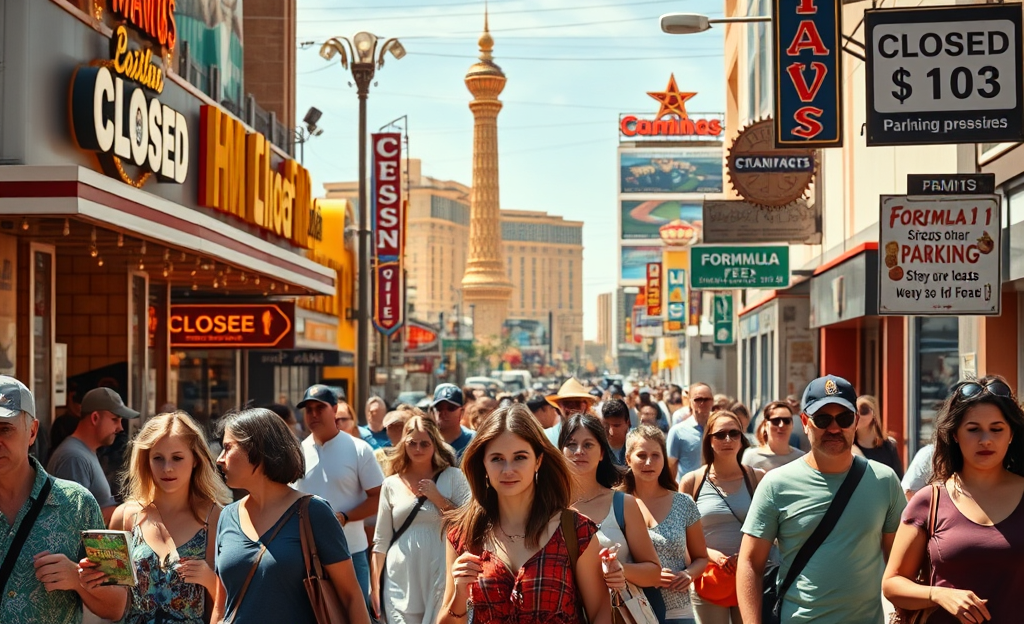
Tourism Decline has become a pressing issue for Las Vegas as visitor numbers dropped significantly in June 2025. This article will delve into the factors contributing to this decrease, including economic challenges, policy changes, and rising costs that deter tourists.
While gaming revenue has seen an uptick, other aspects of spending, particularly in the restaurant and retail sectors, are faltering.
We will explore how perceptions of high prices and limited major events are reshaping consumer choices and influencing the Las Vegas tourism landscape.
Visitor Trends and Economic Impact in June–H1 2025
In June 2025, Las Vegas experienced a 11.3 percent decrease in visitor numbers compared to the previous year, contributing to a 7.3 percent decline for the first half of the year.
Despite this downturn in tourism, the city saw a rise in gaming revenue, reflecting the enduring draw of its renowned casinos.
Meanwhile, spending in restaurants and retail venues fell, highlighting a shift in consumer priorities during their visits.
The contrast in economic indicators showcases the complexity of Las Vegas’s current financial landscape.
Amid these challenges, the city’s tourism sector grapples with an unstable economy and stricter immigration policies, which collectively add to the uncertainty surrounding visitor trends.
Furthermore, the soaring costs of travel and accommodation within the city present significant hurdles, deterring potential visitors who perceive Las Vegas as an expensive destination.
As these factors converge, they underscore the importance of adapting to changing market conditions in order to sustain tourism success.
The main headwinds affecting Las Vegas tourism can be summarized as follows:
- The perception of high costs among potential visitors
- Evolving consumer preferences for more affordable experiences
- The impact of limited major events attracting new tourists
These aspects require strategic attention to navigate the dynamic tourism landscape effectively.
Cost Barriers and the Changing Tourist Environment
Las Vegas, once renowned for its accessibility, now faces challenges as rising travel costs and lodging expenses deter visitors.
Perceptions of high costs play a significant role in this shift, creating barriers that make the city less appealing compared to budget-friendly destinations.
The addition of unavoidable extra fees further compounds these challenges.
Visitors now confront a myriad of additional charges beyond the base cost.
- Airfare spikes make reaching the city increasingly expensive, discouraging long-distance travel.
- Resort fees, often obscured in initial booking prices, surprise travelers and inflate stays.
- Parking charges add another layer of cost, especially dissuading those traveling by car.
These financial burdens contribute to the tourist slowdown, as potential visitors feel nickel-and-dimed.
Despite attractions such as Formula 1 events, many choose less costly locations over Las Vegas.
The city’s failure to adapt to changing market preferences is evident, as it struggles to compete with affordable alternatives, leading to an ongoing re-evaluation of consumer choices.
Consumer Preferences and Market Adaptation
A noticeable shift in consumer preferences has prompted Las Vegas to focus on market adaptation rather than alarm, reshaping its value proposition while maintaining its appeal.
As the LVCVA recognized, although high-profile events like the Formula 1 Grand Prix generate significant economic impacts, the allure of luxury comes with a daunting price tag.
According to the CAUTHE 2025 Conference Insights, attracting a broader audience requires offering varied experiences at more competitive prices.
Visitors today weigh the cost-benefit equation carefully, often choosing destinations that promise affordability without sacrificing quality.
As a culture of mindful spending grows, Las Vegas must strike a balance between leveraging the glitz of Formula 1 and embracing budget-conscious tourism.
The city’s emphasis on extravagant events must pivot towards crafting authentic yet accessible experiences.
This market transformation reflects broader economic trends, envisioning a Las Vegas future that remains vibrant by evolving with its clientele.
Optimism lies in adaptation, demonstrating that the essence of Las Vegas is its ability to innovate amidst changing tides.
Tourism Decline reflects a changing market that Las Vegas must navigate.
Adapting to consumer preferences for affordability is crucial for the city’s future to maintain its appeal and attract visitors.



0 Comments