AACC Takes Legal Action Against Vegetable Cartel
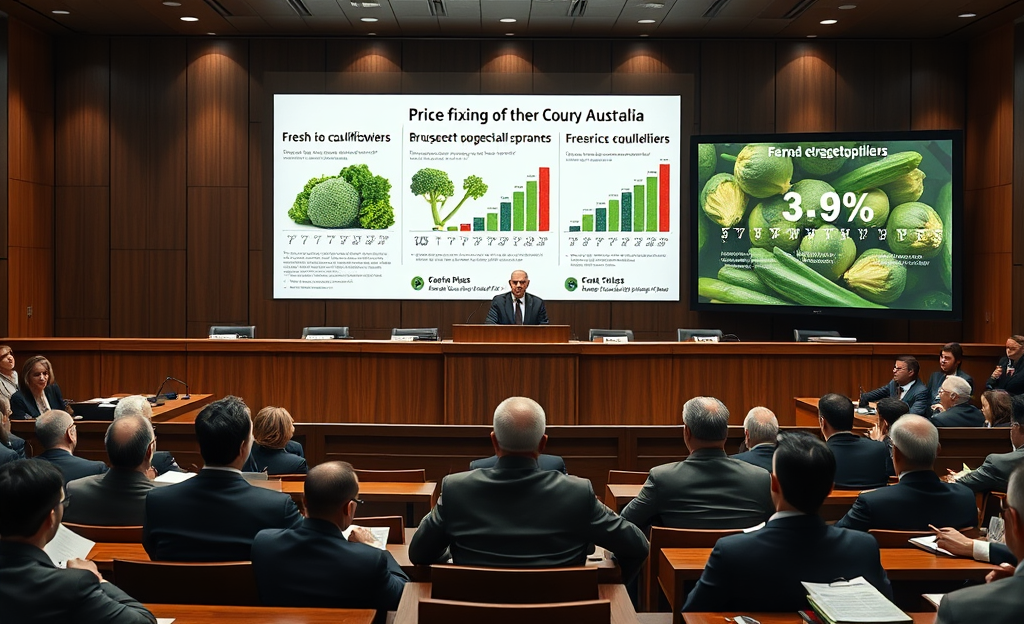
The Vegetable Cartel scandal has emerged as a significant legal issue in Australia, with the Australian Competition and Consumer Commission (AACC) filing civil actions in the Federal Court.
The actions target four suppliers and three senior executives accused of colluding to fix prices on essential fresh vegetables sold to ALDI.
This article will delve into the details of these allegations, including the specific vegetables involved, the time frame of the alleged activities, and the implications for the suppliers and their executives as the AACC seeks remedies for these violations of cartel laws.
Background of AACC’s Federal Court Filings
The Australian Competition and Consumer Commission (AACC) has undertaken a significant legal course by initiating civil proceedings in the Federal Court against four suppliers of fresh vegetables alongside three senior executives.
These industry participants are accused of forming an unlawful cartel aimed at orchestrating a price-fixing scheme targeted at ALDI, significantly impacting the market during the period from 2018 to 2024. This step by the AACC underscores the gravity of competitive breaches concerning Australia’s agricultural and retail sectors.
This action is pivotal due to its direct focus on ALDI’s supply chain, which demands weekly pricing quotes, thereby influencing prices of everyday staples like broccoli, cauliflower, lettuce, cucumber, Brussels sprouts, and zucchini.
The allegation of 28 price-fixing arrangements represents a profound infraction of consumer trust and integrity within the market.
In breaching Australia’s cartel laws, the alleged conduct compromises fair competition.
These proceedings hold national importance given they address potential widespread economic ramifications affecting consumers nationwide.
Scope of Cartel Allegations
The allegations of cartel conduct center on several fresh vegetables, namely broccoli, cauliflower, lettuce, cucumber, Brussels sprouts, and zucchini.
The Australian Agricultural Competition Commission (AACC) claims there were a total of 28 distinct instances of price-fixing arrangements, encompassing 48 price submissions made in relation to these products.
These actions reportedly spanned from 2018 to 2024, indicating a significant period of collusion among the suppliers involved.
Vegetable Types and Alleged Instances
In the AACC case involving alleged price-fixing, the instances per vegetable highlight the scope of the issue.
The agile supply model, as required by ALDI, might have played a role in facilitating these suspicions.
This table provides a concise overview of the alleged actions for each vegetable:
| Vegetable | Alleged Actions |
|---|---|
| Broccoli | 5 |
| Cauliflower | 10 |
| Lettuce | 3 |
| Cucumber | 4 |
| Brussels Sprouts | 4 |
| Zucchini | 2 |
This suspected cartel behavior is under serious investigation, given the comprehensive pattern of submissions that have emerged, making compliance and regulatory actions central to ensuring market balance.
Legal Remedies Pursued by AACC
The AACC has filed civil actions in the Federal Court targeting four suppliers and three senior executives accused of forming a cartel to manipulate fresh vegetable prices offered to ALDI.
These allegations center around a scheme that enabled these entities to control the pricing of certain vegetables, including broccoli, cauliflower, lettuce, cucumber, Brussels sprouts, and zucchini, over a considerable period from 2018 to 2024. Seeking legal redress, the AACC intends to secure declarations, civil penalties, and compliance orders against those implicated.
This pursuit underscores the commission’s firm stance on upholding market integrity; as stated by the AACC, “
the cartel conduct strikes at the heart of market integrity.
” Such actions affirm their commitment to deterring anti-competitive practices and protecting consumer interests.
In their legal plea, the AACC seeks three critical remedies:
- Declarations
- Civil Penalties
- Compliance Orders
The goal is to deter future violations and restore confidence in market dynamics.
ALDI’s Agile Supply Model and Its Impact
The agile supply model employed by ALDI is characterized by the necessity for suppliers to submit weekly quotes for fresh produce.
This model, being highly flexible, provides opportunities for suppliers to potentially coordinate prices due to the frequency and predictability of submissions.
The Australian Competition and Consumer Commission (AACC) considers this structure integral to the alleged cartel activities facing ALDI’s suppliers.
Since the quotes affect price points on a weekly basis, the suppliers could easily communicate and agree upon prices, thereby influencing market conditions without direct oversight.
ACCC’s notices highlight that in the alleged instances, a coordinated submission approach was made to control market prices.
Additionally, the model’s demand for agility allows for price adjustments that are ostensibly aligned among the suppliers.
Given that ALDI’s model revolves around the submission of prices with such regularity, it becomes easier for involved parties to plan collusion activities through these weekly engagements.
The AACC stresses the importance of addressing these mechanisms within ALDI’s supply chain as they provide a channel for synchronized pricing.
As seen in the allegations that cover multiple instances of price-fixing arrangements, such coordination systemizes price manipulations, pointing towards a structured cartel behaviordetails of the case.
Such behavior undermines fair market practices and violates competition laws, emphasizing why the attention on weekly quotes is of critical importance in the ongoing litigation.
“
In conclusion, the AACC’s pursuit of justice against the alleged Vegetable Cartel highlights the importance of fair competition in the market.
As the case unfolds, it will be crucial to observe the outcomes and implications for the involved parties.



0 Comments