Renewable Energy Powers Leisure Centers Efforts
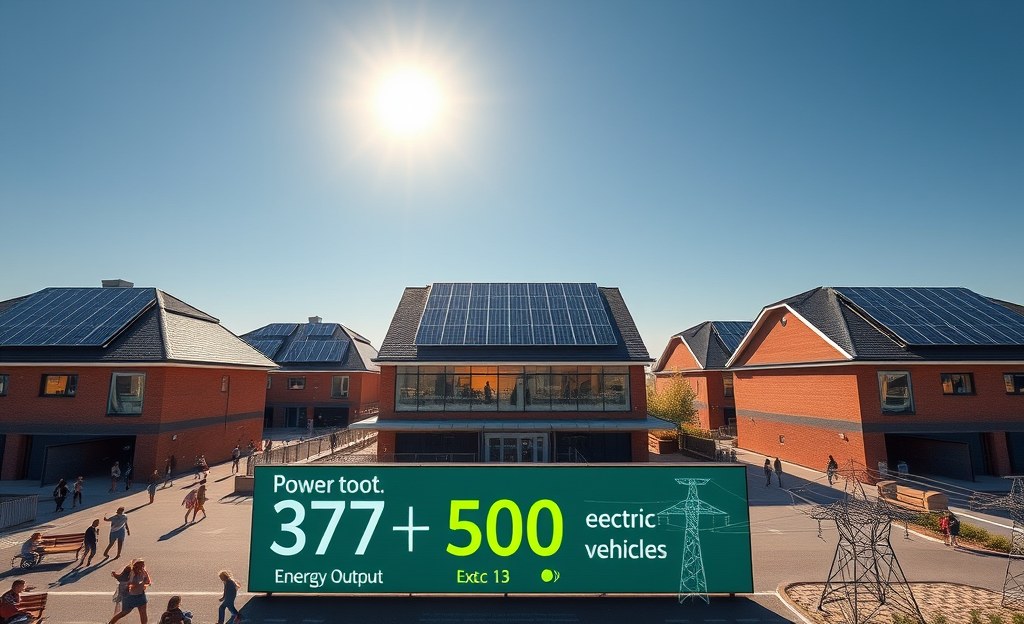
Renewable Energy plays a crucial role in the transition to a more sustainable future, and recent developments in local leisure centers highlight its potential.
This article explores how five leisure centers, equipped with solar panels, have collectively generated an impressive one million kWh of renewable energy.
With the Withdean Leisure Centre leading the charge, we will delve into the impact of this energy generation on operational costs, emissions, and the overall contribution to the grid at the Prince Regent Sports Complex.
Join us as we uncover the benefits and implications of harnessing solar power in our communities.
Citywide Solar Achievement
Solar panels across five leisure centers have generated a remarkable one million kWh of renewable energy annually, setting a new standard for sustainable community efforts.
This impressive total is enough to power 370 homes or charge 500 electric vehicles for a year.
The Withdean Leisure Centre leads this green initiative by contributing over 500,000 kWh alone.
This significant energy production not only reduces operational costs but also curbs emissions citywide.
Furthermore, at the Prince Regent Sports Complex, 97% of the energy is consumed internally, while excess power is sold back to the grid, creating additional revenue streams.
The positive impact on the environment and the local community is undeniable, showcasing renewable energy’s potential to drive sustainable urban development.
The transformation is clear when examining the data:
| Annual Output | Homes Powered | EVs Charged |
|---|---|---|
| 1,000,000 kWh | 370 | 500 |
.
Withdean Leisure Centre: Half-Million kWh Leader
Withdean Leisure Centre stands out as the top solar energy producer among five participating facilities, contributing over 500,000 kWh of renewable electricity annually.
This remarkable output accounts for just over half of the network’s total generation.
The center’s extensive use of solar panels is a significant step towards sustainable energy practices.
Moreover, this abundance of green power not only reduces operational costs and emissions but also showcases Withdean’s commitment to environmental responsibility.
Compared to other centers, Withdean’s share is a leading example of effective renewable energy utilization, supporting both economic and environmental goals.
These efforts are supported by the council’s initiatives detailed in the Brighton & Hove council news, emphasizing the importance of solar energy in urban infrastructures.
Ultimately, Withdean Leisure Centre exemplifies how strategic renewable energy investment can amplify a facility’s sustainability profile.
Prince Regent Sports Complex: High Internal Consumption
The Prince Regent Sports Complex maximizes its use of solar energy by consuming 97% internally.
This strategic approach significantly contributes to both financial savings and environmental benefits as the facility drastically reduces its reliance on traditional energy sources.
By prioritizing the internal consumption of solar energy, the sports complex minimizes its utility costs.
Simultaneously, the excess energy that’s not utilized is exported back to the grid, offering an additional revenue stream.
This dual-benefit system is advantageous for managing operational expenditures and supporting sustainability goals, as highlighted in a report on AOL’s coverage of solar initiatives.
The cause-effect relationship between the reduced dependence on external sources and additional income opportunities showcases the comprehensive advantages of solar panel investments at the facility.
Therefore, the financial outcomes of this energy strategy are evident through both means:
- Reduced utility costs.
- Additional revenue through grid export.
Operational and Environmental Gains
The installation of solar panels across five leisure centers has resulted in significant operational cost savings and emission reductions.
These solar systems generate one million kWh of renewable energy, enough to power 370 homes or 500 electric vehicles for a year, providing a crucial step towards sustainability.
Withdean Leisure Center emerged as the largest contributor, generating over 500,000 kWh alone and highlighting its role in reducing dependence on non-renewable energy sources.
By harnessing solar energy, each center effectively reduces its reliance on grid electricity.
This relevant shift helps lower monthly electricity expenses, translating into crucial budget reallocations that enhance other operational areas, improving the centers’ overall financial health.
Furthermore, the Prince Regent Sports Complex showcases a remarkable usage efficiency, consuming 97% of the solar energy it generates internally.
The underscored benefits extend beyond mere cost savings.
By minimizing carbon emissions and contributing to a cleaner atmosphere, these initiatives foster healthier communities.
The excess energy exported to the grid provides an additional revenue stream, amplifying the sustainability loop.
Every kilowatt generated by these installations not only cuts operational costs but also contributes to a greener environment, aligning with broader environmental targets and exemplifying how renewable energy can become a cornerstone for community health and sustainability.
For more insights into solar solutions for leisure centers, consider visiting Sustain’s Commercial Solar advisory.
In conclusion, the solar energy initiatives at local leisure centers not only demonstrate the viability of renewable energy but also usher in a new era of cost savings and environmental responsibility.
By harnessing solar power, these centers contribute significantly to a sustainable future.



0 Comments