Smart Glasses Revolution with Ray-Ban and Oakley
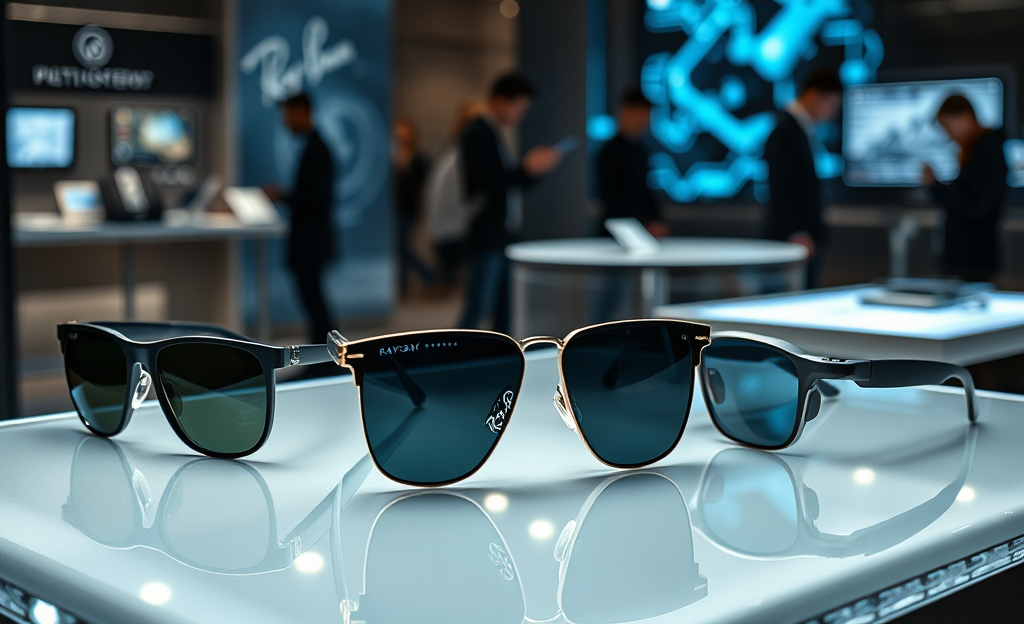
Smart Glasses have taken a significant leap forward with the introduction of innovative models such as the Ray-Ban Display, Ray-Ban Meta Gen 2, and Oakley Meta Vanguard.
These devices, priced between $379 and $799, offer unique features that enhance user experience.
In this article, we will delve into the groundbreaking technologies behind these smart glasses, focusing on the Ray-Ban Display’s integrated display controlled by a neural wristband, as well as the advanced AI functionalities that revolutionize how we interact with our surroundings.
We will also explore what the future holds for smart glasses, including the anticipated ‘Hypernova’ model.
Market Snapshot: Leading Smart Glasses Models
Experience the future of wearable technology with the latest smart glasses, where stunning innovation meets convenience.
Unveiling the Ray-Ban Display priced at $799, which introduces a seamless integrated display controlled through a neural wristband, this model is for those wanting cutting-edge features.
On the other hand, the affordable yet feature-rich Ray-Ban Meta Gen 2 starts at $379 and offers standard lenses with options for upgrades such as polarized and transitions lenses.
Meanwhile, the Oakley Meta Vanguard provides a sports-oriented design and retails for $499, delivering an impressive nine-hour battery life ideal for active lifestyles.
This trio serves diverse consumer needs, exemplifying the range within the industry.
- Ray-Ban Display – $799
- Ray-Ban Meta Gen 2 – $379
- Oakley Meta Vanguard – $499
The Meta Ray-Ban Display distinguishes itself with AI-driven functionalities such as hands-free framing, real-time translation, and an enhanced audio system that revolutionizes daily interactions.
As the development of Hypernova glasses looms on the horizon, smart glasses continue to redefine how consumers interact with technology.
Ray-Ban Display: Integrated Optics and Neural Wristband Control
The Ray-Ban Display glasses emerge as a revolutionary leap in smart eyewear design by offering an integrated display directly within the lenses.
This breakthrough innovation marks the glasses as the first glasses with a built-in display managed through intuitive interactions.
By seamlessly incorporating the display, users experience a fully immersive visual interface without needing additional devices.
According to a detailed review on The Verge, the display’s clarity and brightness elevate the user experience, making the technology not just functional, but enjoyable and engaging.
Complementing this visual innovation, the glasses introduce neural wristband control, setting a new standard for user interaction.
This wristband uses EMG technology to interpret and execute commands based on natural wrist movements, enhancing accessibility and efficiency.
By capitalizing on one’s instinctive motions, it presents a hands-free operation for tasks such as hands-free framing and real-time translation.
Described by one user on Reddit as “magic,” this feature transforms normal user engagement into a streamlined and intuitive experience, positioning the Ray-Ban Display as uniquely futuristic in today’s market.
Intelligent Functions Elevating Everyday Use
Smart glasses are increasingly integrated into daily life due to their AI-driven features.
AI capabilities include:
- Hands-free framing: Enjoy smoother content capture with effortless control, enabling users to focus on the moment rather than manual adjustments.
- Real-time translation: Benefit from seamless communication with instant language conversion, breaking down linguistic barriers and enhancing travel experiences.
- Enhanced audio: Experience richer sound quality with advanced audio systems that offer discreet open-ear listening, perfect for taking calls or listening to music without external interference.
The practical advantages of these features are illustrated in real-world scenarios such as traveling abroad easily with Rokid AI smart glasses or engaging in business meetings with translation features like those in AI smart glasses.
With smart glasses, users appreciate how
“technology seamlessly integrates convenience and functionality into everyday tasks,”
as reflected in positive global feedback.
Looking Ahead to Project Hypernova
The advent of the Hypernova smart glasses represents a transformative leap in wearable technology.
Priced at $800, these glasses will redefine augmented reality with their integrated display and neural wristband control, facilitating an intuitive user interface.
This innovation will particularly benefit hands-free framing, offering seamless operation with advanced AI capabilities like real-time translation.
As the global smart glasses market is projected to soar from $2 billion in 2024 to a staggering $8 billion by 2030, the Hypernova is anticipated to dominate over 75% of this landscape.
Moreover, Meta’s strategic focus on AI integration ensures that these glasses are not just a technological novelty, but a practical everyday tool.
Poised to capture the hearts of tech enthusiasts and everyday consumers alike, Hypernova is more than a gadget; it’s a gateway to a smarter future.
“
The coming years will see smart glasses becoming as ubiquitous as smartphones, shaping an integrated digital lifestyle.
“
This sets the stage for a paradigm shift, where the enhanced audio system and continuous updates keep users engaged.
Enhanced by strategic partnerships, like the one mentioned in this partnership, these glasses promise not just enhanced functionality but breakthrough market penetration, leading the wearable tech revolution with a bold and immersive approach.
Smart Glasses are redefining technology and everyday interactions.
With features that enhance connectivity and functionality, the future looks promising, especially with upcoming advancements like the ‘Hypernova’.
Stay tuned as this field continues to evolve, pushing the boundaries of innovation.



0 Comments