US Government Faces Shutdown Amid Economic Concerns
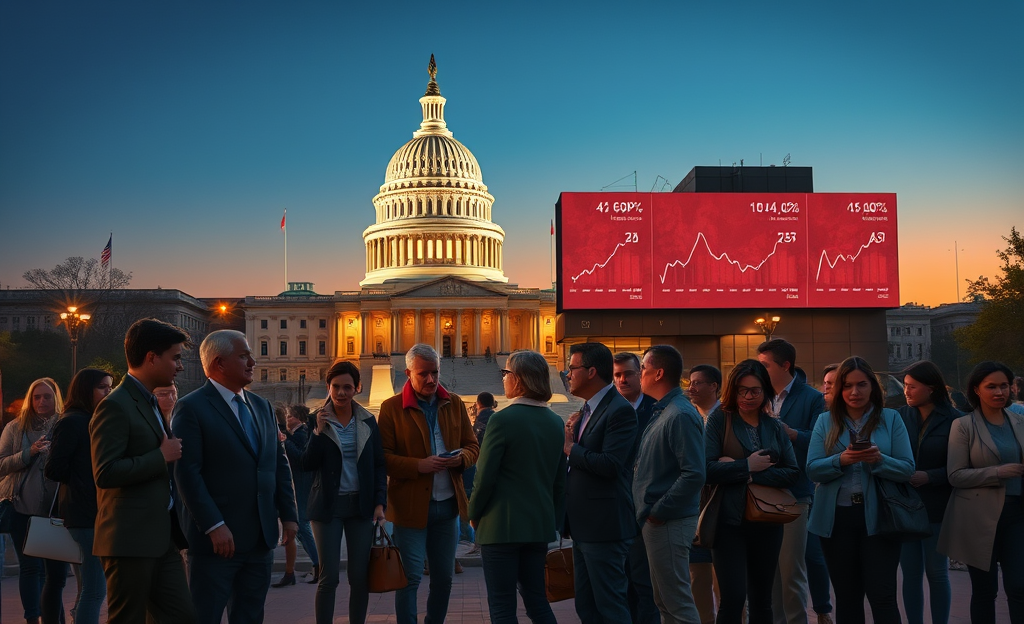
Shutdown Impact The looming threat of a US government shutdown is raising concerns about its potential repercussions on the economy.
With hiring slowing and inflation management challenges intensifying, experts predict that the economic fallout could be significant.
This article will delve into the various ways a shutdown could impact GDP growth, affect non-essential workers, and influence consumer sentiment, while also considering historical trends in financial markets following such events.
Economic Backdrop and Shutdown Timing
The looming government shutdown is occurring at a particularly fragile time for the economy, marked by a slowdown in hiring and persistent inflationary pressures.
This combination raises the stakes significantly, as each week of shutdown could further complicate an already weak economic recovery.
With consumer sentiment at risk and essential services continuing to operate, the implications of the shutdown extend far beyond immediate financial concerns.
Projected GDP Impact of a Prolonged Shutdown
Amidst a volatile economic climate, each week of a government shutdown threatens to shave 0.1 percentage point from GDP growth.
This risk becomes more pronounced when compared to the 1.8 percent annualized growth experienced in the first half of 2025, as compiled by experts.
The potential weekly drag presents a compounding danger that could rapidly alter the growth dynamic.
Below is a concise comparison:
| Period | Baseline Growth | Impact per Week of Shutdown |
|---|---|---|
| 1H-2025 | 1.8% | −0.1 pp |
This compounding danger produces profound implications for the economy.
The continuing reduction could progressively inhibit growth momentum, endangering future stability.
Immediate remedial measures are critical to mitigate these impacts, fostering reassurance within consumer sentiment and maintaining economic equilibrium.
Workforce Consequences and Recovery Hurdles
Federal shutdowns pose significant challenges, particularly for non-essential workers who are subjected to unpaid leave during these periods.
Given that consumer spending constitutes roughly 70% of the economy, the absence of steady income can severely affect economic activity.
Meanwhile, back pay dependency contributes to a cycle of uncertainty, as personnel await eventual compensation after appropriations are resolved.
Agencies, as explained in the Official OPM Guidance, stress the fragility of this arrangement.
Additionally, potential layoffs would exacerbate economic drag by reducing workforce size, hindering productivity, and delaying recovery due to loss of skilled labor.
Essential but unpaid services might continue to run but don’t alleviate personal or economic burdens.
Consequently, households experience compounded stress within a shutdown period, affecting various financial aspects:
- Paused paychecks strain budgets within days
- Extended furloughs heighten job security anxieties
- Delayed compensation disrupts personal financial planning
Essential Services That Remain Operational
Even amidst a government shutdown, defense operations maintain full functionality, ensuring national security remains uncompromised.
Similarly, Social Security payments continue to be distributed without interruption, providing reassurance in uncertain times.
Social Security remains committed to delivering benefits, helping to alleviate concerns for many citizens.
These core services are shielded from the broader government shutdown impacts, highlighting a strategy to preserve vital public functions and minimize disruptions to essential services.
Therefore, the continued operation of these sectors illustrates a focused effort to maintain stability during fiscal challenges.
Consumer Sentiment and Spending Risks
Consumption drives roughly 70 percent of GDP, and any disruption in consumer sentiment can indirectly hinder economic performance.
As indicated by a recent report, declining consumer sentiment erodes confidence, causing a significant downturn in spending.
The looming government shutdown exacerbates this situation, threatening spending patterns as households grow increasingly cautious.
This hesitance emerges from fear of economic uncertainty, leading to reduced consumer outlays.
The economic consequence of such restrained spending can be profound, as it reverberates throughout the economy, potentially slowing growth further in a climate where stability is already quite fragile.
Historical Market Reactions and Resilience
Financial history suggests that US markets often exhibit resilience following government shutdowns.
Although shutdowns may initially cause uncertainty, resulting in brief market dips, the financial landscape frequently stabilizes soon after resolution.
For instance, during the 2013 shutdown, major indices experienced minimal declines and rebounded even prior to the shutdown’s end.
According to data from American Century Insights, stock performance during shutdowns has varied, but historical patterns demonstrate a swift recovery.
Wall Street indexes, such as the Dow and S&P 500, often rise in anticipation of government reopening.
As highlighted by UBS Global Insights, shutdown-induced market impacts tend to be temporary.
Markets typically recover within days once a funding deal is reached.
Such patterns reinforce investors’ perception that financial repercussions of shutdowns are generally short-lived, fostering a broader sense of fiscal stability.
In conclusion, the potential government shutdown poses risks to economic stability, particularly in terms of GDP growth and consumer confidence.
Understanding these implications is crucial for anticipating the broader effects on our economy.



0 Comments