Global Growth Revised Amid IMF and World Bank Meetings
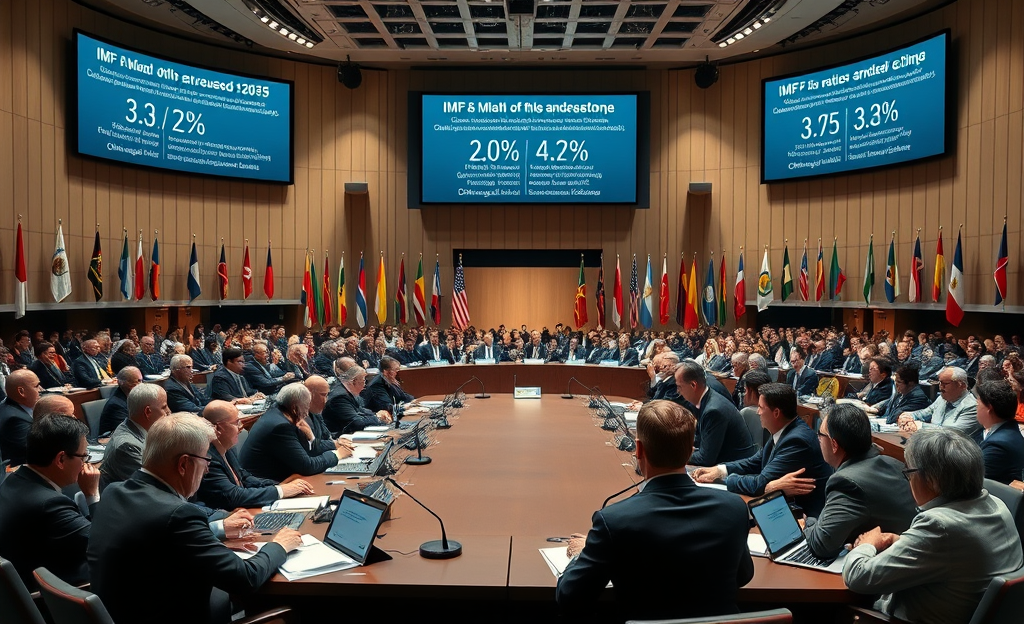
The ongoing Economic Crisis has brought significant challenges to the global financial landscape, prompting urgent discussions at the annual meetings of the IMF and the World Bank.
As key decision-makers gather, they will examine critical issues such as revised global growth forecasts, inflation trends, and the implications of US tariffs.
Attention will also focus on Argentina’s dire economic situation and its potential risks to the IMF, along with the pressing need for improved sovereign debt restructuring processes.
This article will delve into these key points and their far-reaching impacts on the global economy.
Panorama of the 2024 IMF–World Bank Meetings
In the vibrant city of Marrakesh, the IMF and World Bank annual meetings become a pivotal checkpoint for the global economy.
These gatherings serve as an essential platform for global leaders to address key economic issues that impact every corner of the world.
With a keen focus on directing the course of worldwide economic dialogue, the 2024 meetings address several pressing themes.
- Global growth revision: 3.2% for 2025
- Inflation outlook: Expected decrease from 5.67% in 2024 to 4.29% in 2025
- Double shock of US tariffs: Export of industrial capacity from China
- Argentina’s economic crisis: Heightened risk exposure to the IMF
- Enhanced sovereign debt restructuring: Improved negotiations between debtors and creditors
The discussions also address the pressure from the US on financial institutions affecting middle-income nations and China.
This dynamic exchange in Marrakesh lays the groundwork for future collaborations and innovative approaches to global economic challenges.
Revised Growth and Inflation Outlook for 2025
The revised forecast by the IMF and the World Bank reflects a notable shift in global economic expectations, as growth is now projected at 3.2% for 2025. This uptick, compared to earlier projections, is driven by resilient consumption patterns and an easing of previous supply bottlenecks.
Resilient consumption serves as a buoyant force against economic uncertainties, underlined by steady consumer demand in various markets.
While economic headwinds remain, these factors provide a substantial boost to global economic activity, fostering a more optimistic outlook compared to prior assessments.
Simultaneously, the inflation landscape exhibits significant improvement.
The decline from 5.67% in 2024 to 4.29% in 2025 marks an essential decrease, reflecting both monetary policy effectiveness and reduced global supply chain disruptions.
Central banks’ actions aimed at stabilizing prices have started yielding results, alleviating pressures from previous inflation peaks.
The convergence towards more manageable inflation levels reshapes policymaker expectations, enabling them to pivot strategies towards sustainable growth.
As inflation recedes, the focus can gradually transition towards fostering robust economic expansions that can withstand future shocks.
For more insights, refer to the IMF World Economic Outlook.
The ‘Double Shock’: US Tariffs and China’s Exported Industrial Capacity
The “double shock” of the modern global economy, highlighted in recent IMF and World Bank meetings, refers to the simultaneous reverberations from US tariffs and China’s exported industrial capacity.
These forces interact to create new complexities in international trade.
| US Tariffs | Chinese Industrial Capacity |
|---|---|
| Disrupts supply chains | Depresses global prices |
| Imposes cost pressures | Heightens competition |
| Reduces import volume | Overloads market with exports |
As these elements intensify, trade flows face increased uncertainty and modifications.
The US’s protective duties not only affect cost structures but also strain relationships with key partners.
Simultaneously, China’s industrial glut reinforces price deflation and induces fierce market rivalry.
This interconnected conundrum, captured by such financial analyses, leads to highly volatile trade patterns which bear significant consequences for global economic stability.
Argentina’s Crisis and Rising IMF Exposure
Argentina continues to grapple with a economic crisis that has seen inflation soar to staggering levels, reaching an overwhelming 292% annually in 2024. This has been exacerbated by severe fiscal austerity measures aimed at controlling public debt, which have led to significant declines in wages.
The country’s fiscal and monetary turmoil is further illustrated by its alarmingly high overnight interest rate of around 45%.
Amidst this turmoil, the government struggles to regain control over both inflation and the currency crisis, which plagues its economy.
As the International Monetary Fund confronts Argentina’s crisis, the organization’s risk exposure becomes a focal point of concern.
Argentina stands as the IMF’s largest debtor, with an extensive loan arrangement that significantly strains the IMF’s financial capacity.
This situation prompts scrutiny into the prudence of extending further loans to the nation, especially considering its already substantial $43 billion debt to the Fund.
Analysts remain divided on whether increasing IMF exposure is justifiable given the country’s precarious economic state and the risk of default.
The tense assistance line debate revolves around issues of policy credibility and debt sustainability.
Critics question the effectiveness of continued aid given the persistent failures to stabilize economic conditions.
The challenge lies in negotiating a plan that not only provides immediate relief but also establishes a credible framework for Argentina to eventually achieve economic stability.
This requires balancing short-term financial support with the longer-term goals of sustainable economic reforms, as discussed during IMF and World Bank annual meetings.
The future of this assistance remains uncertain as stakeholders deliberate the best course of action amidst ongoing economic challenges.
US Leverage over Financial Institutions and the Ripple Effect on Middle-Income Economies
The US pressure on multilateral development banks like the World Bank significantly influences lending practices, reshaping borrowing landscapes for both middle-income countries and China.
The United States wields considerable voting power, thanks to its substantial financial contributions, which steers decision-making processes, often aligning lending priorities with its foreign policy goals.
For instance, when economic adjustments are deemed necessary, US-backed policies may favor reform packages that prioritize governance improvements in middle-income nations like those in Latin America, potentially imposing more stringent borrowing conditions.
This dynamic can open doors to reforms that these countries might otherwise resist, impacting their flexibility in domestic policy-making.
Moreover, the US leadership in these institutions often results in a push for transparency and efficiency, sometimes influencing the terms of capital access for borrowers.
Similarly, China, as a major stakeholder and borrower, experiences unique challenges.
While it has boosted its own influence by contributing to institutions like the IBRD, the US’s leverage often counterbalances Chinese efforts to shape lending agendas toward their Belt and Road Initiative (BRI) projects.
US pressure can curb China’s aspirations by limiting capital increases or voting shares necessary for expanding its operational scope in developing nations.
This interplay occasionally leads to clashes within bank negotiations as US interests push back against loans that may bolster Chinese geopolitical strategies.
As a result, China navigates through these channels trying to maintain its initiatives while balancing geopolitical equations within the constraints imposed by multilateral financial frameworks.
Toward More Efficient Sovereign Debt Restructuring
The process of sovereign debt restructuring faces numerous challenges, primarily due to protracted negotiations and a lack of coordination among stakeholders.
As highlighted by the IMF, collaborations like the Common Framework now aim to mitigate these complexities but require further refinement.
Delays in reaching consensus between creditors and debtors can stall economic recovery for nations needing urgent financial remediation.
Additionally, the negotiation power dynamics often favor countries with more resilience, making the process inequitable for less economically stable nations.
- Time-bound negotiation windows: Adopting specific timelines for talks to prevent indefinite delays.
- Transparent communication channels: Ensuring information sharing between parties fosters trust and reduces misinterpretations.
- Neutral mediators: Introducing impartial third parties to expedite consensus-building.
- Streamlined procedures: Simplifying the bureaucratic steps involved to speed up the process.
Debtor-creditor negotiations hold immense importance for ensuring global financial stability by preventing disorderly defaults that may trigger broader economic repercussions.
Beyond preserving the economic footing of borrowing nations, these streamlined processes reassure financial markets, fostering confidence and stability.
Such strategic improvements can ultimately aid in building a more resilient and equitable global economy.
In conclusion, the urgent discussions at the IMF and World Bank meetings highlight the interconnectedness of global economies, especially amid crises.
Addressing these challenges is essential for fostering stability and growth in an increasingly complex financial environment.



0 Comments