Immigration Crackdown Hurts Local Businesses
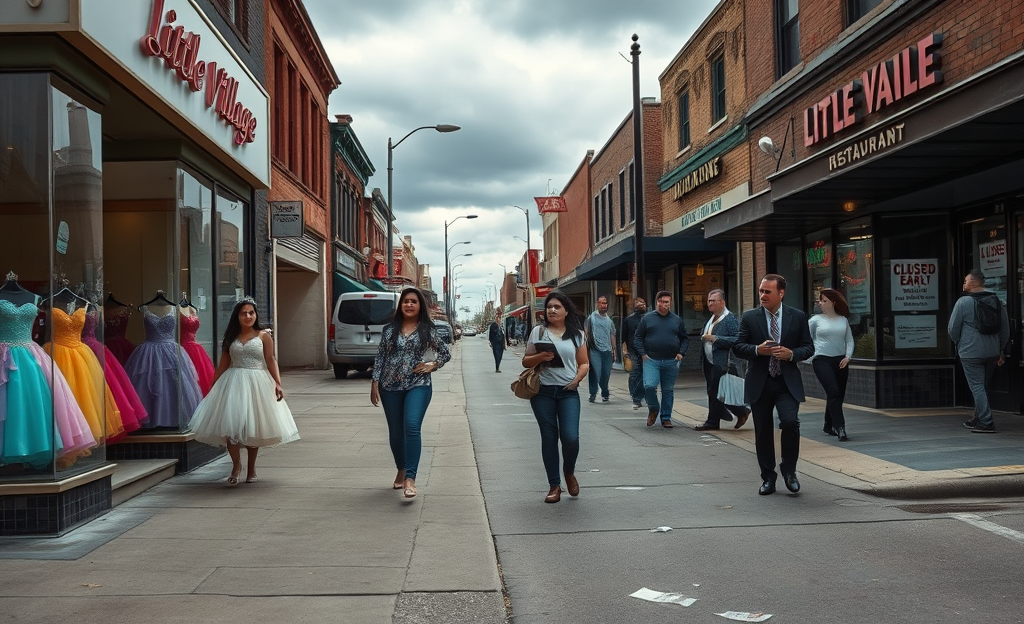
Immigration Crackdown has plunged businesses in Chicago’s Latino communities, particularly in Little Village, into a state of distress.
As local shops, including quinceanera dress boutiques, experience staggering sales declines of around 40%, the fear of enforcement is driving immigrants to remain indoors.
With empty streets and early restaurant closures, the economic vibrancy that once characterized this area is at risk.
This article will explore the profound impact of these developments, drawing parallels to the COVID-19 pandemic’s effects on the community, and highlighting the broader implications for immigrant economic contributions and community solidarity.
Crackdown-Driven Economic Shock in Little Village
Sharp economic decline grips Little Village as heightened immigration enforcement rewrites the fabric of this once thriving community.
The vibrant streets, known for lively markets and family-run eateries, now echo with an unnatural silence.
Residents are driven indoors by the pervasive fear enveloping the area, resulting in plummeting sales figures for local businesses.
According to a report from the Chicago Latino business overview, owners are facing a dramatic sales slump, with a reported 40% drop as communities brace against enforced policies.
Pre-crackdown Post-crackdown Bustling sidewalks Deserted blocks
As the economic landscape deteriorates, the personal narratives of resilience and despair within Little Village’s community are yet to unveil, underlining the intense human element of this crisis.
Plummeting Sales and Consumer Fear
Facing an alarming 40 percent drop in sales, Latino businesses in Chicago are reeling from the pervasive fear stemming from the immigration crackdown.
This fear has kept potential customers, notably immigrants, indoors, leaving streets that were once bustling with activity eerily quiet.
Business types heavily impacted include:
- Quinceanera dress boutiques, where sales have plummeted by approximately 40 percent
- Restaurants, which previously enjoyed lively weekday lunchtimes and evenings, now witness sparsely occupied tables, leading to early closures
- Grocery stores have seen a dramatic reduction in clientele, contributing to immediate staffing cuts and economic strain
Faced with reduced foot-traffic, local establishments that thrived on community engagement are grappling with unprecedented revenue losses.
To better understand the extent of this impact, consider visiting Chicago restaurants facing ICE impact, which paints a stark picture of the current challenges.
This transformation has left many business owners contemplating the future, fostering a permeating sense of uncertainty in the community.
Echoes of the COVID-19 Downturn
Chicago’s Latino neighborhoods are again witnessing a downturn, reflecting an era not long past.
During the initial months of the COVID-19 pandemic, streets resembled ghost towns, mirroring today’s reality as immigration enforcement tightens its grip, driving communities indoors.
Business closures have resurfaced, with many stores shuttering earlier than usual, a phenomenon once reminiscent of pandemic-related protocols that necessitated early closures and layoffs.
Fear now permeates these business corridors, with commerce affected by avoidance, much like it was when social distancing ruled every interaction.
Many describe the present fear as even more distressing than during the pandemic’s peak when health concerns dominated.
Now, the fear stems from potential raids that threaten not just personal safety but livelihoods.
This enforcement-induced economic strain echoes the recession brought by the pandemic, where job losses were pervasive and financial stability elusive.
With immigrant families spending less due to growing anxiety, they recall the financial hardships of earlier pandemic days, highlighting the cycle’s brutal repetition.
In both instances, underlying insecurity saps community resilience, while local businesses battle for survival amid ever-changing, unforgiving landscapes.
Immigrant Spending Power at Risk
Immigrant spending power has reached an impressive $299 billion in 2023, reflecting the significant contributions of this community to the economy.
However, recent localized crackdowns on immigration pose a severe risk to this financial muscle, as fear and uncertainty lead to diminished consumer activity.
The ripple effects of such actions can extend beyond immediate neighborhoods, impacting broader markets and industries reliant on immigrant patronage.
Projected Ripple Effects Beyond Chicago
Chicago’s Little Village and its surrounding Latino communities face significant economic challenges
as immigrant spending declines.
For local suppliers reliant on immigrant-driven demand, this decrease in consumption means potential revenue losses.
Suppliers of goods like fresh groceries, traditional attire, and cultural event services may encounter an abrupt drop in orders, impacting their operations and staff levels.
Moreover, declining sales transactions contribute to shrinking municipal tax revenues, which could limit city resources allocated for community services.
If this trend continues, it will exacerbate fiscal deficits, causing a ripple effect that extends beyond the immediate immigrant communities.
Diminished spending could disrupt supply chains by forcing suppliers to reduce inventory, tighten credit terms, or even close.
Local governments might grapple with diminished tax revenues affecting public services, infrastructure, and essential programs vital for community wellbeing, potentially leading to increased austerity measures, impacting education, health, and public safety services.
Grass-Roots Patrols and Rising Anxiety
Community leaders in Chicago’s Latino neighborhoods, faced with heightened immigration raids, have promptly organized vigilant patrols to safeguard their communities.
Displaying an unwavering commitment, these leaders coordinate teams who watch streets from dawn to dusk, maintaining a close eye on any unfamiliar activity.
Their cautious demeanor reflects a profound understanding of the risks involved, as a single alert can make all the difference.
“We text as soon as we spot agents” captures the urgency and efficacy of their communication strategy.
Responding rapidly to any suspicious movements, patrol members ensure neighbor safety, mitigating the piercing anxiety that looms over their streets.
Volunteers employ various patrol methods including:
- Car-horn signals to alert nearby homes.
- Real-time updates through group chats.
- Strategically positioning themselves on street corners to monitor activities.
Families Fear for Livelihoods and the Future
Families in Chicago’s Latino communities face daily challenges due to escalating immigration enforcement.
Streets that once buzzed with life now remain empty, causing businesses to suffer.
Many shop owners consider shutting down or relocating as sales plummet, driven by fear keeping customers indoors.
Residents reorganize their lives while tiptoeing through a community on alert.
Coping with everyday stress becomes crucial, yet difficult as uncertainty looms at every turn.
Families worry immensely about rent payments.
They question whether staying in Little Village makes sense when their livelihoods hang in the balance, exacerbating anxiety over children’s schooling, as school stability feels jeopardized.
Business owners feel trapped between the need to survive and loyalty to their community.
Long-term survival of community culture is endangered, driving home the painful choice many must make: risking displacement or facing an uncertain future within a cherished neighborhood.
Ultimately, the fear gripping this community echoes deeper than economic loss, striking at the heart of their identity.
In conclusion, the ongoing immigration crackdown not only threatens the survival of local businesses but also creates a pervasive atmosphere of fear and anxiety among residents.
As families navigate these challenges, the future of their livelihoods and community hangs in the balance.


0 Comments