Concerns Over Misuse of Subsidized Gasoline
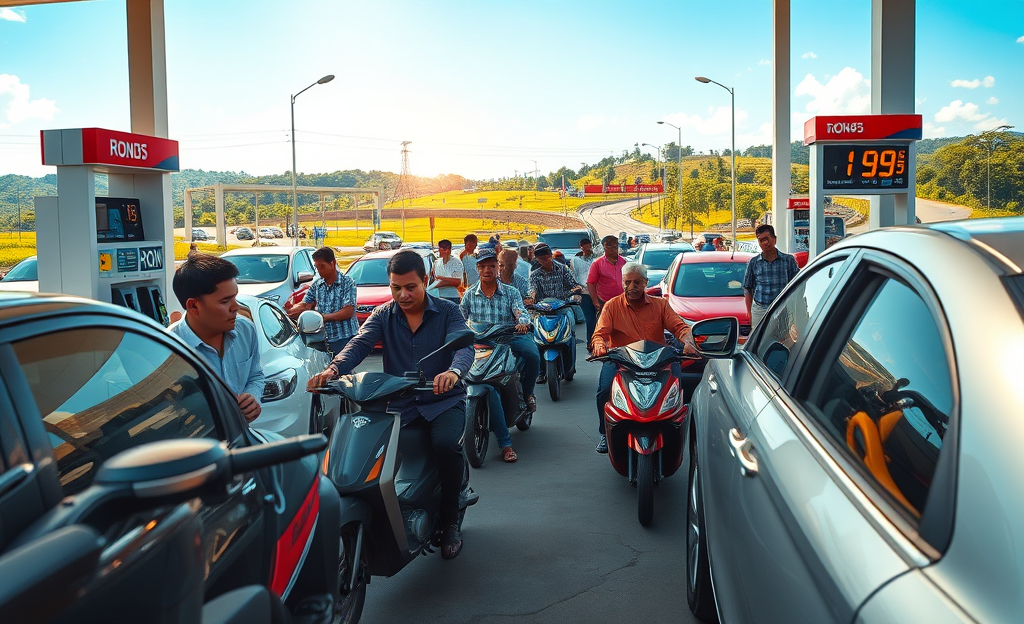
Gasoline Misuse is a growing concern in Malaysia, particularly in border regions with Thailand, where subsidized fuel is becoming a target for illicit activities.
The recent implementation of the Budi95 scheme, which offers affordable RON95 gasoline, has raised alarms as drivers are swiftly reaching their monthly fuel quotas.
This article delves into the implications of the Budi95 initiative, the alarming usage patterns observed in border areas, and the potential exploitation by smuggling networks that could undermine the program’s original intent to support Malaysian citizens.
Urgent Concern Over Subsidized Fuel Misuse at the Malaysia–Thailand Border
Malaysian authorities are increasingly alarmed by the possible misuse of subsidized RON95 gasoline in the border regions near Thailand.
Data reveals that entire monthly fuel quotas are vanishing at an alarming pace, heightening fears of organized smuggling rings exploiting the Budi95 fuel aid scheme.
The anomaly becomes evident as drivers consistently exhaust their allocations far more swiftly than expected, with over 80 individuals, primarily holding motorcycle licenses, reportedly traversing unimaginable distances exceeding 500 km daily.
The urgency of the situation is underscored by the fact that approximately 580 vehicles fill up multiple times per day at high-risk petrol stations near the frontier, as detailed in a recent report.
These figures not only demonstrate potential quota abuse but also suggest an orchestrated effort to divert valuable resources across borders illegally, threatening the nation’s economic stability and heightening the need for immediate action.
Budi95 Subsidy Mechanics and Emerging Irregularities
The Budi95 scheme, launched on September 27, prices RON95 gasoline at 1.99 ringgit (42 cents) per liter with a monthly cap of 300 liters.
Approximately 3 million daily transactions have been recorded, benefiting over 12 million Malaysians.
However, data from border areas indicates that fuel quotas are being exhausted at an alarming rate, prompting investigations into potential smuggling activities.
Overview of the Budi95 Fuel Subsidy Scheme
The Budi95 Fuel Subsidy Scheme, which commenced on September 27, allows Malaysians to purchase RON95 gasoline at a subsidized rate of 1.99 ringgit (42 cents) per liter, with a 300 liters monthly cap.
This initiative’s reach is impressive, with approximately 3 million transactions recorded daily via the scheme, benefiting over 12 million citizens.
The program’s design ensures affordability and wide accessibility for many Malaysians.
For those interested in learning more about the Budi95 initiative, they can explore further details on the Budi95 Fuel Subsidy Programme page for comprehensive insights.
Indicators of Potential Quota Misuse and Smuggling Risks
The Budi95 fuel aid scheme, intended to regulate fuel consumption among Malaysians, allows a capped purchase of 300 liters per month to align with normal usage.
Yet, data highlights irregularities, primarily in border areas.
More than 80 motorcycle-license holders have exhausted their quotas far sooner than anticipated, triggering concerns of misuse.
These users imply journeys exceeding 500 km daily, a feat improbable for average motorcycle travel.
Such patterns suggest an irregular usage, potentially tied to cross-border fuel smuggling activities with Thailand.
Anomalies like these challenge the intent of the Budi95 initiative and may undermine its effectiveness.
In conclusion, the situation surrounding the Budi95 scheme in Malaysia highlights significant challenges related to gasoline misuse and smuggling.
As authorities seek to address these irregularities, it is crucial to ensure that support reaches those it was intended for.



0 Comments