Consumer Subsidy Program Struggles to Stimulate Spending
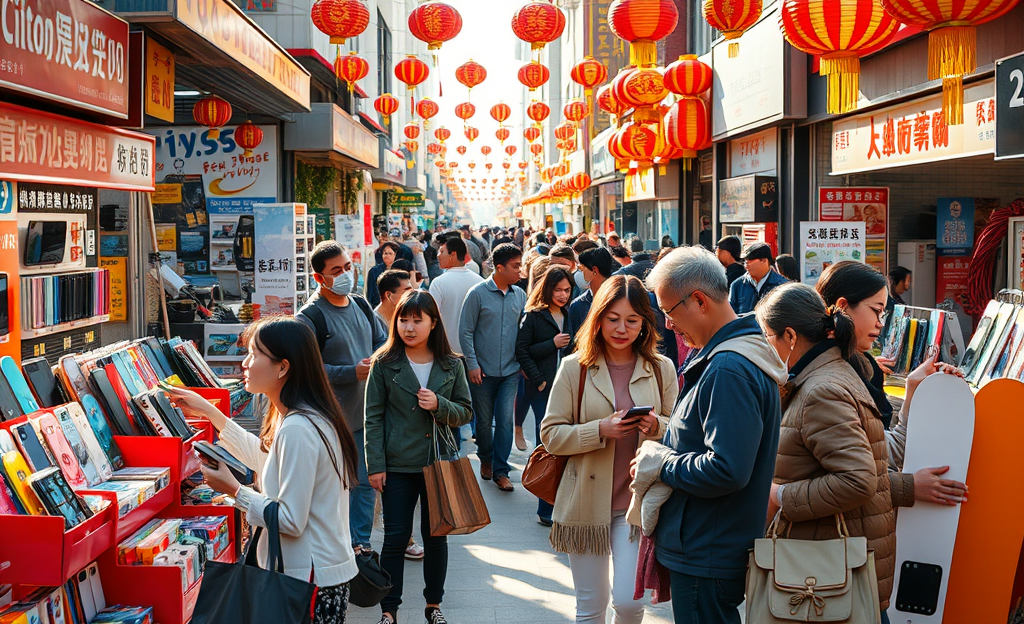
Consumer Subsidy programs have become a focal point for local governments seeking to rejuvenate economies strained by external challenges.
In November 2025, Guangdong initiated its largest consumer subsidy program to date, allocating a staggering 3.5 billion yuan (US$492 million) to incentivize spending on a variety of products, including smartphones and snowboards.
This ambitious initiative aims to stimulate consumption and bolster the local economy amid ongoing trade tensions with the United States.
However, as we delve deeper into the program’s context and consumer responses, it becomes clear that challenges like an unstable labor market and a faltering real estate sector may hinder its success.
Record Consumer Subsidy Program Overview
In November 2025, Guangdong launched its largest consumer subsidy package, totaling 3.5 billion yuan (US$ 492 million), to boost its economy amid ongoing challenges posed by the trade war with the U.S.
This ambitious program aims to revitalize local consumer spending and address the economic pressures faced by the province.
The subsidies offer significant discounts on a variety of products, including:
- smartphones
- snowboards
These items highlight both daily necessities and seasonal interests, reflecting a broad attempt to rekindle consumer enthusiasm.
The program’s strategic goal is to enhance overall consumption and economic activity across Guangdong, during major events like the National Games and the Spring Festival.
Economic Climate and Consumer Sentiment
The current economic climate in Guangdong reflects significant challenges impacting consumer sentiment.
Despite the introduction of large-scale subsidy programs aimed at boosting spending, shoppers have exhibited a notably lukewarm response towards discretionary purchases.
This restrained mood highlights broader issues in the province, such as an unstable labor market and declining property sales, both of which undermine household confidence.
Public Reaction to Discounts
Interviews with local mall-goers illustrate a common sentiment that, despite discounts, products such as smartphones and snowboards remain non-essential items.
Some residents express concerns over the practicality of spending on leisure goods when a tighter budget prevails.
As one consumer shared, “While a discounted phone sounds attractive, job security and financial stability hold greater importance over additional gadgets right now.
” This perspective reflects the sentiment widely shared by those prioritizing essential over non-essential expenditures during uncertain economic times.
Moreover, despite Guangdong’s attempt to stimulate the economy, shoppers tend to preserve their resources amidst a labor market fluctuation.
The Subsidy scheme feedback indicates that markdowns alone don’t entice spending on items beyond necessity.
According to a local shopper, “Reducing prices on leisure goods isn’t enough to ease the economic apprehensions dominating daily life right now.
” Hence, people hesitate to dip into savings for temporary consumer thrills when fundamental economic conditions are unstable.
Labor and Property Market Headwinds
The ongoing instability in Guangdong’s labor market has led to rising unemployment, particularly affecting workers in export-oriented factories, as observed in the MDPI study on supply chain impacts.
This uncertainty forces households to become more cautious about their spending habits, directly impacting their consumption choices.
Families are increasingly reluctant to loosen their purse strings, as the possibility of future income loss looms large.
This trepidation is heightened by the sense that employment prospects remain unpredictable, thus constraining their willingness to spend on items beyond essential day-to-day needs.
Simultaneously, the protracted downturn in the real estate market exacerbates the situation by eroding perceived wealth.
As highlighted in the data from the China Daily report on property prices, home values, a core component of household wealth, continue to drop.
This decline induces a negative wealth effect, making consumers feel less financially secure.
As a result, they become less inclined to dip into their savings or take financial risks, such as investing in high-value purchases.
This behavioral shift illustrates how intertwined macroeconomic trends and household sentiments can create a cycle of constrained consumption, further challenging economic revival efforts.
Program Schedule and Strategic Timing
The Guangdong consumer subsidy program kicks off on November 3, 2025, extending through March 2026 to strategically harness holiday sales fervor.
| Start | End |
|---|---|
| November 3, 2025 | March 2026 |
This timeline is meticulously planned to coincide with the National Games alongside the festive atmosphere of the Spring Festival which draws both local and tourist engagement.
This strategic alignment enhances the potential for increased consumer foot traffic and spending as these events unfold across the Guangdong-Hong Kong-Macao area.
For more details on the exciting plethora of activities during this period, you can visit the Hong Kong Mega Events for a dive into the events planned.
The economic landscape, supported by Guangdong’s financial commitments, reflects a dynamic approach to counteracting current economic challenges.
In conclusion, while Guangdong’s consumer subsidy program represents a significant effort to boost economic activity, the lukewarm consumer response and underlying economic challenges raise questions about its effectiveness.
As the program unfolds, its true impact will be closely monitored during major national events.



0 Comments