Record Black Friday Shopping Despite Higher Prices
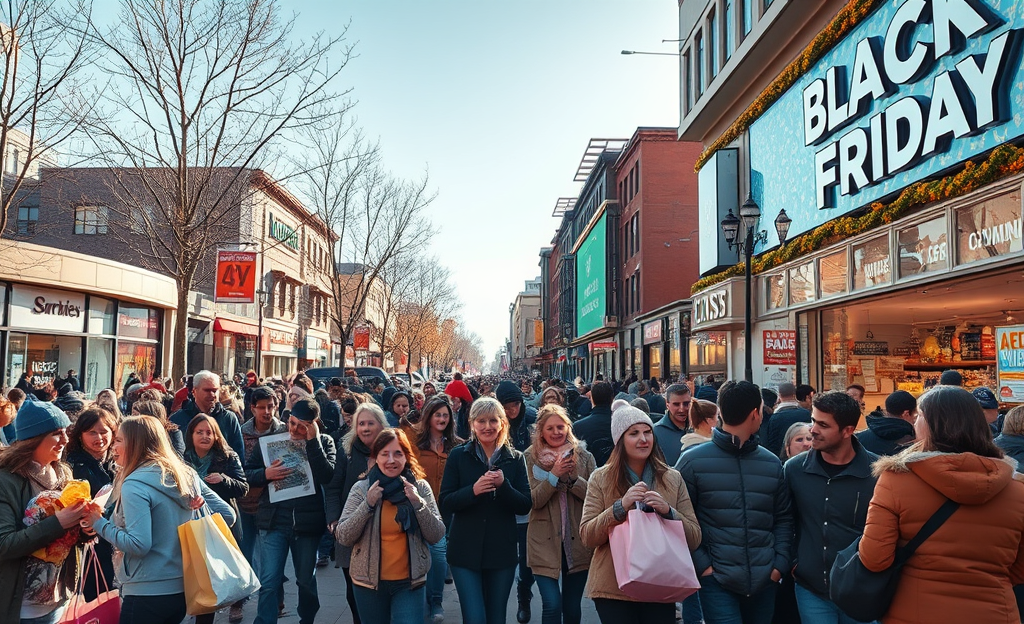
Black Friday is poised to attract over 130 million shoppers this year, showcasing a remarkable resilience in the face of rising prices and tariffs.
As consumers navigate a landscape marked by higher costs and a dip in confidence, spending is nevertheless anticipated to soar to unprecedented levels.
This article will delve into the dynamics influencing Black Friday shopping, including the impact of tariffs on prices, the decline in consumer confidence, and the extraordinary projections for holiday spending.
Join us as we explore these factors driving one of the year’s most significant retail events.
Black Friday Shopping Surge Amid Economic Headwinds
As Black Friday 2024 approaches, more than 130 million shoppers are gearing up for what is expected to be a remarkable shopping spree despite the economic challenges looming over the holiday season.
Economic pressures such as tariffs and inflationary forces have driven up prices, yet the allure of Black Friday persists, as consumers continue to seek out deals and discounts.
Interestingly, this year, spending is projected to reach record levels, underscoring the complexities of consumer behavior in uncertain times.
Amid economic uncertainties, cautious optimism prevails as retailers offer strategic promotions to entice shoppers.
Deloitte’s analysis highlights a nuanced landscape, where shoppers focus more on essential items rather than extravagant splurges, reflecting a shift in consumer priorities (Deloitte’s Black Friday-Commerce Monday analysis).
Meanwhile, estimates from sources like NPR suggest that confidence in making targeted, smart purchases remains strong (NPR on shopper confidence).
This dynamic plays out against a backdrop of evolving consumer priorities, making Black Friday 2024 a pivotal moment for the retail sector.
Tariffs Driving Up Price Tags
Recent tariffs imposed on a variety of imported goods have significantly contributed to rising prices on key merchandise for Black Friday shoppers.
Categories such as electronics, apparel, and home goods have faced some of the sharpest price increases due to the added costs of tariffs being passed on to consumers.
As a result, shoppers this year may find themselves grappling with higher price tags, impacting their overall spending and shopping experience.
Product Categories Most Affected
Shoppers will experience significant price increases in specific product categories due to tariffs this Black Friday.
Based on recent internet data, these impacts include:
- Electronics: price hikes as high as 29 percent, demonstrating a major influence from increased tariffs here.
- Clothing: shoppers can anticipate higher prices, with an increase of up to 25 percent on many brands.
- Furniture: prices have surged significantly under the tariff’s strain with major cost hikes reported.
- Imported foods: crucially affected, several items like seafood and coffee see notable increase in price due to tariffs.
Consumer Confidence Slide and Buyer Psychology
Consumer confidence has noticeably declined over the course of 2023 and 2024, creating ripples in holiday shopping behavior.
This shift in sentiment, influenced by higher prices and economic uncertainties, has led to a pattern of consumer hesitation when making purchases, resulting in a cautious approach towards spending.
Retailers are witnessing a decline in impulse buys as shoppers become more deliberative, prioritizing necessity over extravagance.
As the overall spending impact becomes evident, consumers are increasingly hunting for deals, looking to extract more value from their holiday budgets.
“Consumers are cautious, but not retreating,” said economist Jane Doe, encapsulating the balance consumers are striking between caution and continued engagement in the shopping season.
Moreover, the advent of lingering economic doubts has made shoppers more price-sensitive, steering them toward budget-friendly options while still seeking quality and satisfaction.
For retailers, this altered landscape necessitates adjustments in marketing strategies and inventory management to capture a discerning customer base accustomed to uncertainty.
Record-Breaking Spending Expectations
Amidst economic headwinds characterized by tariffs and dips in consumer confidence, record-breaking spending projections for Black Friday 2024 stand resilient.
According to NBC News, holiday sales display solid momentum fueled by several catalysts.
Retailers step up with aggressive promotions designed to entice cautious consumers.
“Buy-now-pay-later” options amplify purchasing power, giving shoppers flexibility to manage higher price tags without immediate financial strain.
Moreover, the surge in mobile commerce share further highlights technological influence on shopping behaviors.
Through easy mobile interfaces, consumers can effortlessly access deals, contributing to the robust financial outlook.
Reflecting these dynamics, the marketplace navigates economic uncertainties, with spending expected to hit unprecedented levels.
As Caleb Thornton, a market forecaster from Bain & Company, succinctly put it, “It’s a year where the hunger for discounts and convenience drives the optimism in spite of economic pressures.
”
| Driver | Estimated Impact |
|---|---|
| Aggressive Promotions | High |
| Buy-Now-Pay-Later Options | Moderate |
| Mobile Commerce Share | Significant |
Black Friday promises to be a historic shopping event, defying economic challenges.
As consumers continue to engage with the tradition of holiday shopping, the resilience of spending highlights the enduring significance of this retail phenomenon.



0 Comments