Record Online Spending Increases During Black Friday
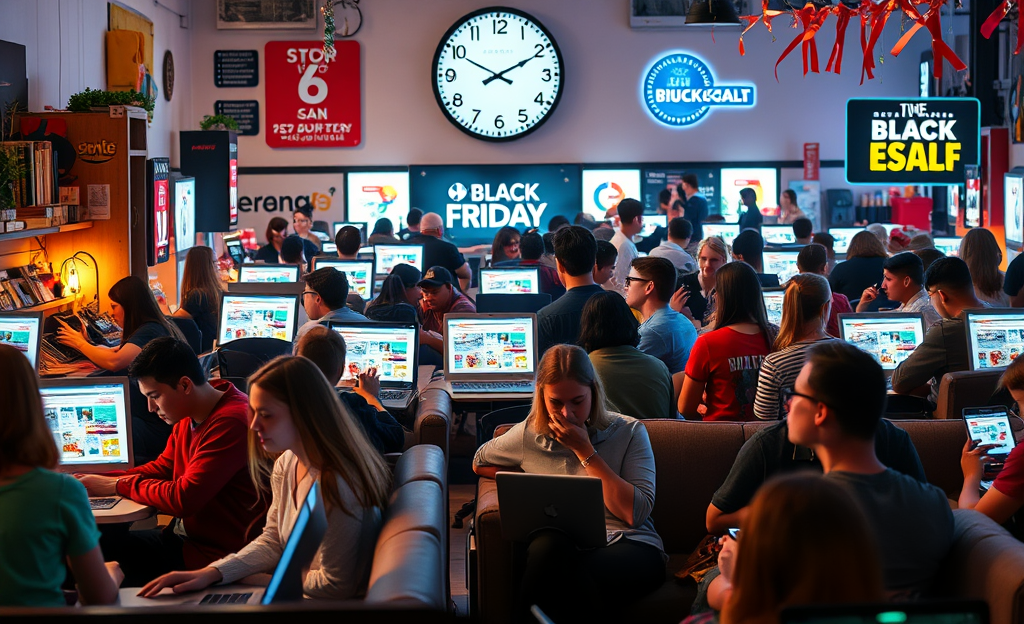
Online Spending surged to unprecedented levels during the recent Black Friday sales, highlighting a significant shift in consumer behavior.
This article delves into the record-breaking figures for online purchases, peak shopping hours, and the notable sales on Christmas Eve.
We’ll also explore the implications of declining physical store traffic and rising prices, as well as the broader economic factors affecting holiday spending.
With total holiday expenditures projected to exceed $1 trillion for the first time, understanding these trends is essential for retailers and consumers alike.
Record-Breaking Black Friday Online Spending
Black Friday 2023 witnessed a historic milestone as American consumers smashed records by spending an extraordinary $11.8 billion online, marking a notable 9.1% increase compared to the previous year.
As digital retail continues to dominate, the spike in activity during this bustling day was particularly significant between 10 a.m. and 2 p.m.
Notably, sales soared at an impressive rate, reaching $12.5 million per minute, illustrating the inherent strength and appeal of online shopping during major retail events.
This unprecedented surge in online consumer spending underscores the shifting dynamics in shopping behaviors, with consumers increasingly leveraging digital platforms for convenience and variety.
According to Adobe Analytics, the day broke new ground in e-commerce, reflecting broader trends despite economic uncertainties affecting consumer confidence.
The massive digital influx during these peak hours highlights a transformative era in retail where traditional in-store metrics are overtaken by online shopping prowess, a testament to the changing consumer landscape.
Holiday Sales Highlights Beyond Black Friday
Online sales reached a remarkable $18 billion in the United States during Black Friday, demonstrating the strong shift towards e-commerce among American consumers.
Globally, this trend resonated powerfully, with total sales soaring to an impressive $79 billion, underscoring the worldwide embrace of online shopping.
Moving forward into December, the holiday spirit was palpable as consumers continued to capitalize on digital deals, culminating in a record-breaking $6.4 billion in online revenue generated on Christmas Eve.
This highlights an unwavering enthusiasm for e-commerce throughout the holiday season, despite external economic pressures such as import tariffs and worries over job stability.
Integrated efforts by retailers to streamline online platforms and encourage easier digital transactions likely spurred this dramatic consumer engagement, seamlessly bridging the gap between Black Friday and Christmas Eve.
This marked period of high engagement ultimately promises a new paradigm for holiday shopping that favors convenience and accessibility.
The Shift From Brick-and-Mortar to Online Shopping
Retailers face significant challenges as consumer behavior pivots online, highlighted by a 3.6% decline in in-store visits compared to last year.
This shift necessitates a strategic reevaluation to remain competitive.
In 2023, physical retail environments have seen reduced foot traffic as more consumers prefer the convenience of online shopping.
This trend compels retailers to devise innovative ways to blend physical presence with digital capabilities, thereby enhancing customer engagement.
The decline in foot traffic forces stores to rethink their operational efficiency by optimizing floor space and reassigning labor strategically.
Moreover, the emphasis on omnichannel strategies allows businesses to provide seamless shopping experiences across various platforms.
Retailers are adapting by focusing on online growth, enhancing customer engagement through innovative digital touchpoints, and investing in technology that offers convenience and speed.
Strategies such as curbside pickup, faster delivery options, and immersive digital experiences are vital in capturing customer interest.
Notably, embedding these elements into their service offerings enriches consumer interaction.
Retailers are responding with:
- Enhance curbside pickup
- Expand same-day delivery
- Invest in immersive digital experiences
Weekend Momentum and Cyber Monday Outlook
As the holiday shopping season progresses, consumer enthusiasm remains buoyant, with expectations set for an impressive weekend spend.
On Saturday, analysts predict that shoppers will allocate around $5.5 billion, propelled by retail events like Small Business Saturday.
This momentum is expected to carry through Sunday, with anticipated online transactions reaching $5.9 billion, setting the stage for a spectacular Cyber Monday.
Retailers are readying to manage the surge, as online sales are forecasted to hit an extraordinary $14.2 billion, marking a continuation of the robust online shopping trend.
The convenience and accessibility of e-commerce platforms are likely to keep consumers engaged in their quest for deals.
According to industry reports, such as those from Adobe Analytics, the sustained high spending levels signify a significant shift towards digital marketplace preference, reflecting an era where online shopping reigns supreme.
Pricing Dynamics and Broader Economic Influences
Despite a 2% drop in the number of items purchased, a 7% increase in average prices is pushing holiday spending past the $1 trillion mark for the first time.
This dynamic emphasizes how consumers face higher prices, leading to greater total expenditures despite buying fewer goods.
| Metric | 2023 Holiday Season |
|---|---|
| Item Count Change | -2% |
| Average Price Change | +7% |
| Total Spending | $1 trillion+ |
External influences such as tariffs and job insecurity exert additional pressure, affecting consumer behavior.
Tariffs on imports raise costs for goods, pushing prices upward even as consumers try to navigate economic challenges.
Job insecurity remains a pressing concern, possibly leading to more cautious spending habits.
It appears that despite economic uncertainties, consumer enthusiasm during the holiday season remains strong, though shaped significantly by these external pressures.
This trend mirrors insights from articles like Inc.
Magazine’s analysis where the impact of tariffs and inflation further complicates the spending landscape.
In conclusion, the dramatic rise in online spending and significant shifts in consumer habits underscore a new era in retail.
As we look ahead, the interplay of economic factors and consumer behavior will continue to shape the holiday shopping landscape.



0 Comments