Hands Reflecting History and Connection
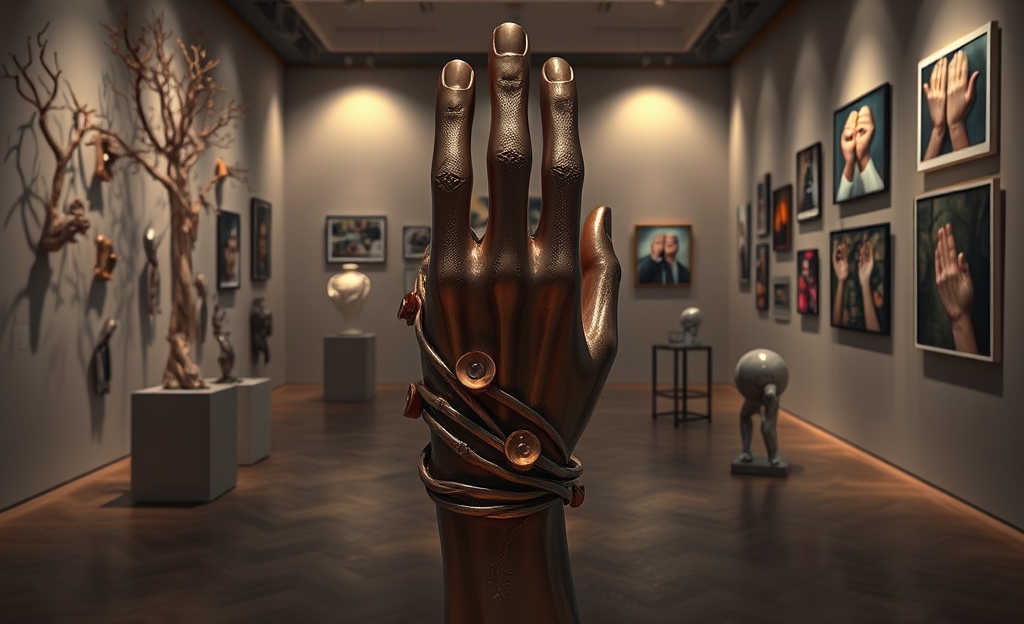
Hands Connection speaks to the intricate relationship between our physical form and the world around us.
This article delves into a captivating exhibition that explores the profound significance of hands, symbolizing our past, present, and future.
Through various artistic mediums, the exhibition encapsulates the duality of hands as both nurturing and harmful, reflecting the strength and fragility inherent in human experience.
From metal and ceramic creations to interactive installations, discover how hands serve as a conduit for connection, memory, and civilization itself, inviting us to reflect on their vital role in shaping our lives.
Beyond Touch: Mystical Hands
The exhibition ‘I Hold It Towards You’ warmly invites visitors into a mystical experience, revealing the timeless allure of hands as bridges weaving past, present, and future.
Within this artistic sanctuary, hands emerge not just as mundane extensions of our bodies but as profound symbolic roles, guiding presences that hold the delicate threads of eras and memories together.
Imbued with layers of meaning, this exploration of hands captivatingly portrays their ability to nurture and protect, as well as to wound and conceal.
The evocative imagery includes a hand shaped like a rose, illustrating the duality of creation and destruction.
Elsewhere, the intertwined hands resemble the silent connection of dead trees, a testament to the human condition of silent resilience.
The clever use of metal and ceramic in the art evokes the historical evolution of humanity, inviting reflection on our primordial tool – the hand.
Each piece within the exhibition eloquently urges contemplation of how hands have been and remain pivotal in crafting archetypes, developing technology, and preserving memory, celebrating their profound vitality throughout human history.
For instance, you can explore further concepts of hands redefining narratives by checking this Guggenheim’s Take on Time and Place, deepening your understanding of their place in our evolving world.
Embodiments of Hand Symbolism
The exhibition \”Embodiments of Hand Symbolism\” invites viewers to explore the multifaceted representations of hands through various artistic mediums.
Each piece serves as a reflection of the complex relationship between humanity and the symbolism of hands, illustrating their fragility, strength, and the stories they tell.
As we delve into individual artworks and their material choices, we will uncover the rich layers of meaning behind the hands that both nurture and conceal.
Fragility and Strength in Metal and Ceramic
The exhibition artfully merges the enduring qualities of metal with the delicate essence of ceramic, creating a vivid exploration of the fragility and strength inherent in human hands.
Sculptures carved from metal stand as testaments to durability and resilience, reflecting the enduring power of hands across time and history.
This robustness contrasts with the ceramic pieces, which capture the contrasting vulnerability of hands, evoking both serenity and the potential for breakage.
The nuanced interplay between these materials narrates a story of contradiction and synergy, where strength and delicacy coexist.
Metal’s industrial might suggests the hands’ historic role in shaping civilizations, building worlds through labor and creation.
Meanwhile, the fragile touch of ceramic captures the exquisite sensitivity inherent in every gesture.
Referencing historical uses, Giorgio Vasari noted how artists like Michelangelo used hands in sculpture to express divine perfection and human imperfection.
Through this lens, the exhibition emphasizes the dual nature of hands, celebrating their capability to nurture or harm, while reminding us of the intricate balance between fragility and strength that defines our human experience.
The Rose Hand: A Dual Promise
The hand shaped like a blooming rose serves as a poetic ode to the juxtaposition of nature and human form, embodying a symphony of contrast in its structure.
Its petals, tender and delicate, unfurl with the whisper of nurturing care, akin to the gentle touch bestowed by a loving hand.
Yet, intertwined within this flourishing bloom lurk sinister thorns, their presence veiled yet potent, ready to inflict harm upon those who dare to approach without caution.
This dual promise mirrors the inherent contradiction present in human interaction, where the sweetest gestures can harbor the most profound dangers.
The rose, long a symbol of love and secrecy, deepens this narrative, casting shadows where sunlight once danced.
This motif within the exhibition not only enchants but challenges observers to reconsider the multifaceted nature of human touch, further reinforcing the timeless notion captured in the phrase
“Every rose has its thorn.”
In this exploration, the Henri Camille-Danger inspires a rich reflection on the duality of existence.
Intertwined Tree Hands: Silent Communion
Artworks of hands, shaped as intertwined dead trees, evoke a profound sense of silent communication that transcends verbal expression.
These forms embody timeless unspoken bonds that persist through the ages, connecting people across generations.
Like the roots and branches of venerable trees, these hands convey an intricate web of relationships, where each finger and limb echoes a life touched, a story shared.
The art not only symbolizes human interconnectedness but also the enduring resilience of these connections, much like trees that stand firm despite the ravages of time and nature.
Such imagery is powerfully illustrated in Mary Hrbacek’s “Tree of Life” creations, which remind us of the anthropomorphic ties between mankind and nature (Tree of Life by Mary Hrbacek).
These artworks serve as a testament to the deep-rooted and often unnoticed alliances we nurture, where the intertwining of fingers becomes a metaphor for unyielding unity.
As
the subtle dance of shadows between the tree-like hands unfolds, it unveils a world where gestures speak louder than words
.
Metal as Memory: The Primordial Tool
The hand has been humanity’s intrinsic tool, shaping civilization from its very roots.
From the flicker of early fire to the sparkle of forged metal, the path of innovation has been guided by the human hand’s adaptability.
Metalwork, a key milestone in technological history, underscores this connection.
As technology evolved, so too did the proficiency of the hand, adapting to forge gleaming alloys from primitive ore.
The ancient use of hands, revealed in studies such as those by New Scientist’s examination of stone tools, highlights the intricate interplay between early toolmaking and hand morphology.
Metal’s permanence in human history serves as a testament to the hand’s enduring legacy.
Not only has the hand been the architect behind tool creation, but it has also been pivotal in wielding these tools, driving the technological leaps throughout millennia.
Therefore, metal can be seen not merely as a substance but as a keeper of memory, echoing humanity’s most primal achievements and linking the past to the unending future.
Indeed, the hand, in its capacity as the primordial tool, scaffolds the entirety of human development.
Miniature Portraits: Where Art Meets Science
Miniature hand portraits serve as both artistic masterpieces and scientific observations, offering a unique window into the delicate intersection of these disciplines.
These detailed, yet diminutive works fuse art and science by capturing hands as symbols of human ingenuity and cultural evolution.
Through the precision of their strokes, they reveal an understanding of anatomical structures and highlight the hand’s essential status in human progress, linking past and present knowledge.
In the realm of interdisciplinary practice, portraits stand out as they illustrate how the meticulous can meet the imaginative.
By employing scientific techniques such as anatomical studies, these portraits emphasize the role of hands in shaping human experiences and narratives.
This blend of disciplines not only honors historical craftsmanship but also projects a future where cultural memory and technological innovation are intertwined through art.
Miniaturized portraits act as lenses, encasing the profound relationship between the artistic expression of the hand and its utilitarian abilities.
Thus, this art form doesn’t just reflect the meticulous nature of its creation, but also engages viewers in a larger ongoing dialogue about the development of human civilization.
Polaroid Veils: Gestures of Concealment
Polaroid photography offers a matrix of concealment in which hands artfully mask identities.
With each fleeting frame, these instant images capture the complexity of human expression and the dichotomy of identity revealed and obscured.
Intriguingly, hands become both shields and facilitators of privacy, concealing faces while simultaneously inviting viewers into an introspective dialog about what is hidden and what is unveiled.
The theory of hidden identity, as explored by practitioners like Noel Alvarenga, emphasizes the manner in which photographs can craft narratives of anonymity.
This approach not only challenges the viewer’s imagination but also empowers the subject’s autonomy over their identity.
Through the lens of a Polaroid, the ephemeral nature of the medium further accentuates the fleeting moment of privacy before it solidifies into a tangible memory.
Hands, in these instances, serve as the conduit of expression, straddling the line between what’s displayed and what’s withheld.
As subjects engage with this form of artistry, they simultaneously reveal and protect their innermost selves.
Interactive Currents: Electricity and Archetypes
The interactive installation stands as a focal point, embodying the fusion of electricity, archetypes, and technology.
Participants engage directly by using their hands to illuminate hidden narratives within the circuitry, transforming a static exhibit into a dynamic tapestry of light and sound.
This interactive art experience merges art and technology, demonstrating the transformative power of touch.
As hands glide over conductive surfaces, they release subtle electric currents that animate the art, offering both an immediate visual impact and a profound connection to cultural archetypes symbolic of humanity’s journey.
- Hands generate subtle currents, vitalizing artwork.
- Participants embody collective memories, shaping narratives.
- Interactive soundscapes respond to movement and touch.
The interplay between human touch and technological response invites deeper contemplation on how our ancestors once shaped their environments and identities through their hands.
This installation powerfully communicates the ancestry of our tools, where hands are the catalyst for both ancient storytelling and modern innovation.
Not only do participants experience an evolving art form, but they also witness the symbolic lineage of our technological evolution.
By engaging with the installation, visitors become active participants, reminding us of our forebears’ enduring legacy and the potent role of hands in crafting our collective future.
Hands Connection serves as a reminder of the essential role hands play in our existence, bridging the gap between humanity and art.
This exploration highlights the significance of hands in defining our shared history, technology, and emotional ties, celebrating their enduring vitality and impact.



0 Comments