Access Credit Without Checking Financial History

Credit Access is a crucial aspect of financial independence, yet many individuals face challenges due to a lack of traditional credit history.

In this article, we will explore how alternative data sources, such as bank transactions and payment histories, have emerged as viable tools for assessing creditworthiness.
See how to access credit today even with a bad credit score
Understand loan conditions clearly without any complications
Get a fast online loan with immediate approval today
By leveraging these non-traditional methods, lenders can provide opportunities for those who have not yet established a formal credit profile.
We will delve into the benefits this offers to individuals, the process of securing loans with alternative evaluations, and new pathways to demonstrate financial reliability without the constraints of a conventional credit history.
Opening Credit Doors Without Prior Records
The realm of financial services is evolving, offering new opportunities through credit without financial history.

This approach enables individuals traditionally marginalized by standard credit scoring systems to gain entry into the financial arena.
It aims at financial inclusion, granting numerous people, particularly those identified as “credit invisible, the opportunity to demonstrate their accessibility to financial products.
Alternative credit evaluation comes to the rescue of those without traditional credit footprints, utilizing methods that review non-traditional data sources.
This form of assessment is crucial in the current financial landscape as it embraces diverse consumer profiles.
Nevertheless, aspiring for credit through this unconventional channel poses challenges:
- Lack of awareness among potential beneficiaries
- Data privacy concerns
- Possible bias in data interpretation
In subsequent sections, we will delve deeper into various aspects of these alternative methods, such as the diverse data sources being leveraged, the inherent benefits, and the potential hazards that may arise in pursuit of financial inclusion.
Stay tuned to uncover how these parameters foster a more inclusive financial ecosystem for the credit invisible.
Evaluating Credit With Alternative Data
The landscape of lending is evolving, presenting new opportunities for individuals often overlooked due to a lack of traditional credit history.
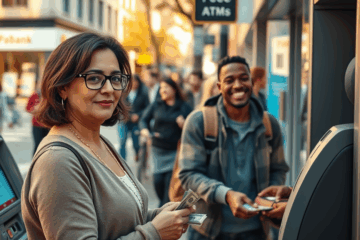
Evaluating credit with alternative data offers a fresh perspective on assessing financial reliability, utilizing unconventional resources to gauge an applicant’s potential.
This innovative approach places alternative data at the forefront of modern inclusive lending, paving the way for broader access to credit.
Data Types Transforming Risk Assessment
The transformation of risk assessment in credit evaluation utilizes alternative data as a crucial tool.

By examining transactions in areas like rent and utility payments, lenders can perceive a borrower’s consistency.
Notably, rental payment history, as highlighted by organizations such as Plaid, provides insight into financial responsibility.
Furthermore, lenders often assess telecommunication payments which uncover the timeliness of smaller, regular payments.
This layered approach helps create a fuller financial profile, which in turn broadens access to credit for those lacking a traditional financial history.
Companies like
GAO credit score alternatives”>U.S. GAO
Relevant data such as mobile-wallet activity emerges as a novel tool, capturing a snapshot of spending behaviors among modern consumers.
In combination, these methodologies redefine risk determination, offering non-traditional borrowers new avenues to demonstrate financial capability.
Large players such as FICO have also ventured into utilizing these alternative data methods to enhance their credit scoring processes.
| Data Source | Contribution |
|---|---|
| Utility payments | Shows on-time habits |
| Rental payments | Reveals long-term reliability |
| Telecommunication payments | Indicates consistent billing |
| Mobile-wallet activity | Captures real-time spending |
Consumer Benefits and Social Impact
The option of obtaining credit without traditional credit checks provides profound advantages for individuals and communities by leveraging alternative financial data.

Consumers gain improved access to credit through the evaluation of bank transactions, rental, and utility payments, which promotes relevant financial inclusion.
This method allows first-time borrowers, especially those from underserved communities, to demonstrate their financial reliability and access financial products, promoting consumer empowerment.
Without the barrier of a conventional credit report, people can secure loans quickly, aiding their financial independence and growth.
Economic mobility becomes a tangible reality, as individuals can invest in opportunities such as education or entrepreneurship that may have been previously inaccessible.
This newfound access to credit can have ripple effects throughout communities, fostering positive economic outcomes and reducing poverty levels, thereby contributing significantly to overall economic rejuvenation (Source: FinAccess 2023).
Furthermore, as more people engage in the credit market, financial institutions can benefit from a broader customer base, enabling a diversified business approach and supporting long-term societal prosperity.
Ultimately, credit without the need for established financial history symbolizes a strong commitment to enabling financial opportunities for all.
Entry-Level Products and Scoring Models
Entry-level credit products offer methods for individuals to build financial credibility without relying on traditional financial histories.

Thanks to alternative credit data, people can establish their credit profiles more inclusively.
The use of rental payments, utility payments, and transaction histories provides a broader understanding of one’s financial reliability.
For those lacking a formal credit history, these methods serve as crucial stepping stones towards financial stability.
- Secured credit card: Requires a cash deposit that becomes the limit, helping to build credit with secured spending limits.
- Rental payment reporting: Services like RentalKharma report rental payment history to credit bureaus, increasing credit scores.
- Utility payment history: Platforms like Experian Boost capture this non-traditional data to enhance credit assessments.
- Micro-loans: Peer-to-peer lending platforms like LendingClub offer small loans facilitating credit score improvement through timely payments.
- Retail installment loans: Offered by retailers, these loans provide credit history through purchasing products.
These methods demonstrate significant real-world effects by opening up credit access avenues to more consumers.
By incorporating alternative data, financial products not only become more inclusive but also provide a robust and diverse way of assessing creditworthiness.
Ultimately, these tools link directly to broader credit access, empowering consumers in their financial journeys.
Navigating Privacy and Compliance
Lenders increasingly rely on alternative data for credit evaluation, primarily because of the potential to reach individuals without a traditional credit history.
However, this innovative approach presents challenges.
Data accuracy remains a significant concern, as inaccuracies can lead to incorrect assessments of creditworthiness, severely impacting borrowers’ lives.
Moreover, privacy concerns arise due to the collection of sensitive personal data beyond traditional financial records, including utility bills and rental payments.
Regulatory frameworks struggle to keep up with this rapid advancement in data usage, posing substantial regulatory compliance challenges.
Using alternative data without proper oversight risks breaching consumer rights and data protection laws.
Lenders must navigate these murky waters carefully to avoid penalties and maintain trust.
A key caution is the potential bias that can arise when algorithms prioritize certain data patterns, inadvertently leading to discriminatory outcomes.
A recent policy assessment emphasizes,
“Regulators are still catching up with the pace of data innovation,” notes a 2024 policy brief.
To mitigate these risks, lenders should collaborate with regulatory bodies to establish transparent, fair, and comprehensive data evaluation frameworks, balancing innovation with consumer protection.
This delicate balance ensures both lenders and borrowers benefit from more inclusive financial practices.
In conclusion, the ability to obtain credit without a traditional history opens doors for numerous individuals.
By embracing alternative data sources, we can foster a more inclusive financial landscape that empowers everyone to achieve their financial goals.