Concerns Rise Over Labor Market and Tariffs Impact
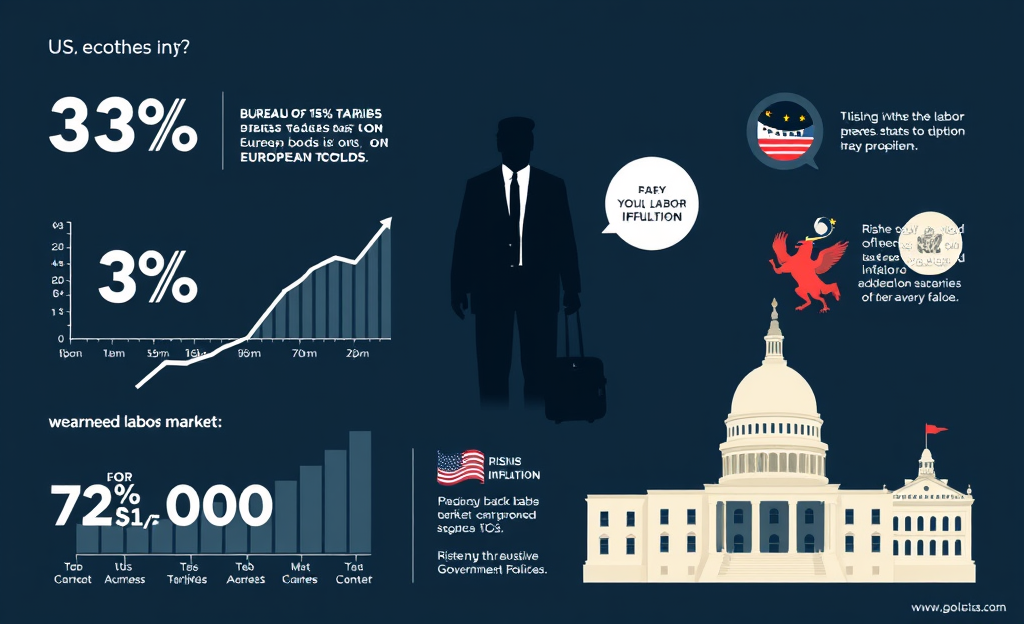
The Labor Market is facing scrutiny as recent economic developments unfold, with a preliminary trade deal between the US and EU resulting in 15% tariffs on European goods.
Meanwhile, ongoing trade negotiations with China remain unresolved.
Despite a solid GDP growth of 3%, the addition of only 73,000 jobs in July has raised alarms about a potential weakening labor market.
Additionally, plans to dismiss the head of the Bureau of Labor Statistics have ignited concerns over the credibility of US economic agencies and possible political influence on the dissemination of critical economic data.
This article will delve into these issues and their implications.
Global Trade Negotiations: EU Agreement Versus China Impasse
The recent agreement between the US and the EU marks a pivotal development in global trade dynamics.
By implementing a 15% tariff on European goods, the US has reshaped its transatlantic trade relations, heralding a new era of cooperation and mutual economic adjustment.
This accord reflects a strategic decision aimed at bolstering certain domestic industries while calibrating the economic balance with major trade partners.
In stark contrast, the ongoing US–China trade negotiations remain mired in uncertainty, with discussions yet to yield a conclusive framework beneficial to both nations.
This impasse heightens potential risks associated with prolonged economic discord and geopolitical tensions, underscoring the complexity of navigating multifaceted global trade issues.
As both regions grapple with these evolving circumstances, the broader impact on international markets and diplomatic ties continues to unfold, compelling stakeholders to remain vigilant and responsive to emerging shifts.
Mixed Signals in Domestic Economic Data
The recent economic landscape presents a confusing picture, highlighted by a robust 3% GDP growth rate contrasted with a modest addition of only 73,000 jobs in July.
This notable disparity raises questions about the underlying momentum of the economy, suggesting that while overall growth seems strong, the labor market may not be reflecting that vitality.
Such mixed signals complicate the interpretation of economic health and prompt further inquiry into the factors influencing job creation in this period.
Data Integrity Under Political Scrutiny
The recent plan to remove the Bureau of Labor Statistics head has raised serious institutional risk concerns, potentially undermining the credibility of US economic data.
Underlined political pressure is evident, as the administration faces criticism for its interference with statistical integrity.
This move could lead to doubt over vital economic indicators essential for decision-making. *Many experts warn* about the long-term impacts on trust.
The removal comes amidst a backdrop of unresolved US-China trade negotiations and a volatile labor market, suggesting heightened economic uncertainty and political motivations driving actions that could erode public confidence in the integrity of national data frameworks.
Clashing Perspectives on Economic Policy
• Rising tariffs threaten supply chains.
• Inflationary pressures on core goods intensify.
• Labor market shows signs of stagnation.
Economists express deep concerns over these issues, referencing potential disruptions in economic growth.
They argue that Relevant text aligning supply chains across borders becomes increasingly complex, which could lead to heightened costs for consumers, as noted in certain economic reports.
In contrast, the administration remains buoyant, emphasizing ongoing growth with a reported 3% boost in GDP.
A government spokesperson stated, “Our economy remains robust,” showcasing confidence in underlined strong text their economic policies despite challenges.
Furthermore, they advocate that their strategies will bolster national industries, which aligns with a commitment to improving job numbers, even if July’s addition fell short of expectations.
“We’re making necessary adjustments,” they assert, underscoring a positive long-term vision.
In conclusion, the current economic landscape presents a mix of growth and concern.
With rising tariffs and inflation challenging the Labor Market, it is vital to monitor how these factors will affect future economic policies and the overall stability of the US economy.



0 Comments