Economic Exclusion of Black Women Demands Action
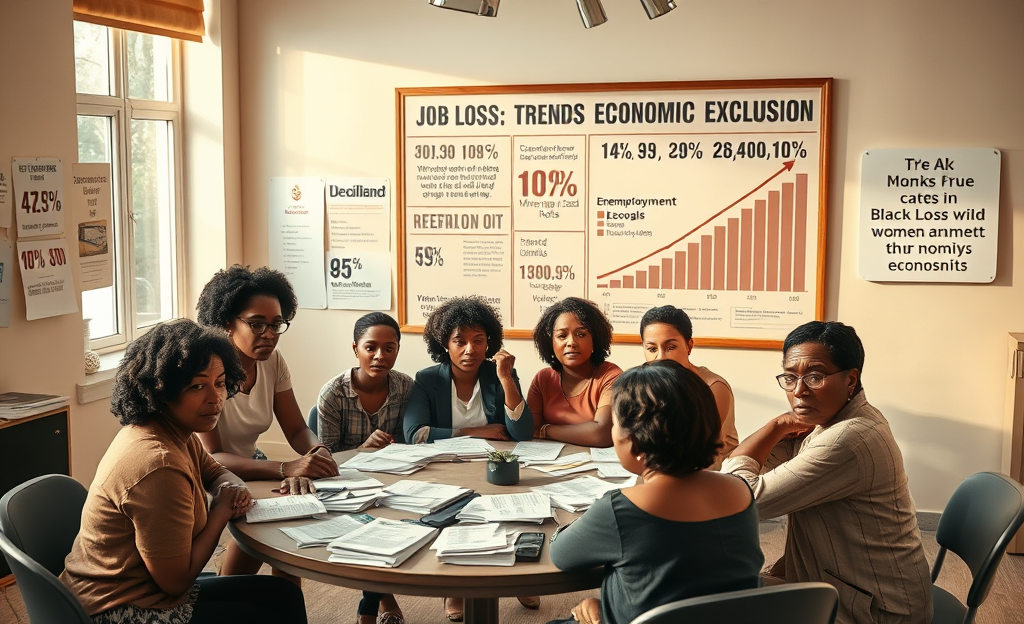
Economic Exclusion of 600,000 Black women since February highlights a troubling trend in our labor market.
This article delves into the recent job report, revealing minimal job growth paired with significant losses specifically affecting Black women.
We will explore the alarming rise in unemployment rates, the widening wage gap, and the concentration of opportunities in low-paying sectors.
By analyzing these issues, we aim to shed light on the urgent need for effective solutions that promote pay equity and create pathways to better-paying jobs, ultimately addressing the economic disparities faced by this demographic.
Economic Exclusion of Black Women Since February
Since February, an alarming economic exclusion of Black women has occurred, with significant implications for both personal livelihoods and the national economy.
This situation demands immediate intervention to rectify structural issues contributing to this exclusion.
The evolving job market and systemic barriers have resulted in substantial job losses among Black women, who face increasing unemployment rates and struggle with low-paying job opportunities.
- 600,000 Black women economically excluded since February.
- 297,000 Black women have lost their jobs.
- 223,000 Black women remain unemployed.
- 75,000 Black women have left the workforce entirely.
- Revealing a loss of $9.2 billion in GDP, exacerbating economic disparities.
Understanding these figures is crucial because the impact extends beyond Black women.
The national economy suffers, as gaps in workforce participation and pay equity remain unaddressed, leading to broader economic instability.
Addressing these issues is not just a moral obligation; it is an economic necessity to ensure the strength and resilience of the U.S. economy.
Monthly Job Changes and Overall Employment Picture
The November 2025 job report signals a troubling trend for Black women in the workforce.
While the economy added just 119,000 jobs in September, the revised data from August indicates an actual net loss in employment.
Within this period, Black women have faced a staggering setback, losing 297,000 positions since February.
This significant decline underscores how critical it is to address economic disparities and improve employment conditions for Black women to prevent further harm to both individuals and the overall economy.
Though overall job creation remains sluggish, the focus sharply remains on the disproportionate impact on Black women whose unemployment rates have risen from 5.4% to 7.5%, as noted in the EPI blog analysis.
| Month | Job Change |
|---|---|
| February | -50,000 |
| March | -75,000 |
| April | -106,000 |
| May | -26,000 |
| June | -40,000 |
Unemployment Rise and Participation Gap
The unemployment rate for Black women saw a significant increase, climbing from 5.4 percent in February to 7.5 percent by September.
This jump underscores a growing concern as these percentages translate into a substantial number of Black women facing economic hardship in 2025. The issue is further reflected in the job report from November 20, 2025, which highlights a worrying trend of job loss going beyond initial estimations as detailed here.
When considering the exit from the workforce, the real 10.23 percent unemployment rate becomes apparent.
This figure reveals the depth of the employment crisis for Black women, emphasizing the challenges faced by those who have opted out of the labor market entirely due to diminished job opportunities according to this analysis.
As they endure financial exclusion, their disappearing presence in the employment sector is alarming.
In contrast, women’s participation in the labor force is declining, while men are re-entering in greater numbers.
This divergence highlights persistent gender-related employment barriers, emphasizing the urgency to create equitable opportunities across industries as examined in this report.
Ensuring pay equity and more inclusive job prospects remain vital to reversing these trends and closing the participation gap.
GDP Impact of Lost Jobs
The loss of 297,000 jobs compounded by 75,000 workforce exits among Black women in 2025 results in a significant 9.2 billion GDP shortfall.
This substantial economic impact arises from the reduced spending power of those affected, leading to diminished consumer demand within local markets.
As these women typically contribute to community-centric sectors such as education and healthcare, the ripple effects extend beyond individual financial distress to erode entire local economies.
This situation threatens to weaken local tax bases, which are vital for maintaining public services and infrastructure.
It’s not just a statistic; it’s a stark reflection of the economic interdependencies within communities.
On a wider scale, this GDP decrease holds critical ramifications for national economic growth forecasts.
Robust consumer spending is a cornerstone of economic vitality, and with this demographic’s reduced participation in the workforce, the national economy feels the strain.
This decline in financial stability among Black women profoundly disrupts not only their economic prospects but also overall growth trajectories.
Addressing this inaction is not merely about rectifying social inequality but safeguarding national economic health.
Encouragingly, policies that promote equitable pay and job opportunities in higher-paying industries could potentially reverse this concerning trend.
Ignoring these issues would not only exacerbate current disparities but also place a heavier economic burden on future economic prospects.
Wage Inequality and Job Quality
Black women are disproportionately represented in low-paying sectors, which exacerbates economic inequality.
The data shows that only 42.6% of Black women work in higher-paying management, professional, and related jobs, as revealed by the NYS DOL Gender Wage Gap Report.
This limited access to quality positions perpetuates the wage gap and financial instability.
- Men: $1.00
- Women: $0.81
- Black Women: $0.66
The long-term impact of wage inequality prevents Black women from accumulating wealth and achieving financial security.
This earnings disparity directly results in a cumulative loss of $42.7 billion in wages annually compared to white men, as noted by the US Department of Labor Report.
Addressing this issue is essential, not only to improve the economic well-being of Black women but also to enhance the broader economic landscape.
Urgent Solutions and the ‘Exit Economy’
The alarming trend of the Exit Economy profoundly impacts Black women, who have been economically marginalized at an accelerating rate.
Since February, the disproportionate job losses and subsequent financial strain highlight a dangerous economic realignment.
Black women’s departure from the workforce not only devastates individual lives but signals broader systemic issues that threaten to destabilize the U.S. economy as a whole.
Continuing on this path will have far-reaching consequences.
Addressing this urgent situation requires unyielding attention to pay equity and opening doors to higher-paying industries.
It’s crucial for employers and policy makers to implement strategies such as comprehensive compensation audits and transparent pay practices.
Drawing insights from effective programs like those recommended by Kindred Futures will be pivotal.
By breaking the cycle of occupational segregation and underrepresentation, we create pathways that empower Black women, ensuring their contributions enrich all sectors.
In this moment, hope lies in collective action and purposeful policy reform.
Acknowledge the power within communities and industries to support and uplift Black women into roles that match their potential.
As allies and advocates, our shared commitment to restructuring workplace dynamics will redefine economic opportunities.
Let us embrace this urgency with resolve and determination, ensuring that the labor markets of tomorrow are inclusive and equitable for everyone.
In conclusion, the challenges posed by economic exclusion and the growing ‘Exit Economy’ underscore the need for immediate action.
Addressing pay equity and expanding access to higher-paying industries is vital not only for Black women but for the health of the entire U.S. economy.



0 Comments