Economic Growth Shows Signs of Slowdown
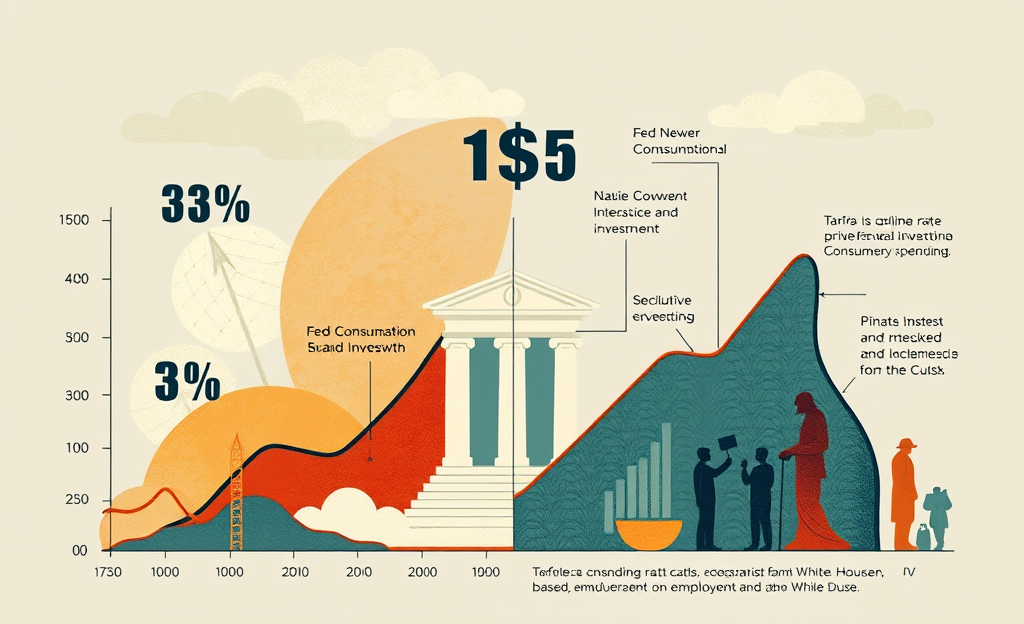
Economic Growth remains a critical focus as we examine the performance of the U.S. economy in the second quarter of 2025. With growth recorded at an annual rate of 3% and a cumulative rate of 1.2% for the year, signs of a slowdown in consumption and investment are emerging.
This article delves into the Federal Reserve’s decision to maintain stable interest rates amidst inflation and tariff concerns, the potential impact of new tariffs on price pressures, and the decline in private investment and consumer spending, all while highlighting the inconsistent stance from the White House regarding economic policy.
U.S. Economic Performance in the Second Quarter of 2025
The U.S. economy demonstrated resilience with a 3% annual growth rate in the second quarter of 2025, bouncing back from a previous contraction.
This robust growth outpaced many forecasts, showcasing relative economic strength, even as challenges like inflation and tariffs loom on the horizon.
However, while the Q2 figures are promising, they hint at deeper underlying issues.
The 1.2% cumulative growth for the year underscores a significant slowdown in economic expansion, primarily due to softer consumer spending and dwindling private investments.
Economic momentum remained steady, yet the facade of robust growth conceals a fragile consumer base and wary investors.
Consumption, typically a driver of economic progress, showed signs of fatigue.
Meanwhile, investment trends appeared cautious, reflecting uncertainties surrounding potential new tariffs and inflation.
Despite calls for monetary easing, the Federal Reserve maintained interest rates, citing inflationary concerns and geopolitical pressures.
Such macroeconomic intricacies illustrate the complex economic landscape, wherein strong GDP growth coexists with cautious optimism among economists and policymakers.
While the current growth pace offers some reassurance, the broader economic picture requires cautious navigation.
Federal Reserve Policy Outlook
As the U.S. economy navigates a tumultuous landscape marked by a modest growth rate and declining consumer spending, the Federal Reserve’s decision to maintain stable interest rates has stirred considerable debate.
This policy stance comes amid rising pressures from inflation, potential new tariffs, and mixed signals regarding private investment.
The outlook for Federal Reserve policy is shaped by these economic challenges, prompting cautious deliberation on future adjustments.
Interest Rates Remain Stable Amid Pressures for Cuts
The Federal Reserve upheld its decision to maintain interest rates stability in Q2 2025, a move seen as critical amid the volatile economic landscape.
Despite the pressure for rate cuts from various quarters, particularly the White House, the Fed held its ground, underscoring concerns around inflation and new tariffs.
According to this CNBC article, chair Jerome Powell emphasized that higher tariffs, which have started to increase consumer prices, necessitate maintaining the current rate to keep inflation in check.
In contrast, some dissenting voices in the Fed argue for immediate measures to stimulate growth, as consumer spending shows signs of slowing.
Nevertheless, Powell prioritizes a cautious approach, aware of the enduring impact tariffs could have on the inflation rate.
As highlighted by this Fox Business coverage, Powell’s stance focuses on containing inflation rather than yielding to external rate cut pressures.
Interest rates stability thus becomes pivotal in navigating these complex economic challenges.
Impact of Potential New Tariffs on Price Pressures
In 2025, the escalation of new tariffs is intensifying price pressures across the U.S. economy.
As tariffs rise, consumer prices inevitably climb, contributing to inflationary trends that policymakers and economists find concerning.
According to insights from the Consumer Price Index Report, tariffs have already affected various sectors and their contribution to overall inflation is significant.
Moreover, studies from the Federal Reserve Bank of Boston project additional boosts to core inflation, raising relevant questions about economic strategies.
Therefore, understanding how these changes will impact consumer behavior and economic growth remains crucial.
As consumer spending reacts sensitively to these developments, businesses and policymakers must adapt quickly to mitigate the potential negative effects of ongoing tariff implementations.
| Proposed Tariff | Estimated Price Impact |
|---|---|
| Automobiles | +0.3 pp to CPI |
| Electronics | +0.5 pp to CPI |
Slowing Private Investment and Consumption Amid Growth
Despite recent output gains, the slowing of private investment in 2025 signals a cautious economic forecast, reflecting broader market concerns.
The impact of tariffs has exacerbated price pressures on imported goods, such as household furniture, further compounding the hesitancy among businesses to commit capital in large-scale projects.
This caution is evident as capital expenditures are expected to stabilize between $65 million and $75 million, portraying an alignment with the Federal Reserve’s measured stance on interest rates to curb potential inflationary impacts.
Such conditions contribute to a mixed economic narrative, where growth figures clash with underlying investment strategies.
Concurrently, consumer spending trends have shown signs of moderation, with personal consumption expenditures predicted to ease from previous highs.
A decrease in spending growth to 1.9% from 2024’s 2.8% suggests that consumers remain wary.
Household incomes, witnessing a notable decline in May 2025, underscore the challenges faced by families in managing increased cost of living, due partly to tariff-induced price hikes.
This slow consumption rate hints at a potentially dampened economic vitality despite encouraging GDP statistics.
As a result, the Federal Reserve’s decision to maintain interest rates reflects the complexities involved in balancing growth pursuits with inflation control.
White House Messaging Versus Federal Reserve Dissent
The recent dissent within the Federal Reserve, as seen during the monetary policy decision-making in 2025, underscores the careful balancing act the institution must perform.
Against a backdrop of economic growth reported at 3%, down from earlier forecasts, this disagreement stems from the cautious approach by a majority of the Federal Open Market Committee (FOMC) to hold interest rates steady.
Yet, crucial perspectives voiced by members who proposed rate cuts echo concerns over a potential economic slowdown.
- Governor Michelle Bowman
- Vice Chair Christopher Waller
highlighted their preference to reduce rates, challenging the prevailing consensus and shedding light on the complexities of steering economic policy amidst domestic and international pressures.
Their stance exposes differing opinions on addressing emerging threats like fluctuating inflation and tariff uncertainties.
Meanwhile, inconsistent White House signals regarding economic stability and policy create additional challenges.
While it prepares to respond to tariff negotiations, the government simultaneously pressures the Fed for rate reductions, signaling a desire for immediate stimulation.
This conflict between rapid easing measures and maintaining cautious monetary strategies reflects the broader economic environment’s strategic ambiguities.
Balancing this theatre of policy-making will prove pivotal for upcoming decisions.
In conclusion, the complexities of the U.S. economy in mid-2025 highlight the challenges of balancing growth with inflation and investment concerns.
As the Federal Reserve navigates these issues, the path forward remains uncertain.



0 Comments