Innovative Smart Glasses Showcase New Technologies
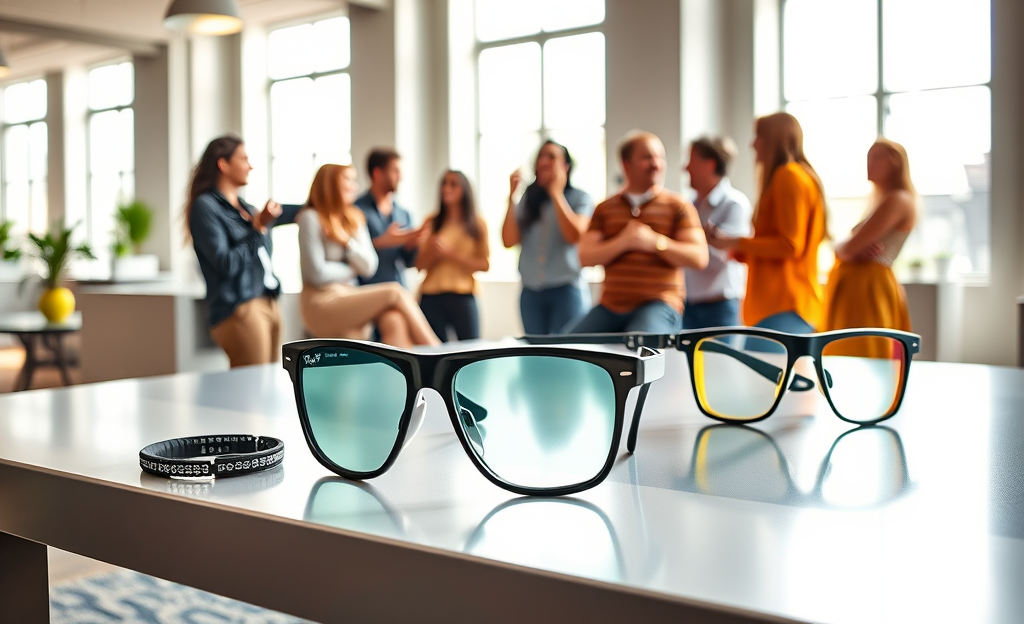
Smart glasses have rapidly evolved, showcasing cutting-edge technology and design.
In this article, we will explore the intriguing features of the latest models, including the Ray-Ban Display, Ray-Ban Meta (Gen 2), and Oakley Meta Vanguard.
From integrated screens to innovative gesture control through the Meta Neural Band, these devices promise to redefine how we interact with technology.
However, challenges like video call performance have emerged, raising questions about their functionality.
With a focus on user experience, we will delve into the initial reception of these products and what the future holds, particularly regarding the anticipated ‘Hypernova’ model with neural control capabilities.
Overview of Leading Smart Glasses Models
Transitioning into the evolving smart glasses market, the Ray-Ban Display priced at $799, the Ray-Ban Meta (Gen 2) at $379, and the Oakley Meta Vanguard at $499 each capture distinct niches.
Ray-Ban’s Display model stands out with its integrated screen and innovative Meta Neural Band, offering gesture control capabilities—ideal for tech enthusiasts seeking the latest advancements.
Meanwhile, the Ray-Ban Meta Gen 2 targets style-savvy users with its competitive pricing, blending form and function.
Bridging performance and practicality, Oakley Meta Vanguard appeals to active lifestyles, providing deep integration with platforms like Garmin and Strava.
This diverse lineup not only reflects the versatility of smart glasses but also demonstrates their growing significance in our daily interaction with technology.
Innovative Features of Ray-Ban Display
The Ray-Ban Display smart glasses soar to the forefront of technological innovation with their integrated screen, offering users a vivid visual experience.
The full-color, high-resolution display is seamlessly embedded into the glasses, delivering a 600×600 px resolution that effortlessly blends into one lens
What truly differentiates these glasses is the inclusion of the Meta Neural Band, an EMG wristband that translates muscle signals into digital commands, allowing for intuitive, hands-free control.
By interpreting your natural muscle signals, this avant-garde device ushers in a new era of gesture control, making interaction seamless and remarkably user-friendly
- Integrated screen
- Gesture control via neural wristband
Presentation Challenges and User Experience
The launch of the Ray-Ban Display glasses faced notable challenges, especially during its presentation.
Among the most glaring issues were the video-calling failures, which disrupted what was intended to be a seamless demonstration of advanced features.
During the keynote event, the glasses struggled with execution, causing awkward pauses and raising doubts about their reliability.
A statement during the presentation reflects this struggle:
“Video calls repeatedly failed during the live demo.”
Such glitches were not minor inconvenience but infringed significantly upon user expectations of a flawless tech experience.
These technical difficulties tempered the enthusiasm surrounding the initial release, leaving spectators questioning the readiness of the product.
The broader user reactions underscored the frustration with a product that was heralded as innovative yet faltered significantly at its debut.
Despite a largely positive reception for its innovative aspects, like gesture control with the Meta Neural Band, the video-calling issues serve as a reminder of the importance of rigorous pre-launch testing for user-facing technologies.
Reception and Market Impact
The Ray-Ban Display, Ray-Ban Meta Gen 2, and Oakley Meta Vanguard have made a notable entrance into the market, attracting significant attention.
Positioned at the forefront of innovation, these smart glasses have swiftly garnered early sales interest, fulfilling market expectations.
The integrated screen of the Ray-Ban Display, harnessed with the Meta Neural Band EMG wristband, facilitates intuitive gesture control, earning acclaim for its functionality.
Meanwhile, the Ray-Ban Meta Gen 2 and Oakley Meta Vanguard offer enhancements that respond to consumer demands, such as the former’s extended battery life and new design refinements.
These enhancements align well with contemporary consumer preferences, offering innovative solutions that set these models apart.
- Strong early sales interest
- Positive design feedback
- Cutting-edge user interaction capabilities
Despite some critiques—particularly concerning the video call performance of the Ray-Ban Display—the initial feedback largely emphasizes the impressive advancements and practical features of these models.
Such feedback underscores the potential for sustained interest as consumers become more familiar with these devices’ capabilities, paving the way for the anticipated ‘Hypernova’ model.
The current lineup, with its blend of aesthetically pleasing design and technologically advanced features, is a testament to the future-forward direction of smart glasses in today’s market.
For more in-depth details, you can explore the Meta Connect 2025 insights.
This clear focus on merging style with high-tech functions promises a bright path ahead for these products in an increasingly tech-savvy market landscape.
Future Developments: Hypernova Smart Glasses
The upcoming ‘Hypernova’ smart glasses promise to revolutionize wearable technology, pushing boundaries with unprecedented neural control capabilities.
Integrating a sophisticated Meta Neural Band, this innovation utilizes neural interface technology that translates wrist muscle signals into seamless device commands.
Users can expect an experience like no other, where even the most subtle gestures allow a new level of interaction with the smart glasses.
The transparency of the display coupled with AI-powered enhancements delivers an immersive augmented reality experience, subtly weaving into daily activities, making it remarkably convenient.
As the Hypernova debuts at Meta Connect 2025, enthusiasts anticipate its harmonious blend of intuitive control and cutting-edge functionality, setting a new precedent for future smart glasses.
This innovation from Meta is poised to leave a substantial impact on how we perceive and interact with both digital and physical environments, promising a future where intuitive technology augments human creativity and productivity.
In conclusion, smart glasses are poised to transform our digital interactions, despite some initial setbacks.
As innovations continue to emerge, the upcoming ‘Hypernova’ model may set a new standard in advanced technology integration.



0 Comments