New Law Limits Social Media Access for Minors
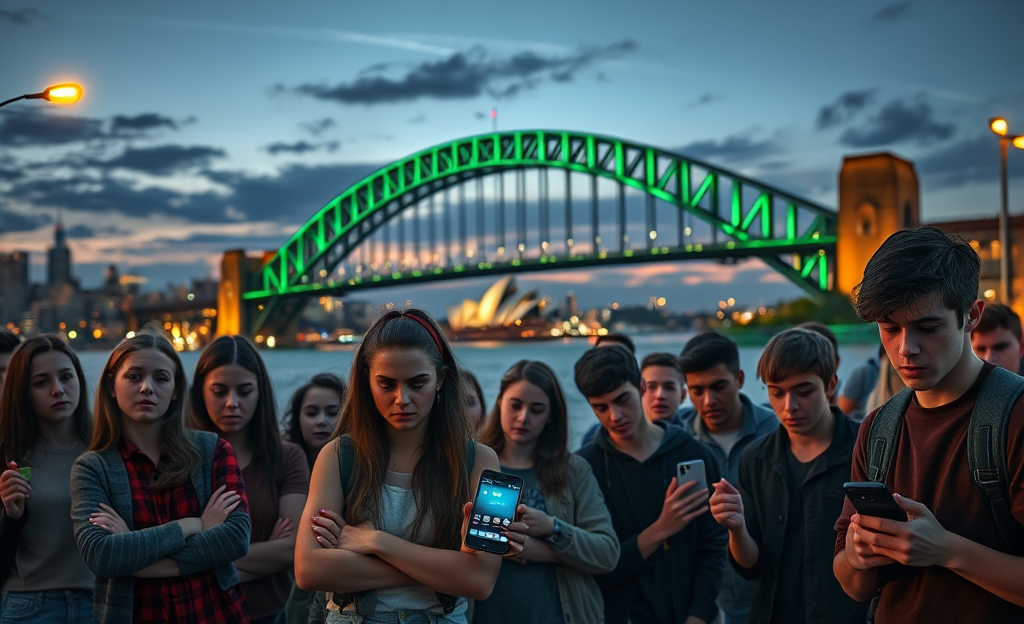
Social Media has become an integral part of modern life, especially for teenagers.
However, a new Australian law now prohibits children under the age of 16 from accessing these platforms.
While the intent is to protect young users from online risks, experts warn of potential unintended consequences.
Reports indicate that many teenagers are finding ways to circumvent age verification measures.
This article will explore the implications of this law, the challenges of its implementation, and the ongoing debate surrounding youth access to social media in the age of digital connectivity.
Australian Law Bans Social Media for Under-16s
The recent implementation of Australia’s pathbreaking legislation marks a transformative shift in online safety protocols by setting a novel precedent for digital interaction amongst minors.
Stipulating an age limit of 16, the law seeks to preclude social media access for those under this age threshold, thereby redefining how young Australians engage online.
Through this legislation, children under 16 are now barred from mainstream platforms such as TikTok, Instagram, and Snapchat, entailing rigorous age-verification measures that promise heightened vigilance against underage use.
Such measures reflect Australia’s national commitment to shielding minors from the myriad online vulnerabilities, encompassing cyberbullying and inappropriate content exposure.
Australia’s approach uniquely positions it as a global front-runner in the pursuit of enhanced digital safety for younger internet users.
This legislative action serves as a timely intervention amidst intensifying concerns over digital welfare, while aiming to set a benchmark for international norms in internet regulations.
Learn more about this innovative regulation by visiting the eSafety Commission Regulation page.
Experts Warn of Unintended Consequences
The Australian law prohibiting children under 16 from using social media has sparked widespread debate regarding its potential unintended consequences.
Experts warn that this ban might inadvertently channel young individuals toward less safe and unregulated online platforms.
This migration poses significant risks, as these alternative digital spaces might lack the necessary security measures to protect young users.
As Dr.
Alice Chang suggests, “We may be driving them underground,” highlighting the potential allure of forbidden content on unmonitored sites.
The Internet provides a vast territory of platforms that are not just simply lesser-known but also potentially more dangerous.
According to the University of Deakin’s research, young people could encounter harmful content that social media sites actively filter.
Moreover, using workarounds like VPNs and make-up to bypass age verifications further exposes them to cyber threats.
Therefore, robust measures to secure these environments remain crucial, emphasizing the importance of a balanced approach in implementing the social media ban.
Teenagers Bypass Age-Verification Measures
Australian teenagers are finding creative ways to bypass the newly imposed social media age-verification measures.
They have turned to various methods that reflect both their tech-savvy nature and desire to remain connected.
One of the most popular evasion strategies involves using VPNs, which allows them to appear as if they are accessing the internet from a different location, thus sidestepping local restrictions.
Additionally, some teens utilize creative makeup tricks to alter their appearance for online video verifications, enhancing their ability to pass photo-based age assessments Learn more on CyberNews
- VPN masking to appear overseas
- Ingenious makeup techniques to trick recognition systems
- Using borrowed IDs from older acquaintances
Despite the challenges faced by authorities in enforcing these measures, a significant number of under-16s continue to navigate these restrictions, illustrating the persistence and adaptability of young users.
Implementation Challenges Acknowledged by eSafety Commissioner
The eSafety Commissioner recognizes the initial hurdles in enforcing Australia’s under-16 social-media ban.
Despite the challenges faced in the early implementation stages, such as teenagers circumventing age verification through methods like VPNs, the Commissioner remains optimistic about future improvements.
According to statements made, this groundbreaking initiative, designed to enhance the safety of young Australians online, is expected to encounter initial obstacles.
However, it is believed that as systems improve and adapt, these can be effectively managed.
The Commissioner highlights the progressive fine-tuning and refinement of strategies to ensure better compliance and security measures are put in place over time.
Crucial to this process is the ongoing feedback from the community and experts in digital safety, which will aid in developing more robust mechanisms to protect children.
The implementation is set against a backdrop of symbolic support, with national landmarks illuminated to mark this significant step in digital safety, aligning with wider governmental goals to protect youngsters from potential online harms.
For more details on how Australia’s new age rules help, visit the eSafety website’s hub on social media age restrictions.
Visual Support at Australian Landmarks
Australia’s landmarks, including the magnificent Sydney Harbour Bridge, shimmer in green and gold hues, creating an illuminating testament that speaks to the heart of the nation.
This vibrant display marks the commencement of a pioneering law that restricts social media for children under 16. As the landscapes glow in harmonious colors, they convey a resounding message of commitment to child safety and mental health.
The visual symphony of lights serves as a beacon of national pride and shared responsibility while ensuring societal awareness about the importance of safeguarding young digital users.
Every illuminated ripple of green and gold across these icons reflects Australia’s resolve to pioneer in global child protection initiatives, drawing eyes worldwide and uniting citizens in a cause that is vibrant and vital.
The choice of colors embodies a unique blend of tradition and transformation, allowing Australians to collectively acknowledge the significance of this bold step forward.
Young People Express Frustration Over Restrictions
Young Australians express deep frustration over the new restrictions imposed by the under-16 social media ban.
Despite the law’s intent to protect younger users from potential online harms, many teens feel a profound sense of social exclusion as they are cut off from vital online communities.
The ban, backed by eSafety Commissioner’s guidelines, has left young individuals feeling ignored and marginalized.
According to a survey of over 17,000 teens, a staggering 75% plan to bypass these restrictions using tricks like VPNs and makeup.
While the policy aims to safeguard mental health, it inadvertently pushes determined users towards less safe platforms, illustrated in the accounts of several teenagers who manage to remain online regardless.
Consequently, they report a growing rift as their peers disengage due to fear of repercussions, exacerbating feelings of isolation in a digital age increasingly reliant on virtual interactions.
Ongoing Debate on Effectiveness and Safety Alternatives
The ongoing debate about the Australian under-16 social media ban highlights concerns about its effectiveness in improving online safety for young users.
With experts cautioning that the ban could drive children to less secure platforms, there is a need to explore complementary solutions.
By investing in digital literacy education, children can learn to navigate online spaces safely and make informed decisions.
Improving platform design to include stronger age verification processes and parental controls can mitigate risks while allowing supervised access.
Additionally, leveraging awareness campaigns could guide both children and parents on safer online practices.
Aligning these methods with stringent enforcement of available regulations is crucial to achieve measurable results.
The debate continues, yet these approaches offer valuable alternatives to complement or eventually enhance the existing law.
| Alternative | Key Point |
|---|---|
| Digital literacy education | Empowers children with knowledge |
| Improved platform designs | Enhances security through technology |
| Awareness campaigns | Ensures informed decision-making |
| Stronger parental controls | Places responsibility on families |
Social Media plays a pivotal role in young people’s lives, making the discussion around the new Australian law crucial.
As the debate on its effectiveness continues, it’s clear that alternative solutions for ensuring children’s online safety are needed.



0 Comments