Oil Wealth Ignites Frustration Over Living Costs
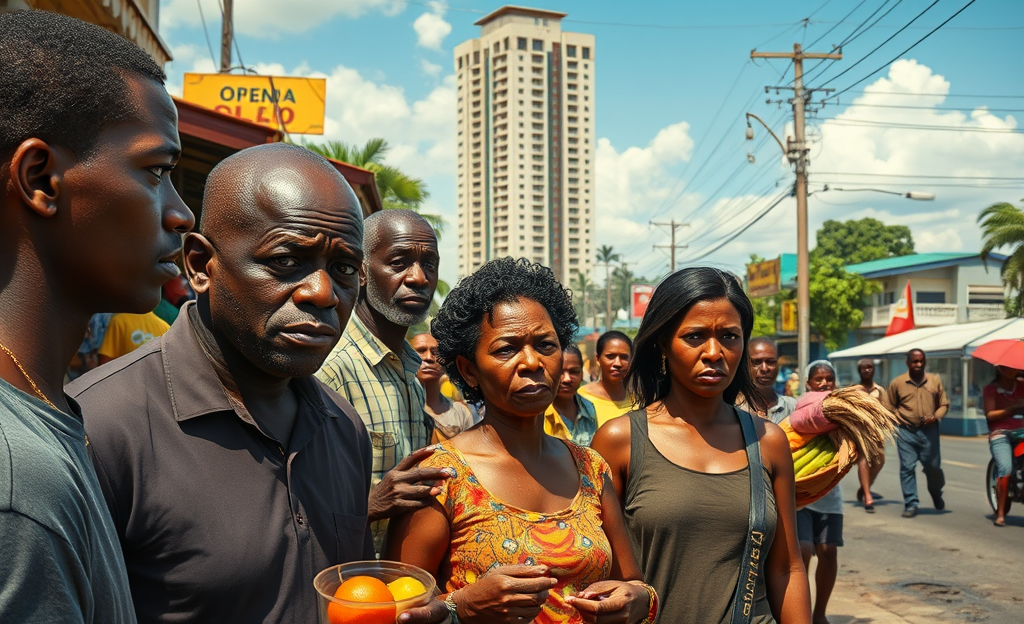
Oil Wealth has significantly impacted Guyana’s economy, spurring growth but also leading to mounting frustrations among citizens regarding the high cost of living.
As the nation approaches presidential and parliamentary elections, discontent is palpable, with many questioning the benefits of newfound riches.
This article will delve into the complexities of economic growth, the disconnect between oil wealth and daily life, and the challenges posed by ‘Dutch Disease’ and the ‘Resource Curse.’ We will also examine the implications of the 2016 production-sharing agreement and the perceived inadequacy of government measures in addressing these concerns.
Economic Growth and Persistent Public Frustration in Guyana
Guyana’s recent oil discoveries have orchestrated an unprecedented surge in GDP, cementing the nation’s profile as a burgeoning petrostate.
This economic boom, primarily fueled by substantial oil exports, has significantly enhanced the government’s financial panorama, yet this picture of prosperity stands in sharp contrast to the rising cost of living faced by its citizens.
While economic statistics paint a rose-colored portrait of growth, residents grapple with inflation and financial strain that erodes their everyday living experience.
The promise of oil-driven wealth translating to broader societal benefits seems elusive to many, as basic expenses like food and housing continue to climb.
The discrepancy between corporate profit and public welfare illustrates a chasm in the distribution of new-found wealth, prompting an increasingly vocal critique of national priorities.
Public frustration is growing, inviting scrutiny as the impending elections approach, shedding light on the urgency for effective governance.
(Source: ____)
Oil Wealth and Socio-Economic Tensions
Accelerating oil revenues in Guyana have sparked a complex array of economic, political, and social tensions.
As the nation navigates its newfound wealth, many citizens grapple with the stark contrast between oil profits and their everyday realities.
This exploration will unpack how these tensions manifest and impact various aspects of life in the country.
Political Climate Ahead of Elections Showing Popular Dissatisfaction
As Guyana approaches its upcoming presidential and parliamentary elections, public discontent stirs throughout the nation.
Amidst remarkable economic growth powered by oil revenues, voters question the tangible benefits of this newfound wealth in their everyday lives.
There is a glaring disconnect between the booming oil sector and the high cost of living, prompting citizens to voice concerns over the distribution and management of national resources.
A recent national opinion poll highlighted this disparity, revealing that the majority of people feel left behind in the oil boom, suspecting that the wealth is not translating into improved conditions or services.
Voter sentiment illustrates the underlying tensions as political leaders appear to focus more on geopolitical strategies rather than addressing grassroots issues.
The sentiment among citizens expresses that, despite the influx of oil money, their daily struggles remain unchanged.
Moreover, the 2016 production-sharing agreement still remains under scrutiny, amplifying calls for transparency and equitable redistribution of oil earnings.
As elections draw near, the demand for accountability and strategic economic management becomes increasingly vocal, signaling that citizens are eager for change and addressing longstanding grievances.
The Economic Challenges: Dutch Disease and Resource Curse in Guyana
The economic growth from oil discovery in Guyana ironically does not reflect in citizens’ living standards.
Guyana is grappling with the Dutch Disease and Resource Curse, which significantly impact its economy.
Prosperity in Guyana suggests that while oil wealth has the potential for transformative economic capacity, improper management leads to adverse outcomes.
Guyana faces the phenomena where oil revenues have not improved citizen’s lives due to poor policy implementation and infrastructural inadequacies.
| Phenomenon | Main Risk |
|---|---|
| Dutch Disease | Currency appreciation that hurts other sectors |
| Resource Curse | Weak governance and unequal wealth distribution |
Despite ExxonMobil’s investments, the prevailing issues such as high cost of living remain pervasive.
Consequently, public dissatisfaction grows as citizens demand transparency on oil revenue allocations.
This disconnection between supposed wealth and the lived realities fuels socio-economic discontent.
Criticism of the 2016 Production-Sharing Agreement and Its Impact
The 2016 production-sharing agreement between Guyana and ExxonMobil has sparked significant criticism due to its perceived fiscal imbalance that undermines state revenue.
Critics argue that it includes disproportionately low royalties and a high percentage for cost recovery, denying Guyana essential earnings from its natural resources.
Notably, the agreement’s terms are seen as skewed in favor of ExxonMobil, allowing them to pay minimal taxes while taking the lion’s share of the profits.
“The agreement gives away too much revenue” (critic) aptly describes the discontent among Guyanese citizens who bear the brunt of rising living costs.
Observers contend that the unfavorable conditions within this agreement exacerbate regional inequalities, alienating local populations from the oil wealth.
Such fiscal terms jeopardize equitable economic growth, highlighting the need for renegotiation to ensure a fairer distribution of the generated wealth.
This discontent has fueled a desire among the citizens and political entities to revisit and amend the contract terms to better serve Guyana’s national interests.
Job Creation and Infrastructure Investment Versus Insufficient Government Measures
Guyana’s oil boom has centered around remarkable economic growth, evidenced by job creation in the oil sector and significant infrastructure investments.
Increased employment opportunities are visibly contributing to the nation’s GDP growth, and initiatives aimed at elevating productivity enhance non-oil sectors as well.
Many applaud these developments, citing improved national infrastructure and rising public sector salaries as indicators of progress.
- Oil sector jobs exist
- Public services still lag
However, despite these advancements, citizens express frustrations regarding high living costs and insufficient improvements in public services.
This dissatisfaction stems from the perceived disconnection between the nation’s newfound wealth and the everyday challenges faced by the populace.
Critics argue that while infrastructure is expanding, essential services like healthcare and education have not kept pace, prompting inquiries about the true beneficiaries of the oil discovery.
A strategic approach may be necessary to balance delivering substantial improvements and leveraging resource wealth effectively, thereby alleviating the risk of the “Resource Curse.
” Robust measures to address citizen grievances could redefine the narrative, fostering public trust and satisfaction.
Citation Placeholder
Expert Warnings on Risks of Mismanaged Oil Wealth and Limits of GDP Measures
As Guyana experiences an oil boom, experts caution against the dangers of mismanaged wealth distribution.
The allure of distributing oil revenues without investing in critical infrastructure and creating employment opportunities poses significant risks.
A sole focus on GDP growth can be misleading; while it may show economic expansion, it does not reflect improvements in citizens’ daily lives.
“GDP alone hides widening inequality” — Expert
Hence, there is an urgent need for broader socio-economic indicators.
Experts advocate for a comprehensive approach to wealth management, ensuring that benefits reach all strata of society and foster sustainable development.
In conclusion, while Guyana’s oil wealth has the potential to transform the nation, it is crucial to ensure that these resources lead to tangible improvements in citizens’ lives, rather than exacerbating existing disparities and frustrations.



0 Comments