Protests Erupt Over Economic Crisis and Living Conditions
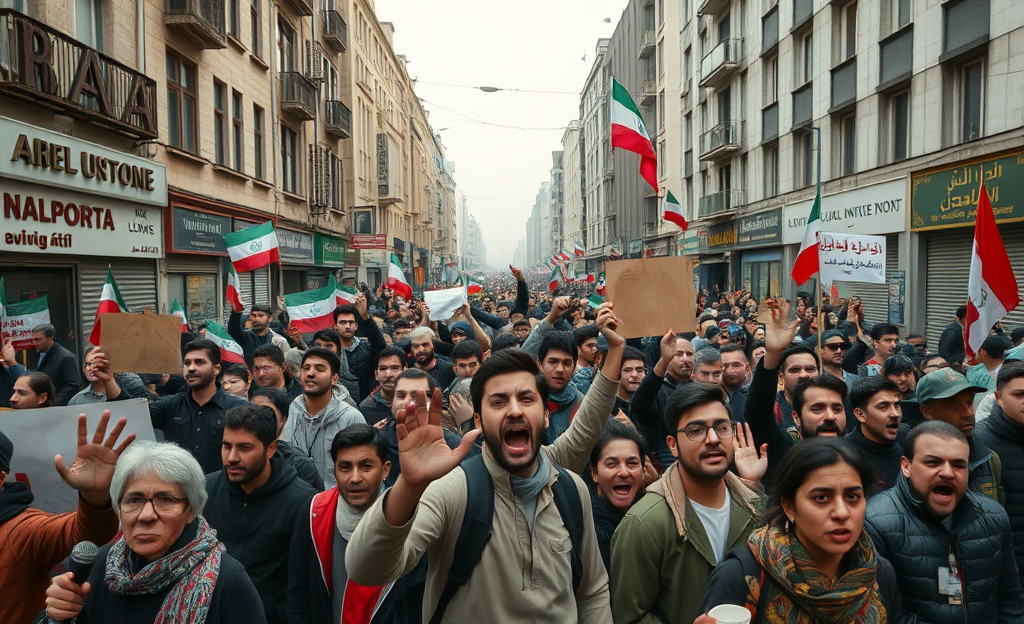
Massive protests have erupted in Iran amidst an alarming economic crisis.
As inflation soars and living conditions deteriorate, the frustration of citizens has boiled over.
Students and merchants have taken to the streets, leading demonstrations that reflect a broader discontent with the government’s handling of the economy.
With the national currency, the rial, reaching unprecedented lows and food prices skyrocketing, the protests have evolved from calls for economic reform to broader demands for political change.
This article will delve into the factors driving these protests and the government’s response to the escalating unrest.
Currency Freefall and Runaway Inflation
The unprecedented devaluation of the Iranian rial has wreaked havoc on the nation’s economy, sending shockwaves through household budgets across the country.
As the national currency, the rial, plummets to a record low of 1.42 million rial = 1 USD, the repercussions are brutally felt by ordinary citizens.
Food prices have skyrocketed, with a staggering 72 percent food inflation squeezing the purchasing power of families who are grappling with soaring costs of basic necessities.
The financial strain is evident in the desperation voiced by merchants and students who have led protests, paralyzing universities and commercial activities.
Despite governmental suggestions for dialogue, skepticism remains high among the affected populace, highlighting concerns that government warnings to cease “seduction and disorder” may not pacify ongoing unrest.
To further illustrate the rapid deterioration, observe the following table:
| Year | Food Inflation |
|---|---|
| 2021 | 50% |
| 2022 | 60% |
| 2023 | 65% |
| 2024 | 72% |
Grass-Roots Paralysis: Students and Merchants Unite
Students in Iran have taken a bold step by organizing walk-outs that effectively bring university operations to a halt.
Their actions send a powerful message of dissatisfaction with the current economic crisis, as campuses remain filled with echoes of protest rather than academic discussions.
The momentum of these movements can be seen in the growing participation of students, particularly from significant institutions such as Tehran University.
This paralysis in education underscores the depth of frustration among young people grappling with high inflation and dwindling prospects.
Merchants have aligned with students by closing their shops, effectively halting commercial activities across the region.
This unprecedented collaboration highlights their shared struggle against an eroding economy.
As the rial’s value plummets, affected businesses feel the unbearable pinch.
Bazaars, once bustling with trade, now stand silent, symbolizing the gravity of the protests’ economic impact.
Their decision to shut operations signifies a cautious yet firm stance against governmental policies that seem to ignore their plight.
Affected venues include:
- Major universities closed their gates
- Key bazaars in central Tehran shuttered
- Essential grocery chains halted their services
Together, these actions reverberate through society, elevating the call for change.
Shift From Economic Grievances to Political Outcry
The recent protests in Iran illustrate a significant shift from a primary focus on economic grievances to expanding protest demands targeting the broader political structure.
Initially ignited by severe economic distress, including a dramatic plunge in the rial to a historic low of 1.42 million against the US dollar, demonstrators voiced their discontent with inflation and deteriorating living conditions.
However, as protests spread across various cities, chants over prices have evolved into open criticism of the government, reflecting deep-seated dissatisfaction with the ruling authorities.
Despite the government’s proposals for dialogue, many protesters express skepticism about its intentions, unsure if genuine change can be achieved.
As the protests gain momentum, the slogans have become starkly political.
Demonstrators no longer focus solely on the economic crisis, but assert their demands for political freedoms and reforms.
The energy of the protests is palpable with cries echoing from university halls to the streets, stating “
We will not return until our voices are heard.”
Students and merchants alike march together, their unity signifying a shift in purpose and illustrating the powerful role of collective action in demanding accountability from leaders.
This unyielding drive challenges the government to acknowledge and address not just the economic turmoil, but the crucial political changes that the Iranian people long for.
Government and Revolutionary Guard Reactions
The Iranian government, seeking to address the ongoing economic crisis-induced protests, has put forward a proposal for dialogue as a potential solution.
However, despite these attempts at communication, many protesters remain skeptical of the government’s intentions.
Officials emphasize the need for calm and negotiation to avoid escalating tensions further.
State TV warned, ‘Any further unrest will be met with firm action’, underscoring the seriousness of the situation.
Meanwhile, the Revolutionary Guard has issued strong warnings, accusing demonstrators of engaging in ‘seduction’ and ‘disorder’.
These accusations are designed to portray the protests in a negative light, framing them as a threat to national stability.
The Guard, a powerful force in Iranian politics, stands ready to take action against any perceived threats, reinforcing their commitment to maintaining order.
Their warnings serve as a stern reminder of the potential consequences for those who participate in ongoing unrest.
Anticipated Union Strikes and Future Momentum
As unions prepare to coordinate with merchants, signs point towards a significant upsurge in nationwide strikes.
These collective actions aim to intensify economic pressure on the government, amplifying the demonstrators’ demands.
The rising inflation and plummeting rial have spurred an urgency among unions, who see alignment with merchants as pivotal to galvanizing broader support.
By uniting different sectors, these planned strikes could severely disrupt economic activities, sending a compelling message to the authorities.
Meanwhile, the government’s calls for dialogue face skepticism, with protesters leveraging these strikes to push for substantial change.
According to the Union Advocacy Group’s website, the notion of a national upheaval through organized strikes is rapidly gaining momentum.
Protesters are driven by the critical economic conditions, and the potential union participation might serve as a catalyst for the movement’s evolution.
- Coordinated nationwide walk-outs
- Enhanced union collaboration
- Potential for increased government negotiation pressure
In conclusion, the ongoing protests in Iran highlight the deep-seated issues stemming from the economic crisis.
As citizens unite against rising inflation and government inaction, the potential for widespread change looms on the horizon.



0 Comments