Protests Erupt Over Living Costs Amid National Unity Calls
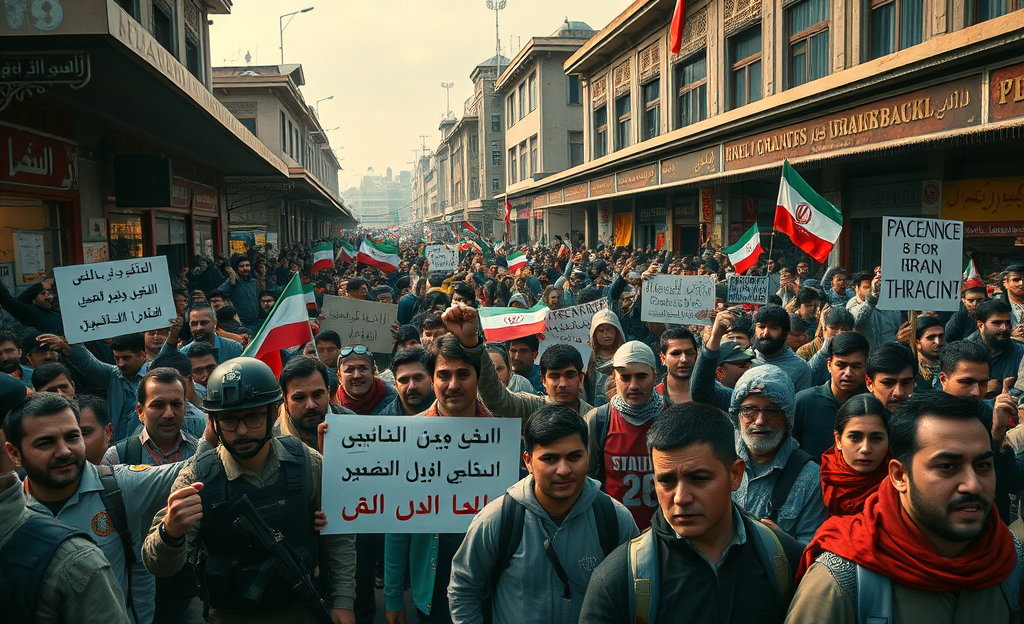
Living Costs have sparked widespread protests in Iran as citizens express their frustration over economic hardships.
As the value of the rial plummets and inflation approaches 50%, demonstrations have erupted, particularly in Tehran’s Grand Bazaar.
These protests reflect deep-seated grievances regarding rising living costs and have involved a diverse array of participants, including students.
This article will explore the multiple dimensions of these protests, the government’s response, and the broader implications for Iran’s socio-political landscape amidst ongoing crises.
Marketplace Flashpoint and Call for Unity
Protests in Iran have erupted at Tehran’s Grand Bazaar as citizens grapple with soaring living costs, spurred by the rial currency’s unprecedented lows against the dollar and inflation rates approaching 50 percent.
This surge in economic grievances has led to widespread calls for national unity amid the struggle for basic necessities, reflecting a deep-seated concern among the populace.
As the demonstrations spread across various cities, the atmosphere is charged with a collective desire for change and stability during these challenging times.
Economic Grievances Fueling Anger
The daily strain on Iranian families intensifies as soaring prices for essentials coupled with eroding purchasing power take center stage.
With inflation nearing a staggering 50%, this economic burden disrupts households, leaving many grappling with increased costs for basic goods and services.
As the latest inflation figures highlight the severe impact, the pressure mounts further due to the significant devaluation of the rial against the dollar, reaching unprecedented lows.
This currency plunge exacerbates financial instability, diminishing savings and making imported goods markedly more expensive.
The interconnected nature of these economic struggles fuels profound discontent across the nation, driving widespread protests.
Inflation and Currency Collapse Explained
The rising inflation rate in Iran, now nearing 50 percent, is linked to several financial dynamics.
A major factor is the government’s weak economic policies amid geopolitical tensions and stringent sanctions.
These have constricted Iran’s oil revenue, pushing the economy into further reliance on domestic resources.
The plunging value of the rial is another issue, with one analysis highlighting that the discrepancy between liquidity growth and actual economic growth exacerbates the situation.
This scenario results in everyday Iranians facing higher living costs as their purchasing power decreases.
According to a study on Eghtesad News, the preference for maintaining multiple exchange rates allows market distortions to thrive.
This directly impacts ordinary citizens as they face inflated prices on essential goods while wages remain stagnant.
The depreciating rial aggravates the issue further, making imports costlier and squeezing the average family budget.
It is crucial to address these economic disparities with sound fiscal strategies focused on sustainable growth.
Violence and Casualties in Lorestan
The recent protests in Lorestan province have become increasingly violent, particularly in Azna.
Demonstrations, initially sparked by economic grievances, escalated into confrontations with security forces.
One shocking incident involved the death of a paramilitary officer, a fact that underscores the dangerous turn these protests have taken.
According to reports, the officer was caught in a crossfire during exchanges between protestors and security personnel.
Alongside this tragic loss, clashes have resulted in injuries to at least 17 others, highlighting the severe level of unrest sweeping through the province.
The escalation of violence has prompted calls for calm and de-escalation.
Authorities emphasize dialogue and warn against further upheavals that might jeopardize public safety.
For further insights, the Tabnak News Report provides an in-depth look at the ongoing situation.
The backdrop of these protests accentuates broader grievances against economic hardships and governance, making this a pivotal moment for the region and the entire country.
Nationwide Spread and Student Momentum
The economic protests in Iran, initially sparked by the dramatic plunge of the rial and soaring inflation, have rapidly spread from Tehran to major cities across the nation.
Sparked by merchants in Tehran’s Grand Bazaar, the demonstrations quickly gained momentum as they reached cities like Lorestan and beyond, showcasing a profound countrywide scope.
A key element driving this expansion has been the significant involvement of students, who have mobilized en masse, voicing dissatisfaction not only with economic conditions but also with broader educational and social grievances.
At least ten universities, including prestigious institutions like Tehran and Beheshti University, have joined the protests, transforming campuses into centers of civic engagement.
Their activism has invigorated the movement, creating a dynamic force that underscores the resilience and determination of the younger generation.
This collective action not only challenges the current economic policies but also calls for broader systemic change across Iran.
Government Dialogue and Warnings
The Iranian government is actively addressing the ongoing protests triggered by economic grievances, adopting a dual approach that combines initiating dialogue with protest leaders and issuing warnings against any act that threatens public order.
Officials realize that addressing these economic hardships requires opening communication lines.
Consequently, the government has initiated a mechanism to engage with protest leaders.
This step, aimed at alleviating tensions and fostering dialogue, seeks to pacify the unrest spreading across multiple cities and involving diverse societal participants.
Simultaneously, the administration remains vigilant, cautioning against any behaviors or actions that could destabilize public peace.
Leveraging sources like the Jam-e Jam Daily, they stress the importance of maintaining societal stability while recognizing the population’s right to voice their concerns.
Demonstrations in Tehran’s Grand Bazaar and beyond underscore the urgency of this approach.
The government combines engagement with vigilance, seeking to balance citizens’ rights with national stability.
Expert Doubts and Regime Stability Concerns
Analysts express deep skepticism regarding the Iranian government’s ability to effectively manage the ongoing economic crisis.
The chronic inflation nearing 50%, coupled with the rial currency reaching record lows against the dollar, underscores fundamental weaknesses in the country’s economic structure.
According to experts, the persistent high inflation and a perpetually weak currency signify a systemic issue that mere temporary fixes cannot resolve.
Recent protests, sparked by severe economic grievances in Tehran’s Grand Bazaar, have spread rapidly, emphasizing the urgency of the situation.
Despite the government’s attempt to initiate a dialogue mechanism with protest leaders, experts doubt its effectiveness in addressing the underlying structural economic challenges.
The potential risks to regime stability remain significant, as an unresolved economic crisis could further embolden calls for substantial political reforms.
Energy Shortfalls and Water Scarcity
Chronic power outages disrupt daily life in Iran, plunging communities into periods of darkness and inactivity.
This inconsistent access to electricity not only impacts routine family activities but also stifles economic productivity as businesses are forced to halt operations.
The unpredictability of energy availability leaves citizens in a constant state of uncertainty and frustration.
The chronic lack of power becomes a metaphor for a larger failure to meet citizens’ needs, contributing to a pervasive sense of disenchantment with governing authorities, and fuels the broader protest movements spreading across the nation.
Water shortages, on the other hand, exacerbate the already dire situation, compounding grievances over mismanagement of resources.
With many relying heavily on agriculture for their livelihood, the scarcity of water threatens food security and economic stability, as explored in Iranian Water Crisis Impacts.
The struggle with these deficits becomes more than just an inconvenience; it symbolizes systemic issues within Iran’s infrastructure and government strategy.
Citizens, therefore, view these shortages as manifestations of institutional neglect, igniting larger social and economic protests, as the government warns against potential escalations as captured in various analysis and reports.
As energy and water resources remain strained, the public’s exasperation with seemingly ineffective dialogues grows, solidifying a unified call for change.
“
In conclusion, the protests in Iran illustrate the urgent need for effective economic solutions.
As the government seeks dialogue, skepticism remains about its capacity to stabilize the situation, especially amid escalating energy and water crises.



0 Comments