Syracuse University Achieves 92 Percent Graduation Success Rate
Graduation Success is a key indicator of a university’s effectiveness in supporting its students through to completion.
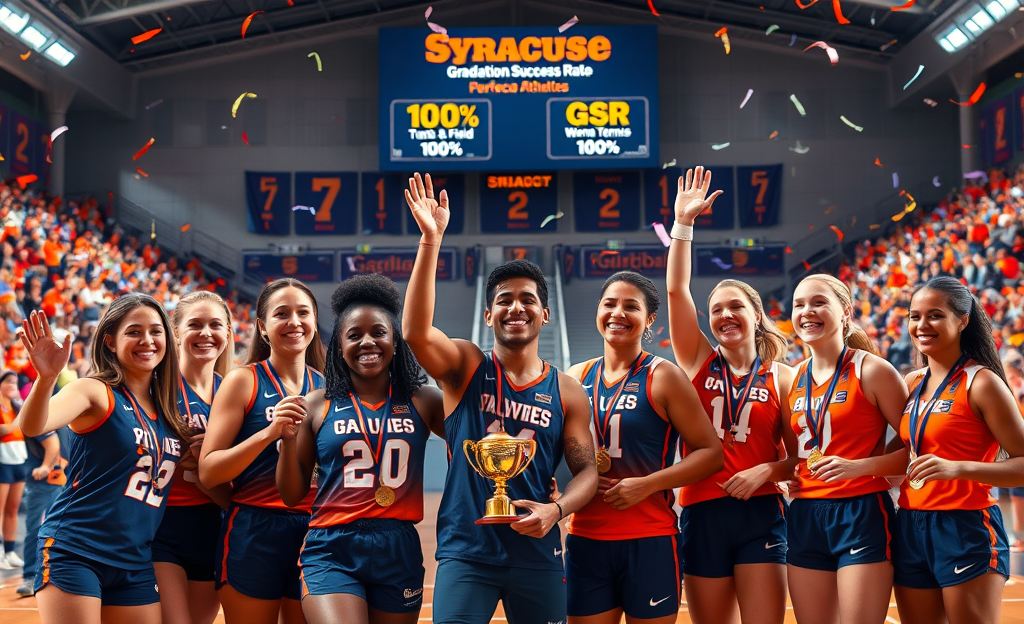
This article explores Syracuse University’s impressive 92 percent Graduation Success Rate (GSR) for the 2018 cohort, which not only exceeds the national average but also showcases the exceptional performance of various athletic programs.
With several teams achieving perfect scores, including women’s tennis and volleyball for over a decade, we will delve into the details of these accomplishments and the significance of the NCAA’s GSR metric in evaluating educational outcomes.
Syracuse University’s Graduation Success Rate Surpasses National Benchmark
Syracuse University’s commitment to academic excellence is evident as its 2018 cohort achieved a 92 percent Graduation Success Rate (GSR), surpassing the national average of 90 percent.
This impressive performance highlights Syracuse University’s dedication to the academic and athletic development of its student-athletes.
The NCAA’s GSR metric, which offers a more holistic view of student success compared to the Federal Graduation Rate, underscores Syracuse University’s superior performance in student-athlete education and support.
Several Syracuse University athletic teams contributed to this exceptional achievement by reporting perfect GSRs.
Notably, programs such as women’s basketball, field hockey, and men’s track & field showcased outstanding academic success.
Additionally, women’s tennis and women’s volleyball have impressively sustained perfect scores for 14 consecutive years, while the men’s cross country and men’s track & field teams have upheld flawless records for 12 years.
The dedication of these teams to maintain academic prowess reinforces Syracuse University’s standing as a leader in fostering both athletic and scholastic achievement.
For more details, visit Syracuse Athletics.
Teams with Sustained Perfect GSR Streaks
Syracuse University stands out for its long-running excellence in achieving perfect Graduation Success Rates.
Among its athletic teams, the women’s tennis and women’s volleyball programs each proudly hold a 14 consecutive years streak of perfection, showcasing their unwavering commitment to academic and athletic excellence.
Meanwhile, the men’s cross country and men’s track & field teams have impressively sustained a 12 year streak, emphasizing their consistent dedication to success both on and off the field.
The Syracuse Athletics GSR information underscores these achievements, reflecting the university’s strong support in nurturing student-athletes.
These continuous efforts by Syracuse University’s athletic programs demonstrate an unparalleled commitment to maintaining high standards that not only meet but surpass national averages, setting a benchmark of excellence in collegiate athletics.
Understanding the NCAA Graduation Success Rate Metric
The GSR metric, launched by the NCAA in 2004, provides a more comprehensive understanding of student-athlete graduation rates compared to the Federal Graduation Rate.
Implemented to address the shortcomings of federal data, the GSR considers a variety of student situations, including transfers.
While the traditional federal rate only accounts for first-time, full-time freshmen who graduate from the same institution, the GSR offers an inclusive view, taking into account the complex pathways student-athletes may experience.
This forward-thinking approach acknowledges the reality of collegiate athletics, where student-athletes might transfer or face unique challenges.
According to NCAA Graduation Rates Overview, it emphasizes the organization’s commitment to academic success.
- Counts transfers who graduate elsewhere
- Excludes departing students with professional opportunities
- Includes student-athletes returning after time away
Graduation Success remains a critical aspect of higher education, and Syracuse University’s achievements highlight the dedication to student-athlete performance and support.
As we’ve seen, excellence in this area can inspire other institutions to elevate their standards and foster environments conducive to student success.


0 Comments