Trump Threatens 100% Tariffs Amid Economic Uncertainty
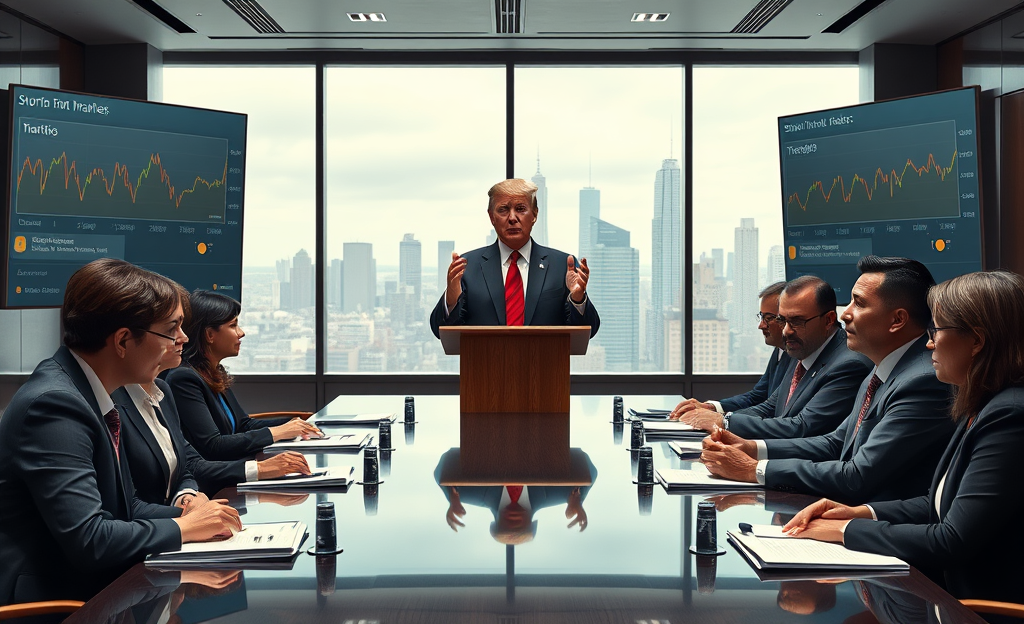
Tariff disputes between the United States and China are intensifying, with recent threats from former President Donald Trump to impose 100% tariffs on Chinese goods over Beijing’s restrictions on rare earth minerals.
This article delves into the implications of these escalating tensions for the global economy, the unexpected resilience of the US market, and the potential fallout for developing nations.
As companies prepare for these tariffs by adjusting their inventories, we will explore the evolving dynamics of trade strategies and the looming risks of an AI market bubble, reminiscent of past economic crises.
Escalation of US-China Trade Tensions over Rare Earth Minerals
Former President Donald Trump has recently issued a warning that he plans to implement 100% tariffs on Chinese imports, responding to Beijing’s decision to tighten export controls on rare earth minerals.
This move signals a significant escalation in trade hostilities, which could have far-reaching implications on international commerce and supply-chain reliability.
Indeed, Trump’s tariff threat has intensified tensions between the United States and China, further complicating the already volatile global economic landscape.
With rare earth minerals being crucial to many industries, from technology to defense, the restrictions imposed by China could severely disrupt supply chains worldwide.
As both nations brace for the trade confrontation, stakeholders are left to ponder the ripple effects this conflict might have on global markets.
Companies across the globe are closely monitoring these developments, concerned about potential shortages and increased costs that could arise from this ongoing trade dispute.
For more insights, refer to this detailed analysis on the issue: China defends rare earth export curbs
US Economic Resilience amid Heightened Uncertainty
Despite the drumbeat of protectionist rhetoric, the United States continues to post solid growth figures.
Analysts describe this phenomenon as unexpected resilience, showcasing the economy’s ability to adapt.
Companies are employing strategies such as front loading to stockpile inputs ahead of potential tariffs, while some trading partners are opting for flattery over confrontation to maintain market access.
Front-Loading and Inventory Management
Front loading involves firms rushing to place purchase orders before scheduled tariff hikes, temporarily inflating import volumes and cushioning production schedules.
- Companies accelerate orders before tariffs hit
- Warehouses expand capacity to store excess stock
- Short-term borrowing rises to finance advance purchases
This calculated stockpiling buys time for businesses to adjust sourcing strategies while sustaining headline growth numbers.
As front loading continues to be a strategic response to uncertainty, it highlights the resilience companies demonstrate to navigate these economic challenges.
Diplomacy: Flattery versus Confrontation
In 2025, trade diplomacy often hinges on the delicate balance between flattery and confrontation, as global leaders employ tactical praise to moderate conflict.
This nuanced approach shifts the focus from overt disputes to a language of partnership, emphasizing shared goals and mutual growth.
Such diplomatic finesse was evident as many leaders chose to cushion interactions with President Trump, avoiding direct tensions.
Notably, Europe’s strategy involved cordial relationships while quietly increasing military spending, as explained in the analysis of Europe’s strategy.
As flattery smooths over potential discord, it safeguards commerce, ensuring progress even amidst underlying conflicts.
Developing Countries Caught in the Crossfire of Tariff Disputes
Many developing nations, once enjoying robust trade expansion earlier in 2025, now confront severe challenges due to escalating tariff disputes.
Since these countries greatly rely on foreign demand for economic growth, coupled with their limited fiscal capacity, they experience heightened vulnerability to external shocks.
This situation becomes significantly pronounced with the imposition of higher shipping costs, leading to squeezed margins for exporters.
| Challenge | Outcome |
|---|---|
| Higher shipping costs | Squeezed margins |
| Sudden rule changes | Disrupted export plans |
| Currency volatility | Investment uncertainty |
As shown, sudden policy shifts disrupt carefully planned export strategies, causing a ripple effect across diverse economic sectors.
The relevant text from UNCTAD’s report on global trade indicates these disruptions increase market volatility and create an environment of uncertainty.
This atmosphere not only destabilizes existing trade relations but also deters investments, crucial for sustaining growth in these economies.
Furthermore, the impending risk of prolonged friction can potentially stall development advancements painstakingly achieved over the years, thus exacerbating inequality.
Consequently, the global economic landscape necessitates adaptive strategies from these nations to mitigate adverse impacts and ensure resilience in turbulent times.
AI Market Bubble Risks and Echoes of the Dotcom Era
The surge in valuations of AI companies echoes the exuberance of the early-2000s dotcom era, raising alarms about an imminent market bubble.
Back then, speculative fervor fueled skyrocketing stock prices of internet firms, until reality struck and market corrections ensued, wiping out vast sums of invested capital.
Today, tech enthusiasts and investors face a similar scenario with AI.
An influx of capital pours into AI ventures, driving up valuations but often disregarding the underlying business models and revenue structures.
Comparisons drawn by financial analysts suggest that, just like in the dotcom boom, present-day excitement may overshadow sound financial principles.
Although the technological potential of AI is immense, parallels with past economic events urge caution.
For instance, discussions found in sources like World Economic Forum highlight the tenuous balance between innovation and speculation, indicating the necessity for informed investment decisions now more than ever.
Preparing for Persistent Global Economic Volatility
As the world economy contends with global economic volatility, the interaction of trade frictions, market froth, and geopolitical uncertainty creates an urgent need for stakeholder preparedness.
Companies and investors must now see beyond the immediate challenges and adopt a proactive mindset.
Leveraging insights from trusted resources like APEC’s Policy Priorities can provide valuable strategies for navigating these complexities.
By enhancing risk assessments and focusing on dynamic response solutions, stakeholders can mitigate risks and seize emerging opportunities amid the chaos.
Policymakers are urged to implement adaptable frameworks that allow businesses to thrive, embracing flexibility as a core principle.
In this rapidly evolving landscape, stakeholders must pursue innovation and cross-border cooperation as pivotal strategies for sustaining growth and stability.
Thus, understanding and preparing for economic shifts remains imperative for future resilience.
Tariff disputes pose significant challenges not only to the involved nations but also to the broader global economic landscape.
As stakeholders navigate these turbulent waters, vigilance and adaptability will be essential in facing the uncertainties ahead.



0 Comments