Twins Focus on Power Pitchers in MLB Draft
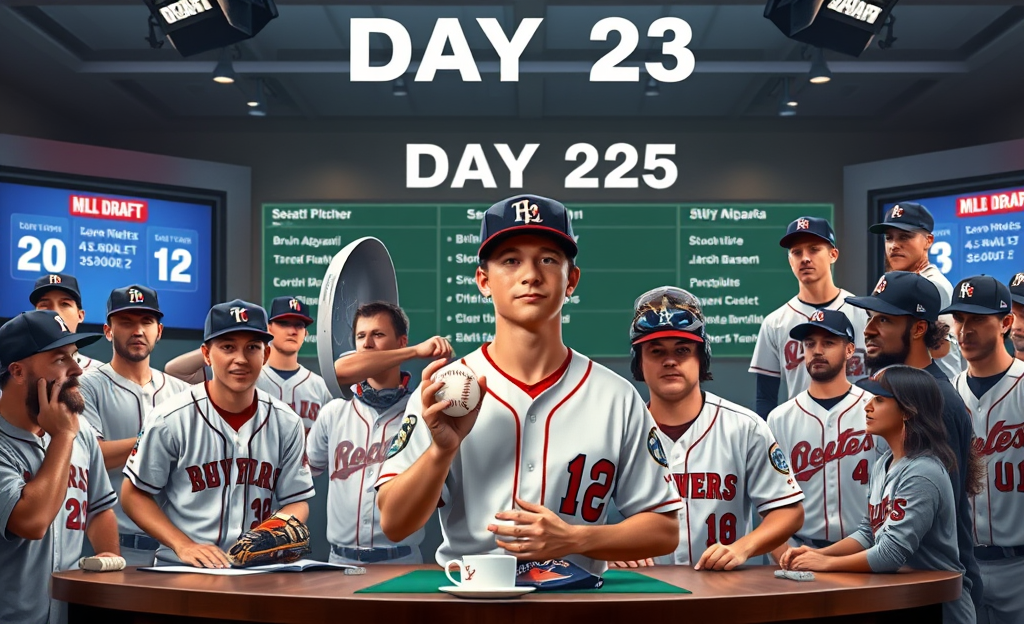
Power pitchers dominated the Minnesota Twins’ selection strategy during the second day of the 2025 MLB Draft.
With a total of 21 picks, the Twins focused on acquiring a mix of raw talent and collegiate experience, aiming to build a formidable pitching roster.
Among the notable selections were towering right-handers like Jason Reitz from the University of Oregon and the hard-throwing Matt Barr from SUNY-Niagara.
This article delves into the key picks made by the Twins, spotlighting their draft strategies and what this means for the team’s future prospects.
Minnesota Twins Draft Strategy: Pitching Depth and College Experience
The Minnesota Twins showcased a strategic acumen during the 2025 MLB Draft by selecting a remarkable 13 pitchers out of 21 picks on Day 2, manifesting their focus on bolstering pitching depth with experienced arms from collegiate programs.
This approach underscores the franchise’s preference for ready-to-develop players over less predictable high school talents.
By opting for college players, the Twins have chosen individuals who have already faced higher levels of competition and exhibit projectable skill sets, paving the way for quicker ascension through the minor leagues.
This tactic is highly relevant as it aligns with the contemporary baseball philosophy that prizes a combination of power, precision, and maturity on the mound.
Furthermore, power pitching has become increasingly crucial in today’s game, and the Twins aim to become a powerhouse in this area.
The picks, including talents like Jason Reitz, a towering 6’11” right-handed pitcher from the University of Oregon, and Matt Barr from SUNY-Niagara, known for his fastball prowess, exemplify the Twins’ commitment to cultivating a formidable rotation and bullpen stocked with velocity and potential.
This strategic direction positions the Twins to enhance their competitive edge, capitalizing on players who offer both immediate impact and long-term promise.
Power on the Mound
The Minnesota Twins made a bold statement during Day 2 of the 2025 MLB Draft by focusing heavily on power pitchers, a strategy that has the potential to redefine their pitching staff.
Notable selections like Jason Reitz, a towering 6’11\” right-handed pitcher from the University of Oregon, and Matt Barr, a right-handed pitcher from SUNY-Niagara boasting a fastball that can reach up to 97 mph, perfectly embody this approach.
By prioritizing size and velocity, the Twins are signaling their commitment to cultivating a roster rich in high-upside talent that can dominate on the mound.
Jason Reitz and Matt Barr: Towering Heat
Jason Reitz, standing at a towering 6’11”, is a remarkable presence on the mound from the University of Oregon.
His rare frame, combined with a steep downhill plane, offers a unique advantage, making him a formidable force in potential future rotations or as a back-end weapon.
Meanwhile, Matt Barr from the SUNY-Niagara, delivers his pitches with a ferocious intensity, hitting a velocity of up to 97 mph on his fastball.
Barr’s elite spin rates and powerful arm strength complement Reitz’s towering presence, creating a dynamic pitching duo for the Minnesota Twins’ 2025 draft class.
Both pitchers bring different yet equally potent attributes to the table.
Reitz’s height adds an intimidating angle to his pitches, while Barr’s velocity offers explosive speed, making them crucial assets with huge potential upsides for the Twins’ rotation strategy.
Position Player Upside
The Minnesota Twins have shifted their focus from power pitching to a more selective approach when it comes to position players.
This strategy emphasizes high-contact, high-instinct bats and gloves that can make an immediate impact in the game.
By targeting players with untapped potential and strong fundamentals, the organization aims to bolster its roster with talent that can thrive at the highest levels of competition.
Bruin Agbayani and Jacob McCombs: Infield and Outfield Versatility
In the 2025 MLB Draft, the Minnesota Twins made strategic selections by picking up Bruin Agbayani and Jacob McCombs, two promising prospects significantly enhancing their team’s dynamics.
Agbayani, whose roots trace back to the St.
Louis School, brings advanced defensive skills to the Twins’ infield.
His ability to read the game and cover ground efficiently at shortstop is vital for shoring up the team’s defensive stability.
Meanwhile, McCombs, a standout from the University of California-Irvine, complements this with his elite contact ability and natural agility in the outfield.
Known for his aggressiveness at the plate, McCombs has an extraordinary knack for getting on base, which is invaluable for on-base consistency.
His athletic routes in the outfield translate to dependable run prevention, fitting seamlessly into the Twins’ strategy.
These selections promise to offer a tangible boost to the Twins’ lineup, melding the precision and power needed to elevate their overall game.
Ryan Daniels and the Prospect Projection Approach
Ryan Daniels, a standout second baseman from the University of Connecticut, emerged as a dynamic pick during the 2025 MLB Draft.
Selected by the Minnesota Twins, Daniels boasts a potent combination of plate discipline and gap power that makes him a model of the team’s ‘future-value’ philosophy.
His impressive run as the Big East Player of the Year underscores his capability to exceed beyond his collegiate stats over time.
The Twins have sharply shifted their drafting strategy to prioritize players like Daniels, whose adaptability and potential can mature into substantial on-field performances.
This holistic focus highlights their commitment to nurturing raw talent into future baseball prowess.
By investing in players with significant upside, the Twins position themselves to capitalize on these prospects’ long-term development.
Daniels and his fellow youthful draftees are pivotal in propelling the organization forward, aligning with a vision that values growth and enduring success over instant collegiate numbers.
In conclusion, the Minnesota Twins’ emphasis on power pitchers and players with potential illustrates a forward-thinking approach in the draft, potentially setting the stage for future success in the league.

0 Comments