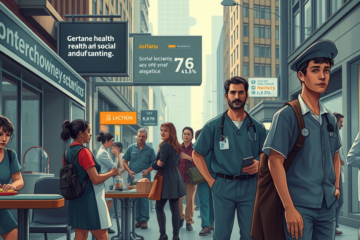
U.S. Economy Faces Threat of Recession

Economic Decline is a pressing concern for the U.S. as recent reports indicate that the economy may be on the verge of a recession.
This article will delve into the current state of employment levels, examining the minimal increases in payroll since May and the alarming rates of job cuts across various industries.
We will also consider the implications of revised employment figures and the unique resilience of the healthcare sector amid these changes.
Furthermore, we will explore how economic policies, particularly regarding tariffs and immigration, may be influencing the risk of recession.
Approaching Recession: Setting the Context
The current economic landscape reflects a precarious position for the U.S. economy, as it teeters near a potential recession.
Significant focus is on employment figures, serving as early warning indicators of economic distress.
Since May, the growth in payroll has been minimal, suggesting an underlying weakness that could be masked by preliminary data.
Any decline, even for a single month, in employment could have far-reaching consequences, signaling a shift into recessionary territory.
Industry-wise analysis reveals that more than 53% of sectors reported job cuts as of July 2025, a concerning trend that amplifies fears of further economic deterioration.
The healthcare sector stands out as a solitary beacon of growth in an otherwise contracting job market.
It’s noteworthy that subsequent revisions of employment data could expose actual declines, making the current picture even more unsettling.
As revisions emerge, they may confirm earlier signs of contraction emphasizing the need for vigilant monitoring and responsive economic policies.
For details on how industries are responding to this shifting landscape, you can explore further insights

Louis Fed insights”>here
Employment Trends and Industry Breakdown
Between May and July 2025, payroll employment barely inched up, signaling potential concerns regarding the overall health of the job market.
Over 53 percent of industries reported job losses in July, with the exception of the healthcare sector, which continued to expand.
These mixed signals reveal underlying tensions in the economy, suggesting that while some industries struggle, others are finding ways to thrive amid uncertain conditions.
Healthcare as the Lone Growth Sector
The healthcare sector in July 2025 offers a glimmer of optimism as it sustains job growth amidst widespread employment challenges across other industries.
A key factor is the consistently rising demand for healthcare services driven by multiple structural reasons.
These underpin the sector’s resilience during economic downturns, making healthcare a defensive stronghold.
Notably, some of these reasons include:
- Aging population boosts demand for care
- Chronic illness prevalence necessitates ongoing care
- Technological advancements create specialized roles
- Regulatory frameworks ensure stable funding
- Need for improved healthcare infrastructure
This resilience implies that investing in healthcare remains a reliable strategy during periods of economic instability, underscoring its defensive nature.
Unemployment Lag and Policy Risks
Unemployment is a lagging indicator, requiring sustained job losses over several months to officially declare a recession.
Such job declines necessitate vigilance; particularly, more than 53% of industries reported job cuts in July 2025, excluding healthcare, which maintained growth.
However, persistent declines haven’t been observed yet, keeping the economy teetering instead of tipping over into recession.
Economic policies, especially surrounding tariffs and immigration, present potential risks.
Tariffs have been shown to affect labor market fluidity by increasing costs for businesses, inadvertently reducing hiring (
Labor Market Impact Report by Equitable Growth”>U.S. Labor Market Impact Report
Consider these policy channels affecting employment:
- Tariff-driven cost increases reducing hiring
- Immigration policies limiting labor supply
- Fiscal uncertainty causing cautious corporate spending
These elements, if unaddressed, could heighten recession risks by adversely impacting labor market stability, echoing warnings that policy missteps could accelerate an economic setback.
In conclusion, while the U.S. economy currently avoids a recession, the signs of economic decline in employment rates and industry job cuts warrant close attention.
Continued observation of these trends will be crucial in understanding the full impact on future economic stability.
0 Comments