Venezuela Faces Rising Poverty and Food Scarcity
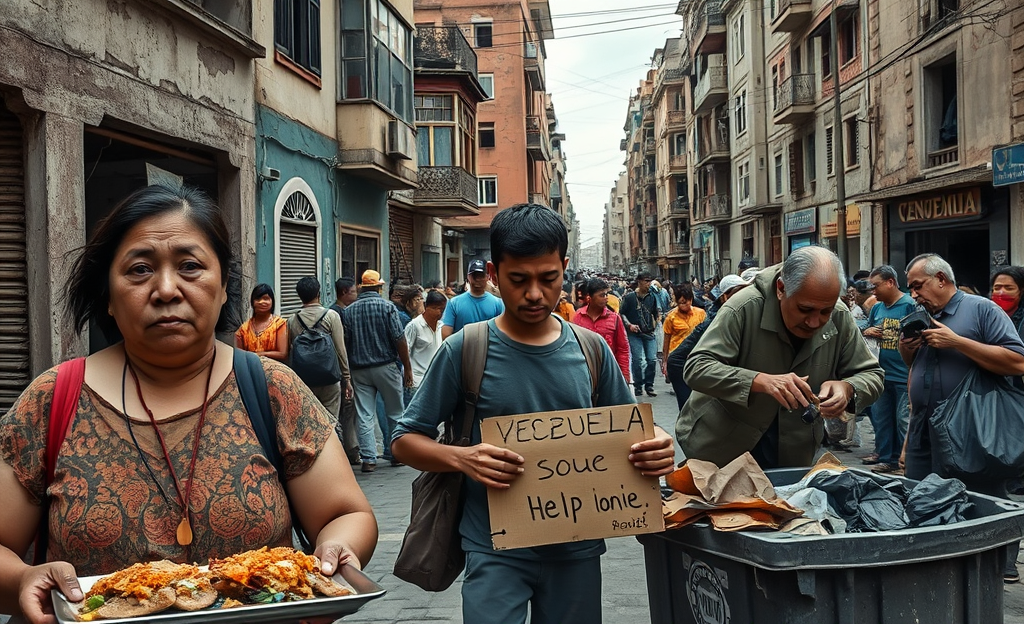
Economic Crisis has gripped Venezuela, leading to a severe decline in living standards and widespread hardship.
As the nation grapples with soaring poverty rates and food scarcity, nearly 80% of the population finds themselves in dire circumstances.
This article will delve into the multifaceted implications of this crisis, highlighting the staggering statistics that reveal the extent of the struggle, including hyperinflation rates and stagnant wages, alongside the mass exodus of citizens seeking better opportunities abroad.
We will also examine the challenges facing economic recovery, particularly within the vital oil sector, and the government’s role in addressing these pressing issues.
Escalating Poverty and Food Scarcity
The devastating poverty levels and widespread food shortages in Venezuela paint a grim picture of a society grappling with profound economic distress.
With roughly eight out of every ten Venezuelans trapped below the poverty line, the struggle to secure daily survival can be overwhelming.
Many citizens find themselves balancing multiple jobs only to afford the most basic necessities, yet their efforts often fall short.
As noted by some sources, inflation has soared to an astonishing 682%, eroding any remaining purchasing power and making it nearly impossible to acquire sufficient food and essentials for families.
The scarcity of food and essential goods has become a defining feature of life in Venezuela.
Food insecurity plagues the nation as the collapse of its economic framework obliterates access to once readily available goods such as proteins and nutritional foods.
Amid this backdrop, millions have chosen to leave the country in search of sustainable livelihoods elsewhere.
Those who choose to stay continue to endure the day-to-day hardships of securing sustenance in an environment where promises of economic recovery remain distant.
This brutal cycle underscores the sheer depth of the crisis facing Venezuelans today.
The Mass Exodus and Its Societal Effects
More than 7.7 million Venezuelans have migrated since 2015, searching for stability amid escalating poverty and food scarcity.
As families face economic uncertainty, they embark on perilous journeys, driven by hope and desperation.
The decision to leave their homeland isn’t made lightly, but as necessities become luxuries, the call to seek a better future resonates stronger.
The impact of this mass exodus permeates communities, both within and beyond Venezuela’s borders.
Families often find themselves fragmented, with members dispersed across continents, striving to support their loved ones back home.
Separation brings emotional strain, yet a determination persists to overcome the challenges they face.
Communities left behind grapple with diminished populations, leading to altered social landscapes and weakened local economies.
While neighboring countries feel the ripple effects of welcoming new Venezuelan inhabitants, the cultural tapestry is enriched, forging bonds that transcend borders.
However, the strain on resources and infrastructures presents challenges that require international cooperation and understanding.
For more insights on how neighboring countries deal with these changes, refer to the detailed study by IMF.
Amidst uncertainty, the resilience of Venezuelans and their ability to adapt highlights the indomitable human spirit.
Hyperinflation, Stalled Wages, and a Fragile Oil Sector
Venezuela continues to grapple with a severe economic crisis marked by hyperinflation, stagnant wages, and a fragile oil sector.
As inflation skyrockets to an astonishing 682%, the unchanged minimum wage of just 130 bolivars, or about $0.40, fails to keep pace with the rising cost of living.
This intersection of runaway inflation, stalled wages, and inadequate oil revenues exacerbates the hardships faced by the Venezuelan population, pushing more individuals into poverty and making basic necessities increasingly unattainable.
Bottlenecks Slowing the Oil Industry’s Return
Venezuela’s oil industry faces significant challenges hindering its recovery.
The decaying infrastructure from years of insufficient investment severely impacts the sector’s efficiency and growth.
Furthermore, economic sanctions restrict the country’s ability to access global markets and obtain essential equipment and technology.
The industry’s progress also stalls due to capital shortages, preventing necessary upgrades and innovations.
As a result, the delays keep the nation’s primary revenue source underutilized, postponing essential economic recovery.
Additionally, cumbersome regulations stifle potential reforms.
- Lack of investment
- International sanctions
- Capital shortages
- Obsolete equipment
- Pervasive bureaucratic hurdles
Waiting for Promised Reforms to Reach Daily Life
Economists stress that the timeframe required for economic reforms in Venezuela to deliver tangible benefits is complex and extended.
For many, the greatest uncertainty lies in how quickly newly announced policies will filter down to daily life amid existing challenges.
Reforms in sectors like oil might receive keen attention, yet the potential growth won’t shift overnight into accessible living standards for the populace.
There is optimism surrounding economic growth, with projections anticipating modest increases in oil production and GDP, as highlighted by reports indicating a rise to over 820,000 barrels daily and a potential GDP increase by 4%.
However, these relevant improvements require consistency in policies and patience to transition from mere statistics into widespread economic relief.
The perseverance and resilience of Venezuelans remain vital, as the nation’s path to recovery extends over years, if not decades, necessitating a balanced mix of hope and realism.
In conclusion, the ongoing economic crisis in Venezuela presents a complex array of challenges that require urgent attention and effective policy changes.
The road to recovery may be long, but understanding these issues is crucial for the well-being of millions.



0 Comments