Climate Summit COP30 Sets Bold 2050 Goals
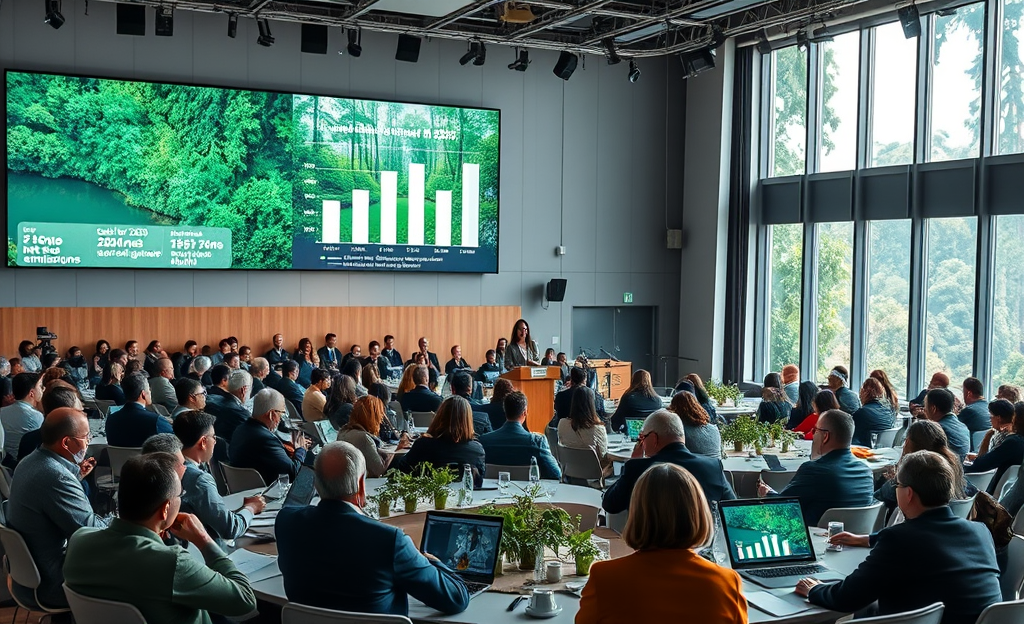
Climate Goals set forth at the Climate Summit COP30 in Belém, Brazil, are ambitious and far-reaching, targeting a transformative future by 2050. With objectives such as achieving net zero greenhouse gas emissions, doubling per capita income, and reducing income inequality by 20%, the summit serves as a pivotal moment in global environmental policy.
Additionally, Brazil’s impressive reduction in deforestation rates highlights significant strides made in environmental conservation.
This article will delve into these critical goals and initiatives, exploring their implications for a sustainable future and the proactive steps being taken to foster change.
COP30 Belém: Vision for 2050
COP30 in Belém emerges as a pivotal forum, seamlessly intertwining the themes of economic growth and climate responsibility.
The vision for 2050 is clear and ambitious; it seeks the transformative achievement of doubling per capita income while ensuring net zero greenhouse-gas emissions and cutting income inequality by 20 percent.
This summit stands at the crossroads of a revolutionary dialogue, presenting sustainable pathways that cater to both ecological and economic imperatives.
COP30 not only paves the way for these bold aspirations but also emphasizes the interdependence between robust economic frameworks and their environmental commitments.
By embedding these focal goals into its discourse, COP30 in Belém sets the stage for substantial international cooperation.
The vision of forging an equitable economic landscape is underpinned by this unique alignment, making it a critical platform for reshaping the global agenda.
As Brazil significantly reduces its deforestation rate—mirroring the lowest level in 11 years—future discussions will turn towards the impactful TFFF fund and gender inclusion, fostering a more inclusive environmental narrative.
Brazil’s Record Deforestation Reduction
Brazil has successfully achieved the historic low deforestation rate of the Amazon rainforest in 11 years, marking a significant milestone in environmental conservation efforts.
This achievement signals substantial progress in Brazil’s environmental policies ahead of the COP30 Summit.
The reduction, which was highlighted by President Lula, comes amid efforts to balance economic growth with ecological preservation.
Importantly, it showcases Brazil’s commitment to the global fight against climate change—a commitment that builds the foundation to reach the summit’s ambitious goals of doubling per capita income and achieving net-zero greenhouse gas emissions by 2050. The focus on sustainable management of the rainforest aligns with Brazil’s broader socioeconomic objectives, reinforcing both regional and global environmental aspirations.
This remarkable reduction in deforestation provides a template for other countries, emphasizing the need for effective forest governance and ongoing investments in sustainability.
As COP30 unfolds, it becomes clear that maintaining this momentum will require continued funding and international support for forest protection initiatives.
By securing financial backing and bolstering institutional frameworks, Brazil can ensure that its ecological progress not only persists but inspires global climate action.
Consequently, advancing this agenda at COP30 is critical for scaling Brazil’s success across other ecosystems, thereby strengthening the summit’s net-zero objectives and demonstrating a sustainable future for the planet.
Financing Forest Conservation: The Tropical Forest Forever Facility
The Tropical Forest Forever Facility (TFFF) plays a crucial role in the sustainable financing of forest conservation by creating a model that incentivizes countries to keep tropical forests intact for generations.
This facility aims to address the challenges of climate change by providing financial rewards to countries that actively engage in preservation efforts.
Furthermore, it aligns closely with COP30’s environmental commitments.
| Target | Amount |
|---|---|
| Total fundraising goal | $125 billion |
| Initial investment | $25 billion |
| Annual yield for conservation | $4 billion |
The funding model mobilizes both public and private sector investments, ensuring long-term ecological impact and sustainability.
By directly linking financial incentives to preservation activities, the TFFF not only contributes to the summit’s goal of achieving net-zero greenhouse gas emissions but also emphasizes reducing income inequality by allocating resources to Indigenous populations and fostering inclusive economic growth.
Through these strategic financial allocations, the TFFF demonstrates a commitment to a healthier, more equitable future.
Women’s Empowerment in COP30 Climate Actions
At the heart of COP30, held in Belém, is a decisive focus on gender inclusion in climate strategies.
This summit underscores the vital role women play in driving climate action and sustainable development, recognizing that their perspectives are crucial to holistic and equitable solutions.
This commitment to women’s leadership is highlighted through targeted empowerment strategies:
- Capacity-building grants for female leaders
- Equitable access to Tropical Forest Forever Facility (TFFF) resources
These initiatives demonstrate a strategic approach to not only uplift women but also enhance the efficacy of climate actions by integrating diverse viewpoints.
Moreover, gender-focused policies are interwoven with forest conservation financing and emission reduction goals, exemplifying how inclusivity fortifies climate resilience.
Women’s leadership extends to the broader objective of halving deforestation and achieving net zero emissions by 2050. The synergy between female leadership and forest stewardship propels the ambitious 2050 targets forward, creating a comprehensive framework for change as highlighted in a COP30 gender perspective initiative initiative, underscoring the efficacy of empowering women in the climate arena.
In conclusion, the goals established at COP30 represent a monumental opportunity for Brazil and the world to create a sustainable and equitable future.
Achieving these Climate Goals requires collective effort and commitment to ensure success for generations to come.



0 Comments