Trump Addresses Economic Concerns Amid High Prices
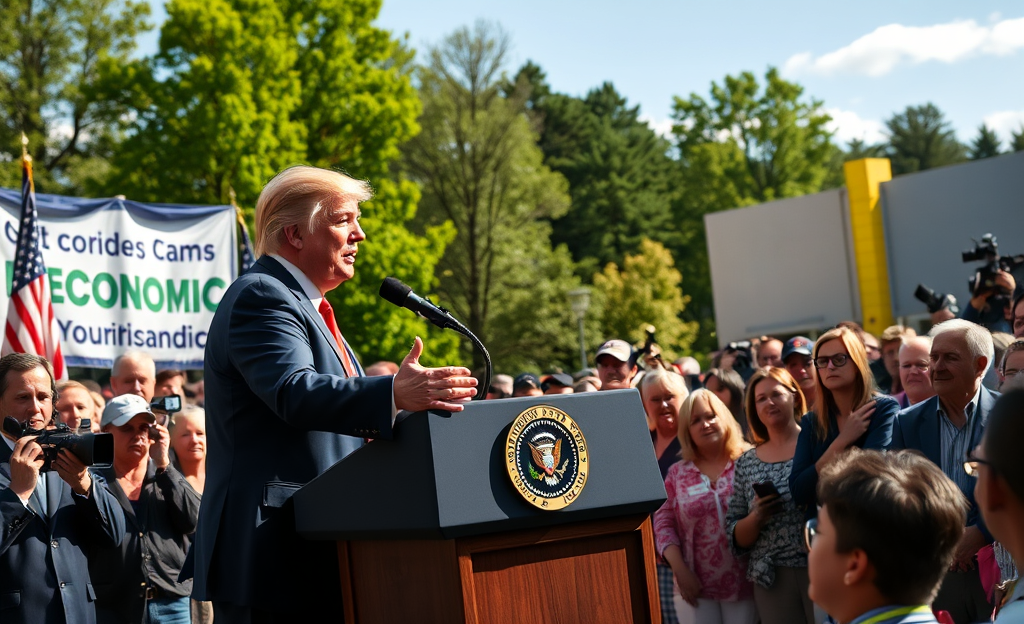
Economic Concerns are front and center as President Donald Trump prepares to address the state of the U.S. economy in Mount Pocono, Pennsylvania.
With mounting evidence that Americans are feeling the strain of high prices, despite assurances of inflation being under control, this article will delve into the complexities of current economic sentiment.
The latest consumer confidence survey highlights a drop in optimism, while divergent views on economic policies intensify the political debate.
As Trump grades his own economic performance, the stakes are high, and the implications for voters in swing states are significant.
Speech Preview from a Key Swing State
As President Donald Trump prepares to take the stage in Mount Pocono, Pennsylvania, the political atmosphere brims with anticipation.
His upcoming address on the U.S. economy holds significant weight, as it could potentially reshape the 2024 economic debate.
This speech is a strategic move in a crucial swing state, reflecting the importance Trump places on Pennsylvania’s strategic status in national elections.
Mount Pocono has become more than just a backdrop; it is a battlefield where economic narratives are fought and won.
By addressing the pressures of rising prices and reinforcing his agenda to combat inflation, Trump’s message seems poised to captivate both supporters and skeptics.
Linking this address to broader national concerns, such as inflation and consumer confidence, he seeks to contrast his efforts with opposing narratives from Democratic critics.
The delivery in such a pivotal locale underscores the urgent necessity of reaching out to essential voter bases as the nation looks forward to the upcoming election cycle.
Persistent Financial Strain on Households
The persistent financial strain on households has become a pressing issue as the cost of living continues to soar.
Recent data shows that economic sentiment is at its lowest point in seven months, reflecting widespread concerns about rising prices.
This situation underscores the challenges many Americans are facing as they navigate an increasingly difficult economic landscape.
Inflation Trend and Sentiment Snapshot
| Month | CPI | Confidence Index |
|---|---|---|
| January | 3% | 105.9 |
| September | 3% | 98.0 |
Steady but stubborn inflation marked the economic landscape from January to September, with the Consumer Price Index unwavering at 3%.
Despite this consistency, consumer sentiment has declined significantly, reflecting growing public anxiety over economic conditions.
This stable inflation rate might suggest controlled price hikes, yet persistent concerns around high living expenses loom large over household budgets.
As families navigate everyday expenses, the sentiment drop illuminates the challenges they face alongside current economic policies.
For more information on consumer price trends, you can explore Consumer Price Index Overview provided by the Bureau of Labor Statistics.
Democratic Emphasis on Affordability
Democrats emphasize the critical issue of affordability by highlighting how current tariffs and economic policies contribute to the ongoing rise in prices, and their talking points include concerns such as the heightened cost of goods impacted by tariffs, as well as adjustments in fiscal moves and regulatory shifts, all of which are straining American wallets.
In contrast to alternative narratives, Democrats argue that such policies have directly led to higher prices for consumers at the checkout line, and previous trade decisions have lasting impacts, fueling the current economic strain.
Amidst ongoing disputes, Democrats assert that addressing these challenges head-on will enhance affordability for everyday citizens, framing their strategy as a correction to fiscal missteps of the past.
They continue to challenge the narrative that economic policies are not the culprit, using data and voter sentiment to back their claims on the impact of policy decisions emanating from the White House, while emphasizing the need for increased governmental accountability.
Their detailed approach to reversing these trends can be explored further here.
Trump’s Counter-Narrative and Self-Grade
Donald Trump often presents a counter-narrative against Democratic critiques by asserting that he is resolving economic issues inherited from his predecessor.
As economic sentiment shows tension, especially with Americans feeling the pressure of high prices, Trump disputes that his administration is to blame for the costs.
Instead, he labels affordability concerns as a Democrat-led “con job,” emphasizing that past policies led to worse inflation than under his tenure.
His speeches, such as those at rallies in Pennsylvania, highlight how he believes prices are stabilizing and wages are rising under his strategies.
He sees these developments as achievements in tackling existing problems and making them into opportunities.
Trump exudes confidence when assessing his economic tenure, illustrated during his roadshow in Mount Pocono, Pennsylvania.
When questioned about his administration’s performance against economic challenges, he boldly claims, “I’d give it an A-plus-plus-plus-plus-plus.
” This
bold statement
showcases his steadfast belief in the robustness of his policies, setting a stark contrast against his political opponents and underlining his commitment to resolve past economic challenges with a strong resolve.
His grading reflects more than mere self-assessment; it underscores his determination to communicate success and bolster confidence among his supporters.
Reviving Campaign-Style Voter Interaction
Former President Donald Trump’s visit to Mount Pocono, Pennsylvania, underscores the significance of reviving in-person campaigning tactics that emphasize direct voter interaction.
According to Spotlight PA, this strategy draws from his past campaigns, where his physical presence in swing state regions cultivated strong connections with constituents, potentially swaying undecided voters.
His approach in Mount Pocono aims to reassure the local working class by directly addressing economic concerns that have emerged under his administration.
By leveraging this traditional form of voter interaction, Trump seeks to counter narratives driven by Democrats regarding economic management.
As CNN explains, his renewed focus on regional engagement can shift voter sentiment in favor of his economic policies, influencing election outcomes in pivotal regions.
Mount Pocono may prove to be a decisive stage in the 2024 economic debate.
In conclusion, as economic pressures persist, the upcoming speech by Donald Trump will be pivotal in shaping public perception and engagement ahead of the elections.
The ongoing debate over inflation and affordability remains critical for American voters moving forward.



0 Comments