Warrior Dividend Sparks Economic Debate Amid Concerns
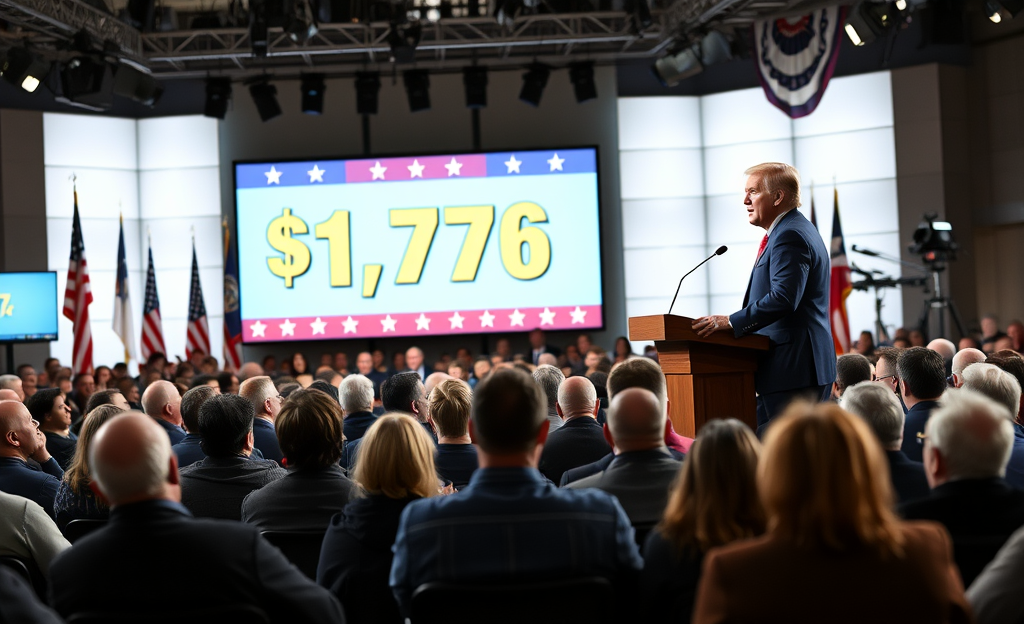
Economic Policy has been a focal point of discussion in recent times, particularly following a televised speech announcing a ‘warrior dividend’ of $1,776 for nearly 1.5 million military members.
This policy is being defended amidst rising dissatisfaction among the American public regarding the cost of living and economic challenges.
With a significant percentage of citizens believing the economy is failing them, and concerns over unemployment and inflation on the rise, this article will explore the implications of these economic policies and their impact on the upcoming 2026 midterm elections.
Warrior Dividend Announcement
In a recent nationally televised address, the announcement of a warrior dividend captured widespread attention, where the President revealed a bonus of $1,776 for nearly 1.5 million military members across the United States.
This financial gesture represents a commitment to acknowledge the dedication and sacrifices made by the armed forces, especially at a time when public sentiment reflects economic dissatisfaction.
With the cost of living rising and unemployment incrementing to 4.6%, the one-time payment stands as both a symbolic and practical gesture aimed at alleviating some financial pressures.
Despite this move, survey results indicate that 61% of citizens feel the economy remains unsatisfactory for their needs.
Nevertheless, amidst these challenges, officials urge patience, promising an eventual economic rebound.
For more detailed coverage of this announcement, you can visit the comprehensive exploration on PBS.
Defending Economic Policy amid Public Discontent
Amid increasing public frustration over rising living costs, government officials defended their current economic policies, highlighting that there are strategies in place to address these concerns incrementally.
However, according to a recent survey, 61% of Americans feel the economic landscape isn’t working in their favor, reflecting widespread discontent Survey on Economy not working for Americans.
Despite this sentiment, leaders emphasized patience, asserting that measures to bolster the economy will yield results over time.
This defense comes as unemployment reaches 4.6% and inflation continues to burden household expenses, although some prices have started to decline.
The administration’s narrative stresses the importance of patience and assured that ongoing economic strategies will eventually reverse current challenges, aiming to realign public trust ahead of the upcoming 2026 midterm elections.
Transitioning these obstacles involves acknowledging immediate hardships while staying committed to structured recovery plans.
Patience as a Path to Recovery
Speakers in the recent televised speech emphasized the need for patience to navigate the current economic challenges, assuring the public of a promising horizon.
As policies begin to take effect, citizens are urged to remain calm and trust in the government’s strategic roadmap, which is designed to ensure a steady improvement in economic conditions.
Although the present situation might seem daunting, officials highlight that some prices have already begun to decline.
Drawing inspiration from past economic recoveries, such as approaches shared in speeches like Fed’s Economic Recovery Outlook, provides a beacon of hope.
This aligns with the historical context that patience is often pivotal in the positive trajectory expected in the coming years.
As the nation strides towards the 2026 midterm elections, the underlying message resonates: adopt patience for it paves the path to economic recovery.
Contrasting Economic Indicators
The economic landscape is challenging as unemployment rises to 4.6%, alongside persistent inflation pressures.
Meanwhile, officials have cited declines in the prices of select consumer goods, showcasing isolated scenarios of economic relief amidst broader fiscal concerns.
| Indicator | Current Value |
|---|---|
| Unemployment | 4.6% |
| Select item prices | Declining |
Despite these contrasting figures, stakeholders emphasize patience, assuring the public of potential economic betterment over time.
The rise in unemployment reflects significant workforce adjustments, as reported by the Bureau of Labor Statistics statistics data reported by Government officials However, minor price drops in specific commodities offer hope to consumers, cushioning the financial strains felt nationwide.
With midterm elections approaching in 2026, economic policies such as the announced ‘warrior dividend’ seek to mitigate the fiscal burden on families.
These dynamics highlight the complexities of navigating a recovering economy, urging for careful observation and adaptive strategy.
Positioning for the 2026 Midterm Elections
As economic concerns increasingly dominate the national discourse, the connection between policy decisions and the upcoming 2026 midterm elections becomes even more pronounced.
The recent announcement of a ‘$1,776 warrior dividend’ underscores a strategic move to bolster support among nearly 1.5 million military members, despite growing frustration over rising living costs.
An illuminating survey reveals that 61% of Americans believe the economy isn’t supporting their well-being.
In a speech, officials emphasized patience and assured that the economy would recalibrate.
This tactic aims to align the administration’s economic policy with voter expectations, as electoral strategy pivots to address these urgent issues.
As people grapple with a 4.6% unemployment rate and increasing prices, nuances like minor declines in some goods were highlighted to suggest progress.
Thus, the central economic challenges are set to frame the electoral battleground, focusing on tangible concerns that directly affect voters’ daily lives, such as:
- Jobs
- Inflation relief
- Cost of living
In conclusion, the current economic landscape presents significant challenges for Americans, with dissatisfaction leading to critical scrutiny of government policies.
As the nation prepares for the 2026 midterm elections, understanding these issues will be vital for both lawmakers and citizens alike.


0 Comments