Economic Disparity In A K-Shaped Economy
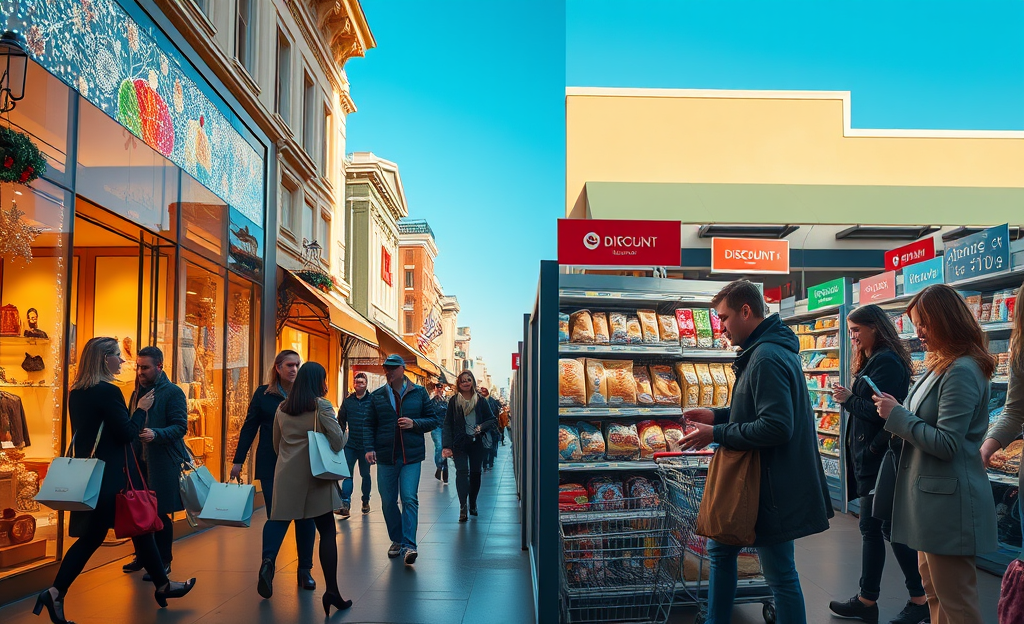
Economic Disparity is a pressing issue in the United States, particularly evident in today’s ‘K-shaped economy’.
As high-income individuals continue to thrive, low-income families are struggling to meet their basic needs.
This article delves into the contrasting holiday shopping habits of these groups, the stark differences in income growth, and the significant disparities in stock performance among companies.
By examining these elements, we aim to shed light on the broader implications of economic inequality and understand how inflation and stagnant wages are impacting different segments of society.
Understanding the K-Shaped Economy in the United States
The K-shaped economy is a concept describing an economic recovery where distinct segments of the economy experience diametrically opposing trends.
Specifically, in the United States, it shines a light on the rising prosperity of high-income groups while starkly contrasting with the stagnant or declining financial circumstances of lower-income segments.
This disparity isn’t just a theoretical construct; it greatly impacts U.S. consumers’ real lives.
Explore detailed insights into this economic pattern.
As high-income families enjoy an increase of 4% in net wages and continue to spend extravagantly on luxury goods, shares of brands like Ralph Lauren surge, showcasing a 37% rise in recent months.
On the other hand, relevant data indicates that lower-income families face a mere 1.4% growth in wages, grappling with rising inflation and restricted income.
Major value-focused retailers such as Kroger see stock declines, reflecting decreased spending from budget-conscious consumers.
This economic disparity further exacerbates social inequality and signals significant challenges ahead for economic equity and consumer confidence in America.
Holiday Season Spending Patterns Among High- and Low-Income Shoppers
The holiday season starkly reveals the economic chasm between high- and low-income shoppers.
Wealthier consumers indulge in luxury stores, finding pleasure in exclusive, premium gifts that signify status and privilege.
These affluent shoppers continue to propel the economy, despite broader challenges or rising costs.
Meanwhile, lower-income shoppers engage in bargain hunting, driven by necessity rather than choice.
Their focus centers on efficiency, ensuring every dollar stretches further.
Forbes insightfully captures this disparity.
Stock trends mirror this division; while Ralph Lauren’s shares rose 37%, indicating optimism among the wealthy, Kroger’s shares fell by 13%, reflecting tighter budgets among everyday shoppers.
Income Growth Disparities: 4 Percent vs. 1.4 Percent
The recent trends in net wages reveal a significant and widening gap between high- and low-income families in the United States.
While high-income households have enjoyed substantial increases, low-income families have not seen the same level of growth.
The impact is striking, creating a clear socioeconomic divide that becomes more pronounced during economic fluctuations.
The following table highlights this disparity, demonstrating how high-income families thrive as their earnings increase, while lower-income families struggle just to maintain pace with rising costs.
| Group | Net Wage Growth |
|---|---|
| High-income families | 4% |
| Low-income families | 1.4% |
This disparity fuels broader economic inequality, affecting consumer behavior and overall economic health.
As high-income families continue to spend and invest, they drive demand in luxury markets and bolster stock performances, as seen with companies like Ralph Lauren.
In stark contrast, those in lower income brackets face the burden of prioritizing basic needs over spending.
As inflation outpaces their modest wage growth, the inability to save or spend perpetuates a cycle that contributes to the wider systemic issues within the U.S. economy.
Yahoo Finance indicates that high-income segments are thriving despite economic challenges, thus elevating brands like Ralph Lauren, while everyday needs and rising inflation weigh heavily on retail giants like Kroger.
The implications of these trends are noteworthy.
- Upscale demand boosts Ralph Lauren’s performance.
- Value-focused pressures weigh on Kroger’s outlook.
These points underscore the prevailing economic disparity.
Spending Stability for the Wealthy, Cutbacks for Everyone Else
The increasingly pronounced economic disparity in the United States manifests starkly in spending behaviors.
Among higher-income individuals, inflationary pressures remain cushioned by robust net wage increases, facilitating a continued indulgence in discretionary purchases.
This financial ease supports a persistent flow of expenditure, especially in luxury sectors.
For instance, brands such as Ralph Lauren have noted a significant uptick in stock performance, highlighting the spending stability of wealthier consumers (Economic Divide Analysis).
The chasm grows wider as high inflation disproportionately affects these groups, further reinforcing the contrast in financial stability across economic lines.
In conclusion, the current economic landscape underscores a troubling divide, with high-income consumers enjoying stability while low-income households face mounting challenges.
Addressing this economic disparity is crucial for fostering a more equitable society.



0 Comments