Exploring Potential and Challenges in the Sleep Economy
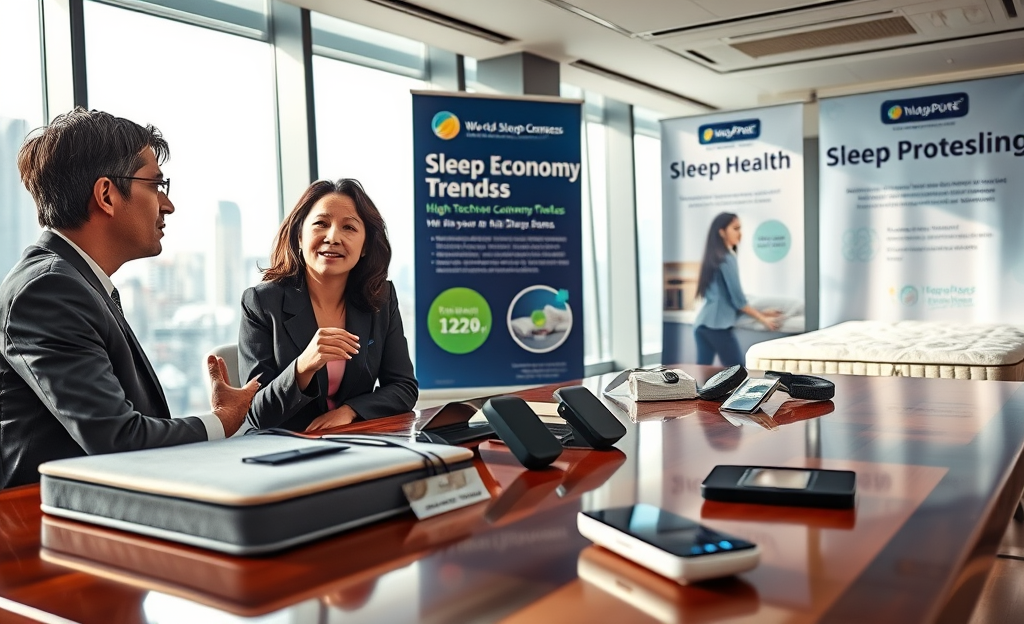
The Sleep Economy is an emerging field that is gaining traction as interest in sleep-related products and services surges.
This article delves into the myriad opportunities for innovation and market growth as awareness of sleep health rises.
Yet, alongside these advancements, challenges such as regulatory needs, understanding consumer demands, and combating misinformation surrounding sleep disorders must be addressed.
Through a thorough exploration, we will uncover the landscape of the Sleep Economy and the factors shaping its future.
Sleep Economy Gains Center Stage at Singapore’s World Sleep Congress
As highlighted during the ‘Squawk Box Asia’ interview at the World Sleep Congress in Singapore, the sleep economy is emerging as a critical frontier in global markets.
The expanding awareness of sleep health is driving a surge in demand for innovative sleep-related products and services.
Companies are now capitalizing on this trend by investing in technology and solutions that promise better sleep quality.
With the increasing prevalence of sleep disorders and the subsequent need for effective management, the sleep economy is poised for significant growth.
However, challenges such as regulation and addressing consumer misinformation must be navigated carefully.
This shift not only represents a lucrative opportunity for businesses but also underscores the broader cultural shift towards prioritizing wellness.
By understanding consumer needs and advancing science-backed solutions, the sleep economy could reshape how we view health and productivity.
— World Sleep Congress, Singapore, 2023
Signs of Robust Market Potential
The sleep economy is witnessing an enthusiastic surge in interest as highlighted on ‘Squawk Box Asia’.
Experts have expressed optimism about the significant market size and the burgeoning consumer demand for sleep-related products and services.
This, coupled with advancements in technological innovation, presents a promising landscape for growth and opportunities in the sector.
Emerging Segments Powering Expansion
Highlighted on Squawk Box Asia are the emerging segments fueling the sleep economy’s expansion.
Smart technology innovations, such as AI-driven sleep monitors and smart mattresses, revolutionize how we understand sleep patterns.
Meanwhile, healthcare advancements in home-based sleep apnea treatments address consumer health concerns.
The wellness sector also sees growth in organic sleep aids and supplements, appealing to natural health enthusiasts.
These pivotal growth drivers reflect a market ripe for technological integration and consumer health focus, bridging the gap between lifestyle and technology-driven solutions.
Innovative sleep solutions are reshaping consumer expectations
| Segment | Example Innovation |
|---|---|
| Sleep Tracking Devices | Non-contact radar sensors |
| Healthcare | Home-based sleep apnea treatments |
| Wellness | Organic sleep aids & supplements |
Hurdles Confronting the Sleep Economy
The burgeoning sleep economy is facing significant hurdles that must be addressed to fully realize its potential.
Key challenges include the need for regulation to ensure consumer safety, the prevalence of misinformation that can mislead consumers, and a general lack of consumer trust in sleep-related products and services.
It is urgent to tackle these obstacles as awareness of sleep health increases, and the market looks to grow in response to rising demand.
Suggested Pathways Forward
Collaborative efforts in the sleep economy are necessary to tackle its complex challenges effectively.
Experts emphasize the importance of industry self-regulation to promote responsible innovation while ensuring product safety and effectiveness.
Encouraging public-private research partnerships can enhance understanding of consumer needs and foster the development of evidence-based solutions.
Additionally, leveraging platforms like Squawk Box Asia broadens awareness, highlighting the critical role of regulating misinformation.
Through these pathways, the sector can unlock its full potential, paving the way for a future where sleep health is prioritized and misinformation is effectively managed.
Asia’s Strategic Edge in the Sleep Economy
Asia is rapidly establishing itself as a strategic powerhouse in the burgeoning sleep economy, leveraging increased awareness and innovative initiatives.
At the heart of this movement is Singapore, which stands out for its strategic position in the region and proactive government policies aimed at fostering innovation.
During a recent discussion on Squawk Box Asia at the World Sleep Congress in Singapore, experts highlighted Asia’s unique advantage in integrating cutting-edge technologies with traditional knowledge to deliver unparalleled sleep solutions.
Notably, local authorities emphasize maintaining a robust regulatory framework to ensure the safety and efficacy of new products entering the market.
This foundation not only invites investment but also supports sustainable growth within the industry, thus cementing the region’s crucial role in the global sleep economy.
Furthermore, industry leaders are capitalizing on the region’s vast consumer base to drive forward-thinking solutions that cater to diverse sleep health needs.
An example includes the expansion of wearable technology and personalized sleep therapies that utilize data analytics, enhancing consumer experiences and efficacy.
Experts noted the importance of understanding consumer needs, which is a driving force behind these advancements.
By harnessing Asia’s vast network of research institutions and industry partnerships, countries like Singapore are taking strides in transforming sleep health practices on a global scale.
Additionally, ongoing efforts to combat misinformation around sleep disorders further underscore the region’s commitment to informed consumer engagement.
With these developments, Asia is proving to be a vital hub for innovation and investment in the sleep economy, setting benchmarks for other emerging markets worldwide.
In conclusion, the Sleep Economy presents both exciting opportunities and significant challenges.
By addressing regulatory needs, understanding consumer preferences, and combating misinformation, stakeholders can cultivate a thriving market that enhances sleep health for all.



0 Comments