New Bill Seeks To End Government Shutdown
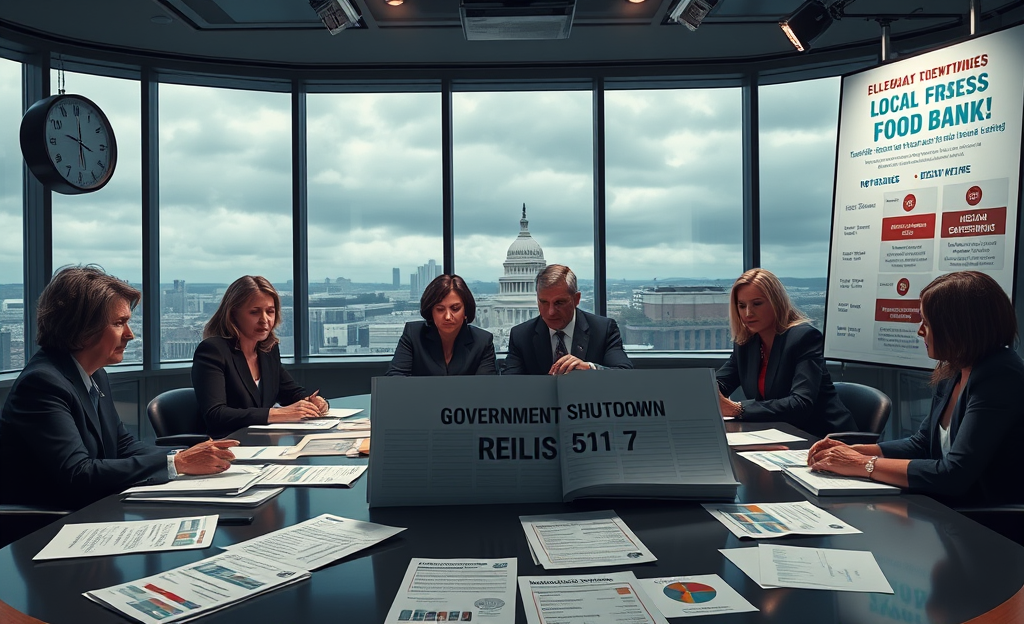
Government Shutdown continues to impact various sectors as a new 31-page bill is introduced to bring an end to it.
This article will explore the key elements of the proposed legislation, the considerations of moderate Democratic senators, and the implications of the ongoing shutdown on federal programs, air travel, and the local economy in Washington, D.C.
Additionally, we will examine the rising concerns among executives and the significant drop in consumer sentiment, reflecting the widespread worries about the shutdown’s effects on everyday life and the economy overall.
Legislative Proposal to Reopen Government
A new 31-page bill has been introduced to end the government shutdown.
Reports indicate that moderate Democratic senators are considering offering their support for this proposal.
The legislation aims to keep the government open until January 30 of next year, fund specific federal programs for a full fiscal year, and limit the layoffs of federal employees.
Criticism Over Lack of Immediate Health Vote
The newly proposed government shutdown bill has sparked significant concerns among progressive lawmakers, who object to the lack of an immediate health care vote.
Many argue that eminent progressive figures see this decision as an abandonment of crucial health issues that directly affect constituents.
Progressives are voicing dissatisfaction; they accuse the measure of postponing necessary votes on healthcare provisions.
This delay is viewed as a serious oversight, sidestepping urgent care concerns that so many Americans deem vital.
The absence of guaranteed health care measures intensifies frustrations.
As noted in a critique, “Millions feel neglected without the promise of faster action.” This sentiment echoes through various discussions on government platforms like Springfield Daily News, illustrating a widespread discontentment.
While the bill seeks to maintain governmental operations, critics feel it fails to address deeply entrenched health disparities.
For them, this represents a missed opportunity to elevate health priorities amidst ongoing legislative negotiations.
Moreover, progressives emphasize the urgency of comprehensive healthcare reform and view the lack of action as a missed opportunity that sidelines these indispensable issues for many communities.
Shutdown Delays and SNAP Payment Adjustments
SNAP recipients are experiencing significant setbacks due to the prolonged government shutdown, impacting their access to essential food benefits.
The Supreme Court’s order introduced new guidelines to implement staggered payments, aiming to alleviate disruptions.
However, many families continue to report interruptions in their food assistance, leaving countless households vulnerable.
Here’s a look at how the timing of benefit distribution has changed:
| Period | Status |
|---|---|
| Pre-order | Paused |
| Post-order | Staggered release |
Relevant text regarding these changes highlights ongoing challenges, as officials scramble to navigate the complex landscape of federal guidance and judicial decisions.
States are making efforts to resume full benefits through expedited state-driven initiatives, yet uncertainty remains.
Escalating demand at food banks and the economic distress felt by SNAP-dependant families underline the urgency of finding lasting solutions.
Air Travel and Cargo Disruptions
The recent wave of cancellations, exceeding 2,000 flights according to reports, presents a vivid illustration of the impact that governmental shutdowns have on air travel and cargo networks.
As the ABC News Report on Flight Cancellations reveals, these cancellations stem primarily from significant reductions in air traffic control capacity, attributed to unavoidable staffing shortages.
This reduction has not only forced airports to reduce operational hours, but has also led to Relevant text regarding delays in crucial aviation systems, compounding difficulties for passengers and airlines alike.
The resulting disruptions have further hampered cargo deliveries, particularly affecting time-sensitive shipments that rely heavily on precise scheduling.
Airlines and cargo operators are grappling with these unprecedented challenges, which have unraveled several Relevant text within logistics frameworks.
A myriad of factors contribute to these challenges, including:
- Staffing gaps have forced towers to trim schedules.
- Logistical bottlenecks are increasingly evident at major hubs.
- Ripple effects on cargo are amplifying as delays pile up.
Combined, these factors initiate a chain reaction that extends beyond passenger inconvenience, straining supply chains and threatening the efficiency of global cargo networks.
As air freight constitutes nearly half of U.S. air shipping, disruptions could lead to broader economic ripple effects, affecting everything from retail inventory levels to international manufacturing timelines.
Economic Strain in Washington, D.C.
The ongoing federal shutdown places intense pressure on Washington, D.C.’s local economy.
Businesses surrounding federal offices face considerable declines in foot traffic, as over a million federal workers remain unpaid, directly impacting their spending power.
The shutdown’s effects stretch beyond eateries and shops, extending to the entire supply chain that supports them, compounding financial strain.
Furthermore, reduced air traffic capacity has led to significant flight cancellations, disrupting not only passengers but also the shipment of goods, hinting at a broader economic setback.
Meanwhile, local business leaders voice mounting concerns during this uncertain period.
Moreover, food banks in the region face unprecedented demand as furloughed workers turn to them for sustenance.
According to local reports, significant increases in requests for assistance have overwhelmed these organizations.
As a result, they struggle to keep up with food insecurity, exacerbated by rising prices and federal program cuts.
Provisions like SNAP benefits encounter delays due to halted government functions.
The Capital Area Food Bank, among others, gears up for a continued surge in demand, highlighting the merciless toll on community resources.
Washingtonians feel this pinch profoundly, further illuminating the deep financial wounds inflicted by the shutdown.
Executive Concerns and Consumer Sentiment
Executives express increasing concern over the ongoing government shutdown, as the phrase ‘government shutdown’ now appears in earnings calls at its highest frequency since 2018.
Many business leaders, like one executive quoted saying, “Businesses cannot plan with the government in limbo,” highlight the uncertainty this generates.
This instability poses challenges to planning and long-term investments, affecting sectors across the board.
The shutdown’s impact ripples beyond boardrooms; it reaches into households, with its economic repercussions visible in consumer sentiment hitting a three-year low.
According to recent surveys, consumers’ confidence in personal finances and economic stability has declined significantly.
For instance, the Michigan Consumer Sentiment Index has dropped to its lowest point since mid-2022, as noted by Investopedia.
The combination of restricted government functions and uncertainty has exacerbated worries, causing a notable trend in the public’s financial anxiety.
Meanwhile, economic leaders continue to advocate for resolution, hoping to revive stability and restore faith among both business sectors and consumers alike.
Government Shutdown poses critical challenges for the economy and individuals alike.
As discussions around the new bill unfold, the urgency for resolution remains paramount to alleviate the mounting pressures faced by communities and federal workers.



0 Comments